Podcasts

Back

Assessing Morocco’s progress in the context of COP26

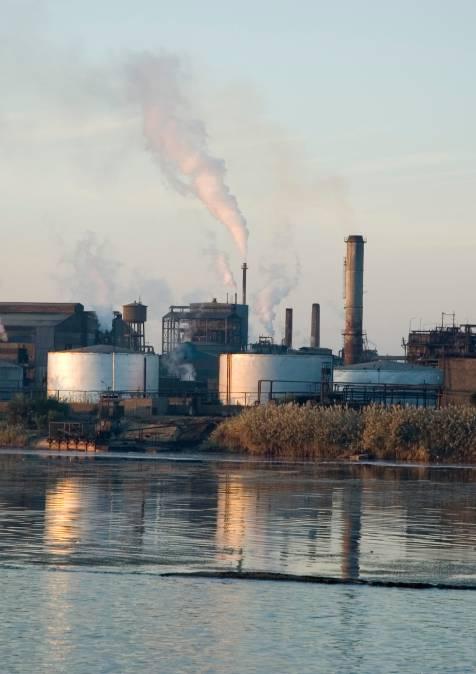
This Podcast is based on a Policy Brief by Rim Berahab and Uri Dadush. It examines how Morocco progresses on the mitigation component of its Nationally Determined Contribution (NDC) targets and the critical challenges in delivering that promise. Emphasis was also placed on Morocco's most important policy steps to accelerate decarbonization in the post COP 26 context.

 

RELATED CONTENT

  • Authors
    Abla Zidani
    November 19, 2026
    La Guinée détient plus d’un tiers des réserves mondiales de bauxite et, en 2023, elle en est devenue le premier producteur mondial, devant l’Australie. La bauxite, ressource indispensable à la production d’aluminium, est jugée stratégique par la Chine, les États-Unis et l’Union européenne. Après une phase d’ouverture aux investisseurs sous Alpha Condé, la politique minière du pays a changé de logique avec Mamadi Doumbouya : il ne s’agit plus seulement d’attirer les capitaux, mais au ...
  • From

    17
    9:00 am November 2026
    Industrialization in North Africa is entering a new phase shaped by global megatrends, the green and digital transitions, evolving value chains, and the growing need for resilient and competitive production systems.Against this backdrop, the Policy Center for the New South and the United Nations Industrial Development Organization (UNIDO) are convening The Future of Industrialization: Building Future-Ready Industries in North Africa on November 17, 2026, at the Policy Center for the New South in Rabat.The event will present key insights from the Industrial Development Report 2026 (IDR26) and bring together policymakers, industry leaders and experts to discuss the region’s industrial opportunities, constraints and policy priorities. The exchanges will focus on pathways toward s ...
  • October 09, 2026
    Can Nigeria’s Dangote refinery help strengthen Africa’s energy security amid disruptions to global supply routes? This discussion considers how expanding local refining capacity can reduc ...
  • Authors
    August 13, 2026
    The renewed instability in the Middle East has exposed Africa's continued vulnerability to external energy shocks. Shipping disruptions through the Strait of Hormuz, the maritime chokepoint through which roughly one-fifth of global oil and LNG supplies transit, have once again demonstrated that African fuel security remains highly dependent on geopolitical developments beyond the continent. While many African economies have traditionally relied on refined petroleum imports from Gulf ...
  • Authors
    August 12, 2026
    La géographie mondiale des hydrocarbures n'est évidemment pas figée. De nouveaux producteurs de pétrole et/ou de gaz naturel apparaissent suite à des découvertes, le plus souvent réalisées par des compagnies pétrolières internationales. On pense notamment au Mozambique, qui produit et exporte du gaz naturel liquéfié (GNL) depuis la fin 2022, au Sénégal, qui est un producteur de pétrole offshore depuis la mi-2024, et au Sénégal et à la Mauritanie, qui sont devenus conjointement expor ...
  • Authors
    August 5, 2026
    This paper addresses the persistent challenge of resource dependence in the world's poorest countries, focusing on the ten poorest African nations where natural- resource rents average 14% of income. It argues that four decades of conventional policy advice, which treated resource dependence primarily as a revenue management problem, have failed to help these countries. While stabilization funds and permanent-income frameworks aim to smooth consumption, they do not answer the fundam ...
  • Authors
    July 2, 2026
    Africa is facing a massive electricity deficit that is impacting its economic and social development, and its ability to catch up with the rest of the world. It is imperative that the continent increase its electricity production to connect the 600 million people who are currently without access and to improve the quality of service for the millions who are suffering from frequent blackouts and load-shedding. Economic development in the 21st century will crucially depend on the digi ...
  • Authors
    June 8, 2026
    The energy shock caused by the war between the United States and Israel and Iran has highlighted the need for Africa to refine more of its own crude oil. Africa is a net hydrocarbon exporter, but remains stuck in the old colonial economic model: it mostly exports raw materials and imports refined products. Africa exports about 2.6 billion barrels of crude oil every year, and imports about 1.4 billion barrels of refined products. This is a problem for two reasons. First, Africa ...
  • June 5, 2026
    Driven by its mission to reflect on and analyze the major geopolitical, economic, and societal transformations shaping the contemporary world, and with a view to contributing to knowledge-sharing and disseminating the main outcomes of its research program, the Policy Center for the New South regularly publishes collective volumes addressing issues of particular importance to Morocco, Africa, and the broader Global/New South. In this spirit, the Center has recently released two volum ...