Webinar : OECD Multilateral Development Finance Week 2026

June 15, 2026

As part of the OECD Multilateral Development Finance Week 2026 (MDF Week), the Policy Center for the New South (PCNS) is organizing a webinar entitled “Rethinking Development Finance: African Agency and the Future of Multilateral Development Co-operation after ODA Retrenchment.” The discussion aims to contribute to ongoing reflections on the future of development finance and the evolving role of African countries in shaping more sustainable and equitable development partnerships.


As of mid-2026, the global development finance landscape is undergoing a profound structural shift. A historic decline in traditional Official Development Assistance (ODA)—driven by fiscal consolidation and shifting domestic priorities among major Development Assistance Committee (DAC) donors—has exposed the vulnerabilities of a development model reliant on external aid. This retrenchment is creating substantial financing gaps in critical areas like public health, climate adaptation, and infrastructure across Sub-Saharan Africa.


However, this crisis of traditional aid also presents a pivotal opportunity for African nations to redefine their development sovereignty. This session brings together African policymakers, global development finance leaders, and civil society experts to explore how the continent can transition from a donor-recipient paradigm toward a model anchored in self-reliance, strategic autonomy, and local agency.

Speakers
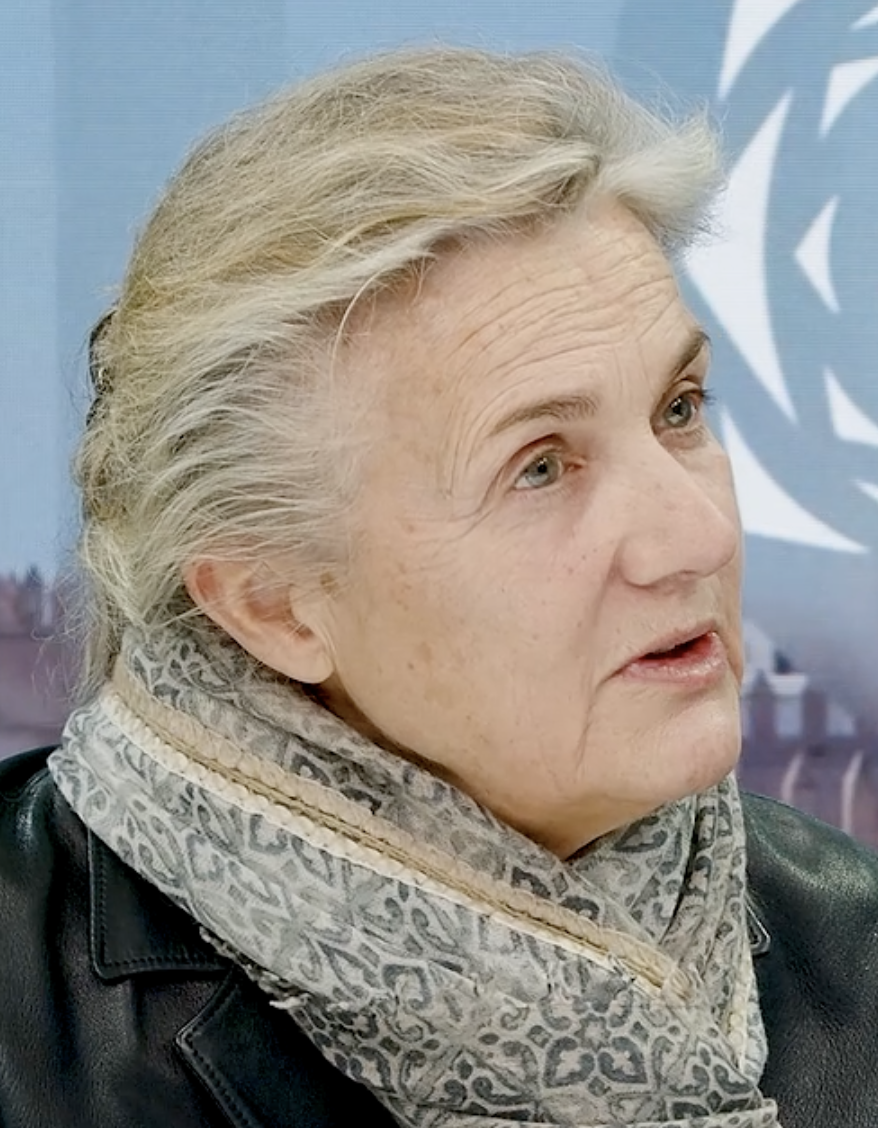
Oumayma Bourhriba
Senior Economist
Oumayma Bourhriba is a Senior Economist at the Policy Center for the New South (PCNS).At the PCNS, which she joined in 2019, Oumayma Bourhriba conducts research focusing on macroeconomic policies and international trade, with a particular emphasis on services.She has contributed to major publications on the Moroccan economy, such as the IMF’s Morocco's Quest for Stronger and Inclusive Growth (2023) and the World Bank’s Trade Policy in Morocco: Taking Stock and Looking Ahead (2023). Beyond her research, she has coordinated the Africa Economic Symposium, one of the flagship convenings organized by the PCNS.Oumayma Bourhriba holds a master’s degree in applied economics from University Mohammed V (UM5), where she is currently a PhD candidate.She is fluent in Arabic, English, ...
Otaviano Canuto
Senior Fellow
Senior Fellow at the Policy Center for the New South, Affiliate Professor at Mohammed VI Polytechnic University and Non-Resident Senior Fellow at Brookings Institute. Former Vice President and Executive Director at the World Bank, Executive Director at the International Monetary Fund (IMF) and Vice President at the Inter-American Development Bank. ...
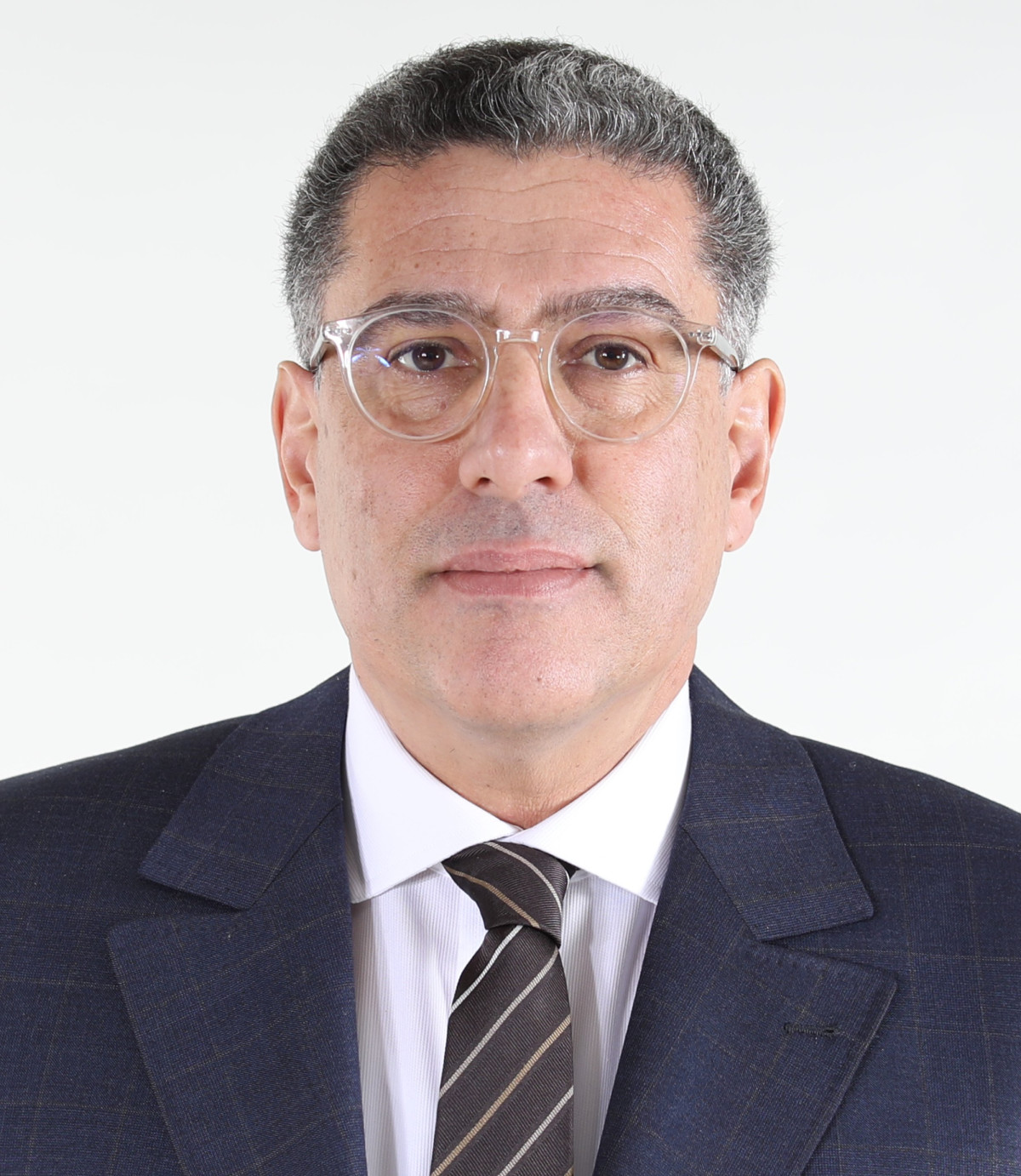
Karim El Aynaoui
Executive President
Karim El Aynaoui is Executive President of the Policy Center for the New South. He is also Executive Vice-President of Mohammed VI Polytechnic University and Dean of its Humanities, Economics and Social Sciences Cluster. From 2005 to 2012, he worked at the Central Bank of Morocco (Bank Al-Maghrib) as Director of Economics, Statistics, and International Relations. He also created and headed the Research Department and served as a member of the Governor’s Cabinet. Previously, he worked for eight years at the World Bank as an economist for its regional units of the Middle East and North Africa and Africa. Karim El Aynaoui has published books and journal articles on macroeconomic issues in developing countries. He has co-authored works on growth and the labor market in M ...
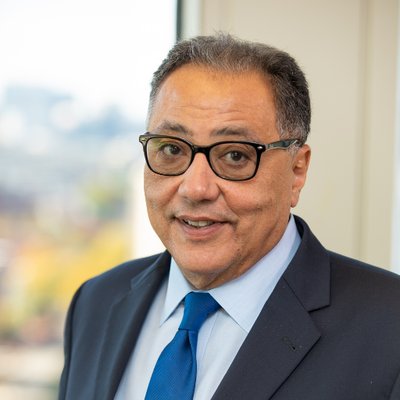
Hafez Ghanem
Senior Fellow
Hafez Ghanem – who holds a PhD in Economics from the University of California, Davis – is Senior Fellow at the Policy Center for the New South, a development expert with a large number of academic publications; and more than forty-year experience in policy analysis, project formulation and supervision, and management of multinational institutions.  He has worked in over 40 countries in Africa, Europe and Central Asia, Middle East and North Africa, and South East Asia.   Between 2015 and 2022 he was Vice President of the World Bank, initially responsible for the Middle East and North Africa, then for Sub-Saharan Africa and then East and Southern Africa.     In this latter capacity he was responsible for developing and implementing the World Bank ...
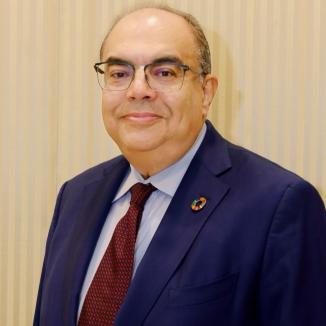
Mahmoud Mohieldin
Special Envoy on Financing the 2030 Sustainable Development Agenda, United Nations
...

RELATED CONTENT

  • May 6, 2021
    Africafé, l'émission de décryptage de l'actualité des organisations africaines avec des experts africains arrive enfin sur vos écrans. Pour cette première édition, le présentateur de l'émission bimensuel, Youssef Tobi, accueille Khalid Chegraoui, Senior Fellow au Policy Center for the N...
  • April 09, 2021
    C’est dans un contexte marqué à la fois par la crise sanitaire liée à la pandémie de COVID-19 et par l’émergence de nouvelles menaces à la paix et à la sécurité du continent africain que ...
  • March 17, 2021
    Cette étude concerne la Communauté économique des Etats d'Afrique de l'Ouest (CEDEAO), rappelant, tout d'abord, leur diversité géographique, démographique et économique. Montrant ce que ces Etats ont en commun mais, aussi, ce qui les différencie. La CEDEAO, qui réunit quinze pays parmi les plus pauvres de la planète, si on se réfère à leur PIB par habitant, en dollar courant ou en parité de pouvoir d'achat/PPA/. Ce qui explique une démographie explosive, sans que l'on puisse dire si ...
  • Authors
    Christophe Bertossi
    Matthieu Tardis
    February 26, 2021
    Si les migrations en provenance d’Afrique constituent la priorité des politiques européennes de contrôle des frontières extérieures de l’Union européenne (UE), les dynamiques migratoires africaines sont pourtant avant tout régionales. Les migrations subsahariennes sont très peu connectées aux flux transcontinentaux : plus de 70 % restent en Afrique. Si l’on observe le continent dans son ensemble, en y ajoutant les pays du Maghreb et l’Afrique du Sud (deux régions mieux connectées a ...
  • February 24, 2021
    L'intégration régionale en Afrique est considérée comme une priorité par de nombreux responsables politiques et acteurs économiques du continent. Avec la signature de l'accord portant création de la ZLECAf par l'ensemble des pays africains, le défi consiste désormais à mettre en place un marché continental pour les biens et les services et à jeter les bases d'une union douanière continentale. Nombreux sont ceux qui, sur le continent, considèrent la ZLECAf comme un plan d'investissem ...
  • February 5, 2021
    Regional integration in Africa is seen as a priority by many of the continent’s policymakers and economic stakeholders. With all Africa now signed up to the African Continental Free Trade Agreement (AfCFTA), the challenge now is to implement a continental market for goods and services and establish the foundations of a continental customs union. Many on the continent see the AfCFTA as an investment, economic-diversification, and job-creation blueprint that will shape the future of A ...
  • Authors
    January 21, 2021
    In the Western Sahara Advisory Opinion, formal questions specifically requested by the General Assembly were only on terra nullius and ‘legal ties’ at the time of Spain’s colonization of the Saharan Provinces. however, two other issues, which had not been specifically requested, were added to the formal question of ‘legal ties.” The additional issues concern the right to self- determination and ‘territorial sovereignty.’ The statements on additional issues have recently been referre ...
  • Authors
    November 9, 2020
    The word ‘occupation’ was used twice specifically to the Saharan Provinces in UN General Assembly resolutions in 1979 and 1980. Though the word has not been used by the General Assembly since, it has appeared in court rulings in the EU, the UK and South in a detrimental conclusion regarding Morocco’s sovereignty over the Saharan Provinces. This paper shall start with a consideration of international law in order: to differentiate occupation of a nonself- governing territory from occ ...