Rising Food Prices: Understanding the Impact on Developing Economies

November 29, 2023

To emphasize the importance of addressing this issue and discuss the potential actions that need to be taken to ensure food security and sustainable development in these nations, the Policy Center for the New South is organizing a webinar titled “Rising Food Prices: Understanding the Impact on Developing Economies”. The webinar will be held on November 29th, at 3 PM (GMT+1/ Rabat time).

Food inflation in developing countries carries profound implications for both the economy and the populace of these nations. This phenomenon denotes the sustained escalation in the costs of food commodities, instigated by an array of determinants, including climatic conditions, supply chain disruptions, economic policies, and market dynamics. As such, it represents a complex and multifaceted challenge that requires a nuanced approach to comprehensively understand its root causes and devise effective interventions.

In developing countries, where a substantial portion of the population is poor, rising food prices can lead to a decline in their standard of living, malnutrition, and even hunger. This is particularly true for those who spend a significant portion of their income on food. Food inflation can also have broader economic implications, such as reduced consumer spending on other goods and services, hampering investment, and driving up interest rates, exacerbating poverty and inequality.

It is worth noting that food inflation in developing countries has global repercussions as these nations often provide vital food resources to the global market. Fluctuations in food prices in these nations can impact food security and prices worldwide, creating challenges for policymakers to manage and mitigate its impacts.

Therefore, it is imperative for policymakers to understand the drivers of food inflation in developing countries and develop effective strategies to manage and mitigate its impacts on the economy and the population. These strategies may include policies that address supply chain disruptions, enhance productivity in the agricultural sector, and improve market competition, among others.
Speakers
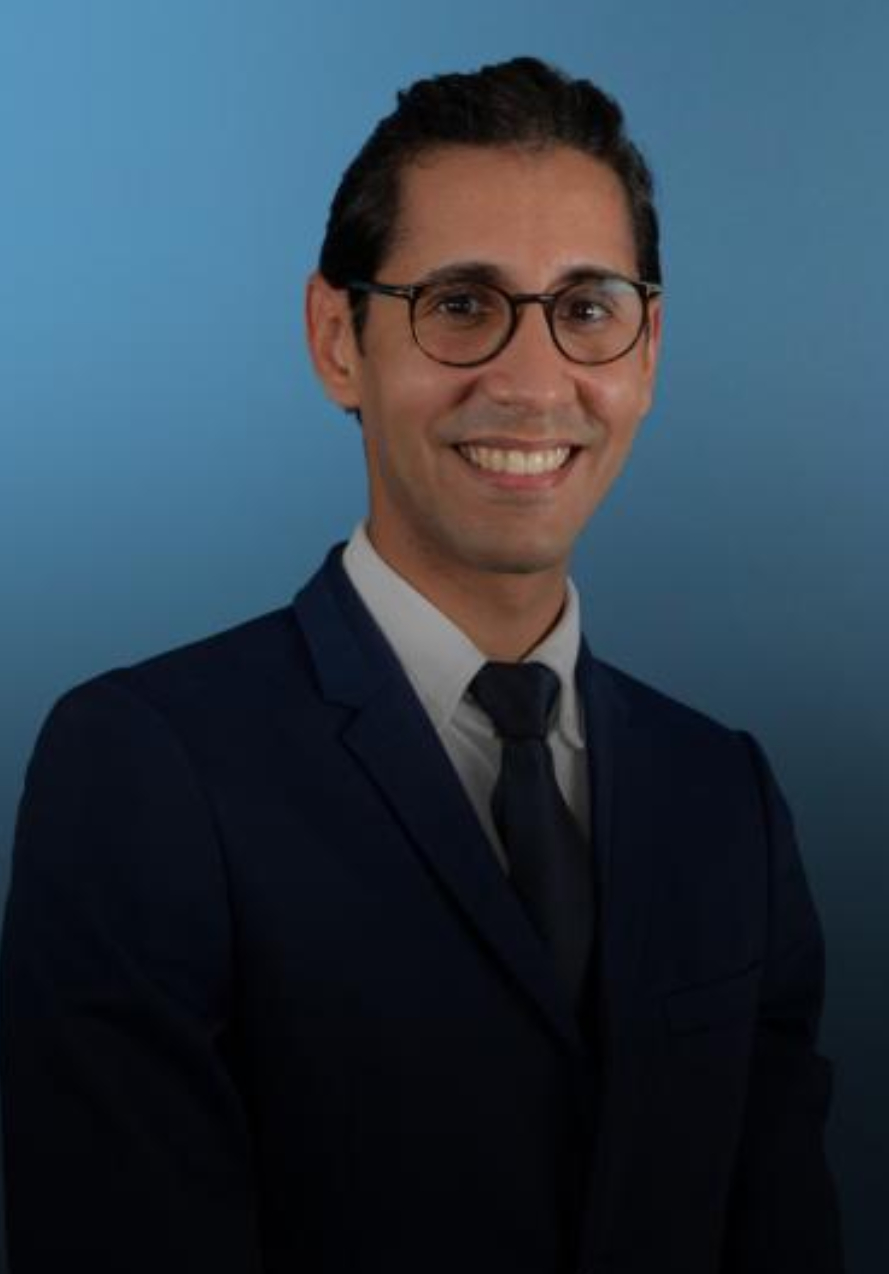
Ahmed Ouhnini
Economist, Policy Center for the New South
Ahmed Ouhnini is an Economist at the Policy Center for the New South. His research area covers agricultural economics, human and social development. Previously, he has worked as a researcher at the Paris School of Economics (PSE) and has also a record of working in consulting services in Morocco. Ahmed holds an engineering Diploma in Agriculture and Rural Development from the National School of Agriculture of Meknes and a Master’s Degree in Law, Economics and Management from the Paris 1 Pantheon Sorbonne Institute of Development. ...
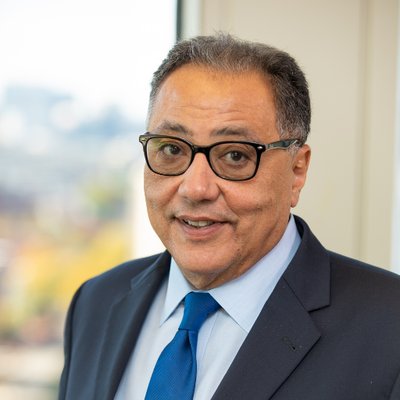
Hafez Ghanem
Senior Fellow
Hafez Ghanem – who holds a PhD in Economics from the University of California, Davis – is Senior Fellow at the Policy Center for the New South, a development expert with a large number of academic publications; and more than forty-year experience in policy analysis, project formulation and supervision, and management of multinational institutions.  He has worked in over 40 countries in Africa, Europe and Central Asia, Middle East and North Africa, and South East Asia.   Between 2015 and 2022 he was Vice President of the World Bank, initially responsible for the Middle East and North Africa, then for Sub-Saharan Africa and then East and Southern Africa.     In this latter capacity he was responsible for developing and implementing the World Bank ...
Isabelle Tsakok
Senior Fellow
Isabelle Tsakok, development practitioner, policy analyst, researcher, and teacher, is a Senior Fellow at the Policy Center for the New South. She grew up in the Republic of Mauritius, a multi- lingual, multi-ethnic and multi-cultural society. She holds a PHD in Economics from Harvard University, and a BA in Phil/Econ from the London School of Economics. As World Bank staff and consultant, she has focused on agricultural and rural development including on issues of agricultural transformation, food security, and poverty reduction. She has worked in most regions of the developing world, including Africa –North and South of the Sahara; Asia - South, Southeast and East; and Latin America. She has taught courses on agricultural policies and institutions at the World Bank; the Scho ...

RELATED CONTENT

  • Authors
    Sous la direction de
    Philippe Chalmin
    April 9, 2019
    Les cours des matières premières ont, une fois encore, été marqués par une importante volatilité en 2017 et 2018. Si de nombreux facteurs économiques permettent de l’expliquer, la raison politique fut également bien présente. Les Annual Report tensions commerciales entre la Chine et les États-Unis on Commodity et, plus globalement, la montée des incertitudes ont pesé Analytics and sur les perspectives macroéconomiques mondiales et sur Dynamics « le dynamisme des marchés ». Comptant ...
  • Authors
    June 9, 2017
    In June 2017, the second Annual Report on Commodity Analytics and Dynamics In Africa (Arcadia report) was published, in collaboration between the OCP Policy Center and CyclOpe. Its aim is to annually report on the evolution of the economic, legal, financial and societal links between Africa and the world commodity markets, both with regard to the cyclical changes in the markets, and to the structural changes or failures that may have emerged. Focusing on 2016 and early 2017, the Arc ...
  • Authors
    Under the Supervision of
    Philippe Chalmin
    July 4, 2016
    Guinea’s bauxite, Moroccan phosphates, Nigerian Bonny Light, Zambian copper, Côte d'Ivoire’s cocoa, Ethiopian coffee or Madagascar’s vanilla: all are examples demonstrating that raw materials have a dimension that is as global as it is local. Global by the markets on which they are traded, local by their quality, a key element of their price, and their macroeconomic impact, particularly for Africa. In line with the 2016 CyclOpe report, which celebrates three decades of existence thi ...
  • August 18, 2015
    OCP Policy Center and the German Marshall Fund of the United States, in partnership with the Fernando Henrique Cardoso Institute, organized an Atlantic Strategy Group conference on June 23rd and 24th, 2015 in São Paulo, Brazil with a focus on trade, energy, food, and Geopolitical System...