Quels seront les enjeux géopolitiques de l’après #COVIDー19 ? - Interview avec Rachid Houdaigui

April 9, 2020

- Quelle grille de lecture peut-on proposer pour l’après Covid-19 ? - Quelles sont ses implications géopolitiques ? - Quelles leçons tirées du débat actuel sur les conséquences géoéconomiques de la crise ?

Speakers
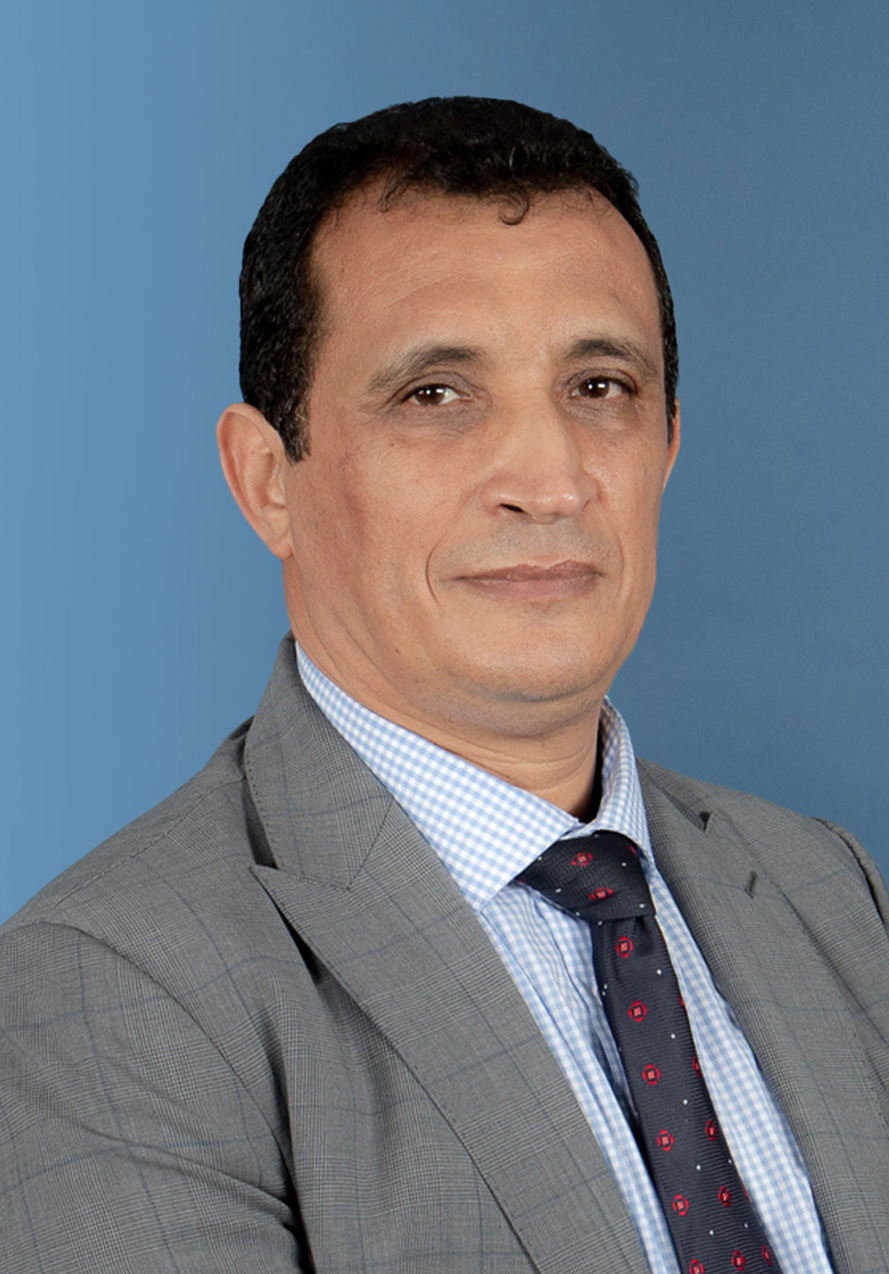
Rachid El Houdaigui
Senior Fellow
Rachid El Houdaïgui is a Senior Fellow at the Policy Center for the New South and an Affiliate Professor at Mohammed VI Polytechnic University. He also serves as a professor of International Relations at Abdelmalek Essaadi University's Law Faculty in Tangier. His expertise encompasses international relations, geopolitics, defense and security, focusing on the Mediterranean region, North Africa, and the Arab world. He also serves as a professor at the Royal College of Advanced Military Studies in Kenitra and is a visiting professor at Cergy-Pontoise University (Paris), Cadiz University (Spain), and La Sagesse University (Beirut, Lebanon).   He is the founder of the Moroccan-Spanish review "Peace and International Security" and oversees the Observatory of Mediterranean St ...

RELATED CONTENT

  • September 16, 2026
    Much of Western debate was revealingly silent on the Shanghai Cooperation Organization (SCO) summit, which took place on August 31 and September 1 in Bishkek, Kyrgyzstan. That relative silence reflects how poorly the organization’s growing significance is still understood. The meeting has not gone unreported. Any gathering of Xi Jinping, Narendra Modi, and Vladimir Putin inevitably attracts&nbs ...
  • Authors
    Stephan Klingebiel
    Andy Sumner
    September 4, 2026
    This Paper was originally published on cgdev.org. Escalatory attacks on multilateral rules and institutions in this era of raw power politics have plunged international politics into uncharted territory. Traditional alliances have been fractured and new partnerships between unlikely bedfellows are emerging. No longer in transition, the post-World War II world order is in rupture. This paper examines international cooperation under these conditions and argues that a new "flexi-l ...
  • August 25, 2026
    Predictions of American decline have become increasingly prevalent. The United States has run persistent trade deficits for decades, but its public debt now exceeds its annual economic output. Meanwhile, and new centers of industrial and technological power continue to emerge across Asia. Yet despite these developments, no country has so far replaced the United States as the main organizing power of the international economy. Conventional explanations explain this in terms of U.S. m ...
  • Authors
    Meryam Amarir
    August 13, 2026
    Les crises récentes au Moyen-Orient, notamment les attaques ciblant les navires commerciaux en mer Rouge et les tensions autour du détroit d'Ormuz, ont mis en évidence la vulnérabilité des principaux corridors stratégiques du commerce mondial. Plus qu'un bouleversement de l'organisation des échanges, elles accélèrent une transformation déjà engagée, fondée sur la recherche de chaînes de connectivité plus résilientes, la diversification des itinéraires commerciaux et le développement ...
  • Authors
    August 13, 2026
    Cuando estalla una crisis, esta da lugar a la activación de reflejos para su gestión y la limitación de sus efectos. Comienzan, entonces, los análisis y las suposiciones sobre las disfunciones, los incumplimientos y las fallas que la ocasionaron. En algunos casos, la teoría de la conspiración se inmiscuye y las hipótesis buscan a los autores que provocaron la crisis, sus designios y sus objetivos. Sin embargo, la teoría de la gestión de crisis nos enseña que una crisis surge según ...
  • Authors
    Meryam Amarir
    August 13, 2026
    Recent crises in the Middle East, particularly attacks targeting commercial vessels in the Red Sea and tensions surrounding the Strait of Hormuz, have highlighted the vulnerability of the main strategic corridors of global trade. Rather than fundamentally disrupting the organization of trade flows, these crises are accelerating an ongoing transformation driven by the search for more resilient connectivity chains, the diversification of trade routes, and the development of logistics ...