
In recent years, and in light of the mounting challenges associated with the effects of climate change on communities worldwide, discussions have ramped up on the necessity to crowd in private money to meet the sustainable development goals (SDGs) and mitigate environmental challenges to livelihoods. In this discussion, Rakan Aboneaaj, Research Associate at the Center for Global Development and member of the ADEL 2023 cohort, highlights the main stakes of the mobilization of private capital to that effect.
RELATED CONTENT
-
 Securing North Africa's Future: Geopolitical Dynamics, Regional Stability, and Strategic CooperationAugust 21, 2026In this episode, Lana Bleik examines how North Africa has become a contested geopolitical hub where external powers (US, China, Russia, Turkey, Gulf states) compete through infrastructure ...
 -
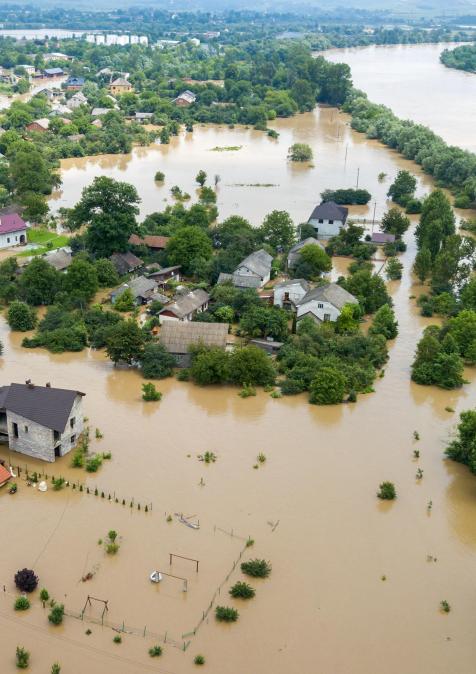 July 23, 2026As El Niño intensifies it generates apprehension among us all. The slow pace of the energy transition and continued carbon emissions have already put us on a trajectory toward an average air temperature rise of 2.8°C above pre-industrial levels (1850)—far exceeding the 1.5°C limit set by the 2015 Paris Agreement. ...
 -
 July 2, 2026Africa is facing a massive electricity deficit that is impacting its economic and social development, and its ability to catch up with the rest of the world. It is imperative that the continent increase its electricity production to connect the 600 million people who are currently without access and to improve the quality of service for the millions who are suffering from frequent blackouts and load-shedding. Economic development in the 21st century will crucially depend on the digi ...
 -
 June 30, 2026This episode explores Morocco’s green transition, examining the country’s progress in renewable energy alongside the challenges of reducing dependence on fossil fuels. It discusses the economic and social impacts of climate change, particularly on water, agriculture, and health, while h...
 -
 June 24, 2026Africa today remains far from food secure. Chronic malnutrition, widespread anemia among women of childbearing age, stunting and wasting among young children, pervasive underemployment in both rural and urban areas, and a youth bulge frustrated by high unemployment are key features of a continent that is seriously off track with respect to the SDG deadline: only 6% of SDGs have been implemented (Mo Ibrahim Forum, 2025).Despite this dismal progress, Africa can still achieve “The Afri ...
 -
June 3, 2026Cet épisode met en lumière les défis et perspectives du secteur halieutique marocain à travers l’analyse du Pr. Abdelkabir Kamili. Il souligne que la durabilité des ressources marines n’est pas un frein à la croissance économique, mais une condition essentielle pour garantir la performa...
-
 May 29, 2026This Paper was originally published on tandfonline.com This paper examines how reductions in transportation costs reshape regional economic and environmental outcomes in Morocco. We simulate a reduction in delivered (purchasers’) costs via a transport-margin efficiency improvement – implemented as a margin-saving technical change in the transport sector – within a province-level Spatial Computable General Equilibrium (SCGE) framework. Simulating a 1% decline in transport costs, ...
 -
 May 14, 2026Decarbonization is reconfiguring global relative prices. As clean energy, natural capital, and location-specific assets become dominant industrial inputs, the relative cost of producing low-carbon goods is increasingly determined by geography. Two systematic distortions explain why the expected reallocation of investment toward renewable-rich economies remains incomplete. First, industrial policy interventions, including subsidies, trade barriers, and certification systems, disconne ...
 -
 April 28, 2026Climate policy is increasingly reshaping the conditions under which firms participate in international markets. As some jurisdictions introduce carbon border adjustments, lifecycle emissions standards, and supply-chain traceability requirements, market access is starting to be made conditional on verifiable characteristics of production processes, such as carbon intensity, embedded emissions, and input sourcing, rather than solely on product characteristics or prices. This paper exa ...
 -
April 9, 2026Cet entretien explore le Nexus Eau-Énergie-Alimentation comme un défi systémique majeur pour le Maroc, dans un contexte de rareté croissante des ressources et de pressions sur la souveraineté. Il met en lumière les interdépendances critiques entre ces trois secteurs et les limites d’app...

