Présentation d'ouvrage : Dialogues Stratégiques (16ème volume)

October 24, 2024

Depuis 2016, le Policy Center for the New South et le Centre de Géopolitique de l’école HEC Paris organisent chaque année deux éditions des « Dialogues Stratégiques ». Cette plateforme d’analyse et d’échange réunit des experts, des chercheurs provenant de différents think-tanks et du monde académique, des praticiens, ainsi que des décideurs politiques pour débattre des grandes questions géopolitiques et sécuritaires à l’échelle internationale, ainsi que des problématiques d’importance commune à la fois pour l’Europe et l’Afrique.

Le cycle de séminaires a pour vocation d’offrir un environnement orienté vers les politiques publiques « policy-oriented », où les panélistes se réunissent dans un cadre interactif et constructif pour confronter et enrichir leurs analyses respectives. Cette collaboration est issue du partenariat tissé entre les deux centres de réflexion, en vue de favoriser le dialogue scientifique et multidisciplinaire et de contribuer à la production d’analyses pertinentes sur des problématiques majeures.

Dans la perspective de partager les fruits des échanges menés lors des séminaires avec les participants et les parties prenantes intéressées, les discussions et échanges font l’objet de « Policy Papers » qui sont regroupés au sein d’une publication conjointe.
Speakers
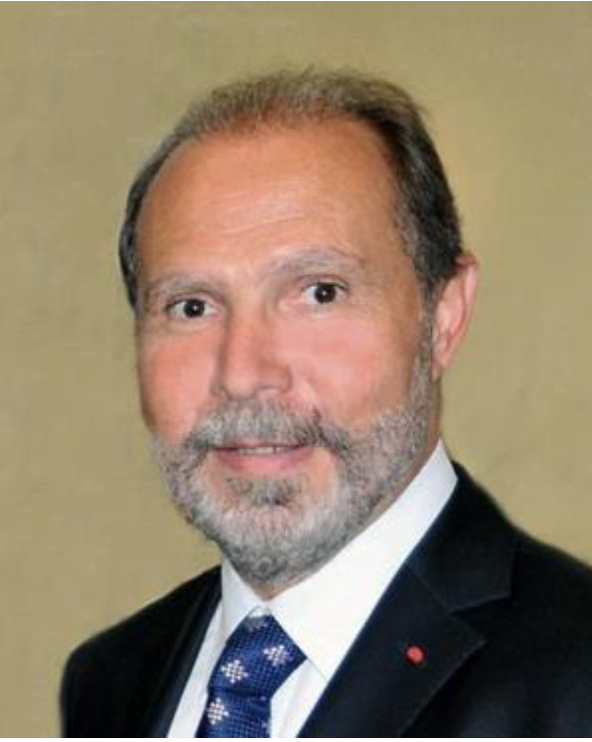
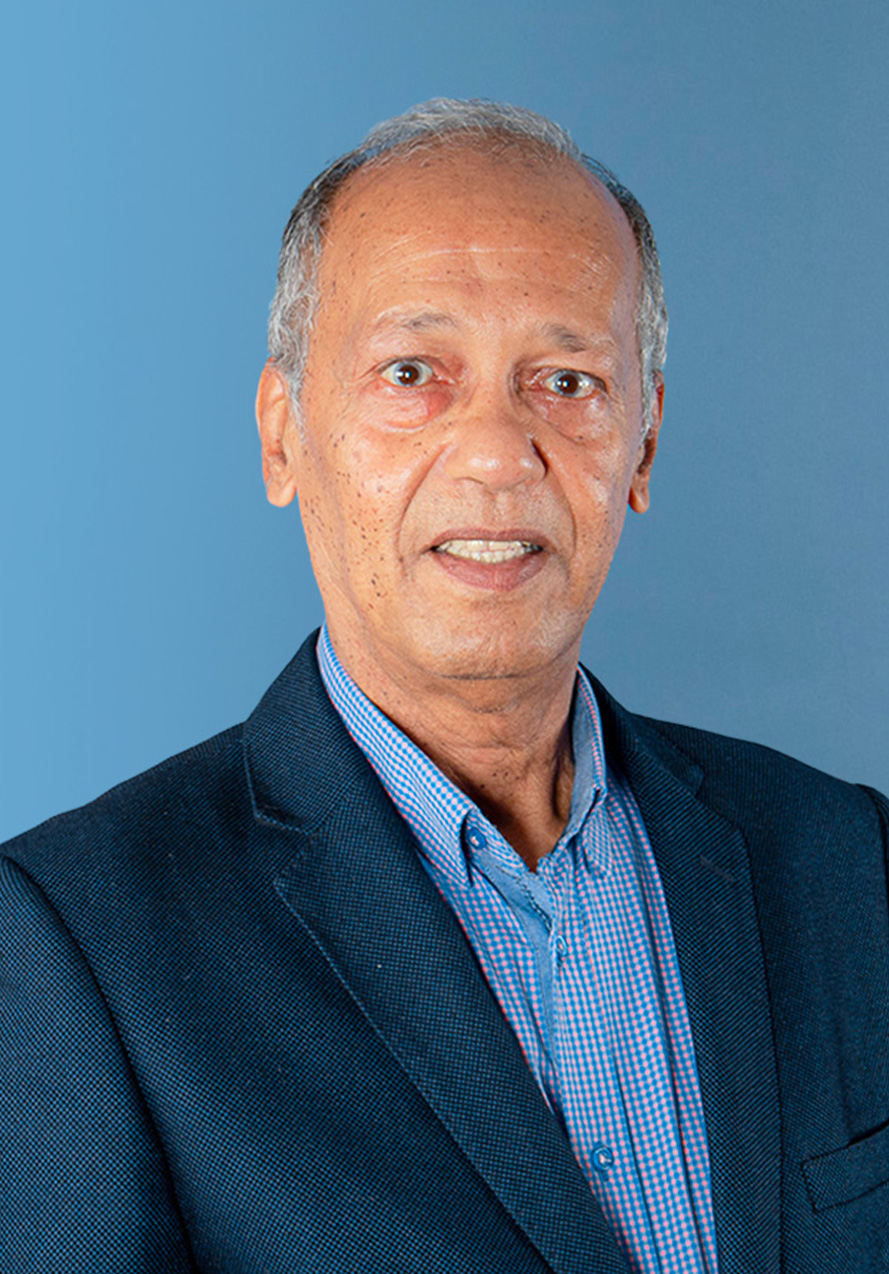
Abdelhak Bassou
Senior Fellow
Abdelhak Bassou is a Senior Fellow at the Policy Center for the New South and a non-resident senior fellow at the Atlantic Council’s Africa Center. He is also an Affiliate Professor at Mohammed VI Polytechnic University. Bassou has had an extensive career in Moroccan National Security, where he served in various capacities including as head of the border division from 1978 to 1993. He was the former director of the Royal Institute of Police in 1998 and served as Head of Regional Security (Errachidia 1999-2003, Sidi Kacem 2003-2005) and as Central Director of General Intelligence from 2006 to 2009.   He holds a master's degree in political science and international studies from the Faculty of Law, Economics, and Social Sciences in Rabat. His academic research delves into ...
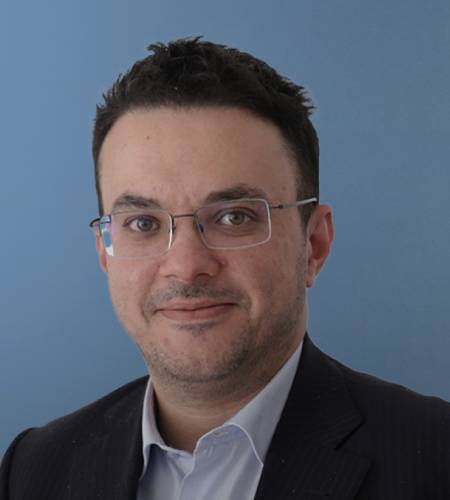
Driss Alaoui Belghiti
Senior International Relations Specialist
Driss Alaoui Belghiti is a Senior International Relations Specialist at the Policy Center for the New South (PCNS).At the PCNS, Driss Alaoui Belghiti focuses on governance issues in Southern Africa and the United States’ engagement on the African continent.He has notably contributed to the coordination of PCNS events and publications on African geopolitics, including the African Peace and Security Annual Conference (Apsaco).Before joining the PCNS in 2023, Driss Alaoui Belghiti worked in national public institutions and at the Pan-African Parliament.He holds a bachelor's degree in political science and international relations from the School of Governance and Economics in Rabat, Morocco, and a master’s degree in the Governance of International Development Organizations from th ...
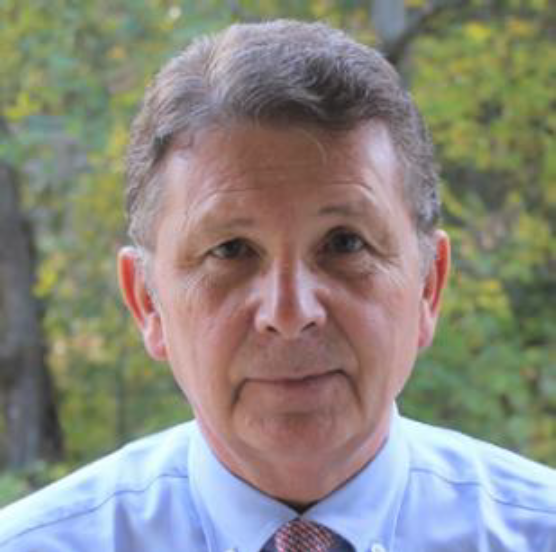
Pascal Chaigneau
Directeur du Centre HEC de Géopolitique
Professeur des Universités (classe exceptionnelle), Pascal Chaigneau est responsable du département de science politique de l’Université Paris V Sorbonne Paris Cité. A l’Ecole HEC, il est directeur scientifique du double diplôme HEC-Sciences Po, directeur de la Prep ENA et responsable du programme Business environment de l’executive MBA. Directeur de séminaire à l’Ecole de Guerre, il est expert relations internationales de la Marine Nationale et Directeur de la Chaire de Géopolitique de la Gendarmerie Nationale. Il a créé le Centre d’Etudes Diplomatiques et Stratégiques doté du statut consultatif auprès des Nations Unies. Avocat spécialiste en droit international, il est conseiller du commerce extérieur de la France et a été pendant dix ans administrateur de Radio France Inter ...
Thierry Garcin
Chercheur Associé, Centre HEC de Géopolitique
Politologue, chercheur associé à l’Université de Paris (École doctorale), professeur invité à la Sorbonne Abou Dhabi, Thierry Garcin privilégie l’approche géopolitique des relations internationales, avec un intérêt particulier pour l’arme nucléaire, les conflits armés et la notion de puissance. Docteur en science politique (HDR), il a notamment enseigné à Paris I, Paris III et à l’IEP. Maître de conférences à HEC, il vient de publier la seconde édition de Géopolitique de l’Arctique (Economica). Responsable de l’émission quotidienne de Radio-France, « Les Enjeux internationaux », durant 33 ans. Parmi ses publications : « La Fragmentation du monde », « La puissance dans les relations internationales », Paris, Economica, 2018. Géopolitique de l'Arctique, Paris, 2e éd., Economica, ...

RELATED CONTENT

  • May 13, 2026
    The meeting between Donald Trump and Xi Jinping in Beijing this week goes far beyond the traditional framework of a bilateral encounter between the world’s two largest economies. In many respects, it is a symbolic moment in the transition toward a new international order—one increasingly shaped not only by great-power competition but also by the Global South’s growing political consciousness and strategic relevance. ...
  • Authors
    May 6, 2026
    Trump’s Strategy of Overriding Constitutional SafeguardsPerhaps bearing in mind that only a minority of voters in the United States support U.S. military action against Iran, President Donald Trump has called the war a “short term excursion” and a “little journey” that may be over “pretty quickly”. The war is thus not a war, although Trump has said the U.S. will take Iran “back to the stone ages, where they belong”, and the U.S. military has admitted to attacks on 14,000 Irania ...
  • Authors
    Stephan Klingebiel
    Andy Sumner
    May 4, 2026
    This Opinion was originally published on policyedge.in The weakening of global institutions creates both risk and opportunity, placing India at the center of debates on reform and renewal.The global order is not collapsing outright but is gradually hollowing out, as institutions lose normative coherence and great power contestation reshapes rules from within. This moment of transition creates both risks of fragmentation and opportunities for redesign. For India, rising economic ...
  • April 29, 2026
    Cet oped a été publié initialement dans la revue afkar/ideas 77 (IEMed).  La politique étrangère du Maroc traverse une transition structurelle, sous l’effet de la polycrise mondiale, de la diversification de ses partenariats et de l’affirmation de nouveaux choix stratégiques. La centralité accordée aux notions de « hub », de « plateforme »ou de « corridor » traduit un glissement sémantique et fonctionnel dans le narratif national, accordant une priorité majeure aux considé ...
  • Authors
    April 21, 2026
    « C’est le moment me semble-t-il de sortir de cette dialectique de l’euphorie ou du désespoir pour entreprendre un effort de réflexion sur soi, sur notre situation dans le monde : se penser, se représenter, mener une réflexion critique sur ses propres réalités. Il est de la responsabilité des intellectuels, penseurs, artistes africains de mener à bien cette entreprise afin de dégager des horizons et contribuer à la transformation radicale des sociétés africaines » Felwin Sarr. Écriv ...
  • Authors
    Paul Isbell
    April 2, 2026
    PrefaceThis series of policy briefs, Pan-Atlanticism: The Atlantic Basin in a Multipolar-Transnational World, assesses the strategic significance—and potential—of the Atlantic Basin, when viewed and engaged with as a distinct and coherent region for international cooperation or governance, and as a potential arena of strategic competition, within a shifting structure of international power that is now moving from unipolarity to a new multipolar reality.The series began by tracing th ...
  • Authors
    April 1, 2026
    We are now in the fifth week since the U.S. airstrike that killed top leaders of the Iranian regime, initiating a war involving the United States and Israel against the country. More than a month of mutual bombardments between Iran and Israel has ensued, extending to other Persian Gulf nations, U.S. military installations—and even Cyprus. From a global perspective, the impact has stemmed primarily from disruptions to regional production of goods and the blockade of the Strait of Hor ...