Otaviano Canuto on Development Through Gender Equality

July 14, 2021

Otaviano Canuto, Policy Center for the New South Empirical evidence shows that gender inequality, including from legal gender-related restrictions, leads to the loss of growth opportunities, particularly in countries at earlier stages of development. The adverse effect of legal barriers to women’s participation in economic activities remains significant for countries at different stages of development. Time is now for investing in women and ensuring countries and the world can honor commitments and achieve the Sustainable Development Goals agreed upon to ensure a prosperous and sustainable world for generations to come.

Speakers
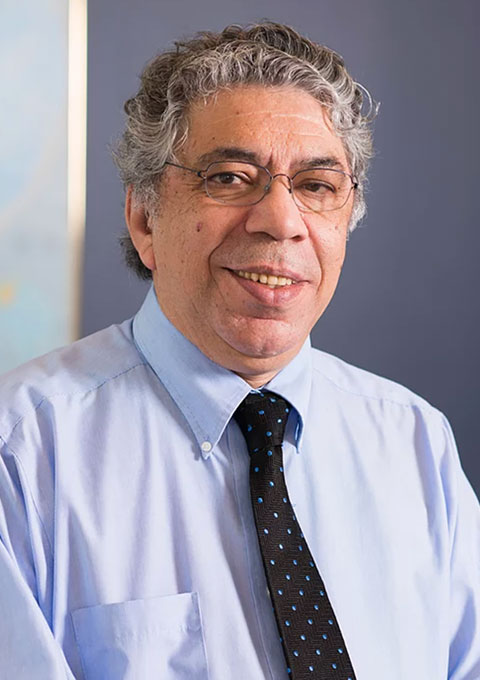
Otaviano Canuto
Senior Fellow
Senior Fellow at the Policy Center for the New South, Affiliate Professor at Mohammed VI Polytechnic University and Non-Resident Senior Fellow at Brookings Institute. Former Vice President and Executive Director at the World Bank, Executive Director at the International Monetary Fund (IMF) and Vice President at the Inter-American Development Bank. ...
RELATED CONTENT

  • Authors
    Hajar Kabbach
    May 11, 2026
    Closing Morocco's gender employment gap could increase GDP per capita by 40-50 percent; yet female labor force participation stands at just 19 percent—among the lowest in the world and still declining. This policy paper argues that investing in the care economy is not merely a social expenditure, but a productive economic strategy with measurable returns. Drawing on international evidence from Uruguay, Mexico, Colombia, and India, the brief demonstrates that well-designed care syste ...
  • April 28, 2026
    Cet épisode met en lumière les dynamiques de genre au Maroc, en soulignant l’écart entre les avancées juridiques et leur application concrète. Il aborde la baisse de la participation des femmes au marché du travail, liée à des contraintes multiples, ainsi que la faible reconnaissance du...
  • April 13, 2026
    Cette interview met en lumière les inégalités de genre persistantes au Maroc, malgré des avancées institutionnelles notables. Elle analyse les écarts dans l’accès à l’éducation, à l’emploi, à la santé et à la participation politique. À travers l’intervention de Fatima Mourd, elle soulig...
  • Authors
    Corinne Dufka
    Niccola Milnes
    December 8, 2025
    Although the crises affecting the Sahel have been widely analysed through the lenses of armed groups, state fragility and geopolitics, much less is known about how women experience insurgent governance in their everyday lives. This is particularly pertinent to members of the pastoralist Peuhl ethnic group, which has been strategically targeted for recruitment by the Central Sahel’s dominant Islamist armed group, Jama’at Nusrat al-Islam wal-Muslimin (JNIM), as a means of facilitating ...
  • Authors
    Zakaria Elouaourti
    August 7, 2025
    This paper was originally published on tandfonline.comYouth’s life paths have become increasingly challenging, especially for those classified as ‘Not in Education, Employment, or Training’ (NEET), who comprise 31.2% of North Africa’s youth population. This paper contributes to the growing discourse on the NEET phenomenon by exploring its structural and psychosocial dimensions in North Africa, with a specific focus on gender. Using a rich micro-level dataset of 7,815 individuals age ...
  • June 16, 2025
    This Paper was originally published on tandfonline.com This paper analyzes gender disparities in reading and mathematics among Moroccan 4th-grade students using data from PIRLS 2021 (7,017 students) and TIMSS 2019 (13,536 students). Using the Blinder-Oaxaca decomposition method, it separates performance gaps into explained (observable characteristics such as age, family background, teacher, and school factors) and unexplained (structural) components. In reading, the unexpl ...
  • March 08, 2024
    This podcast on Intersectionality and Feminism features Canadian advocate and 2022 Atlantic Dialogues Emerging Leader alumna Sydney Piggott. We explore the concept of intersectionality, i ...
  • March 07, 2024
    Despite the various progress recorded over the last decades, Morocco is still experiencing significant gender gaps. This is a cause of concern because countries with high gender inequalit ...