Les Politiques Economiques de Relance Post-Covid-19 : Regards Croisés

June 12, 2020

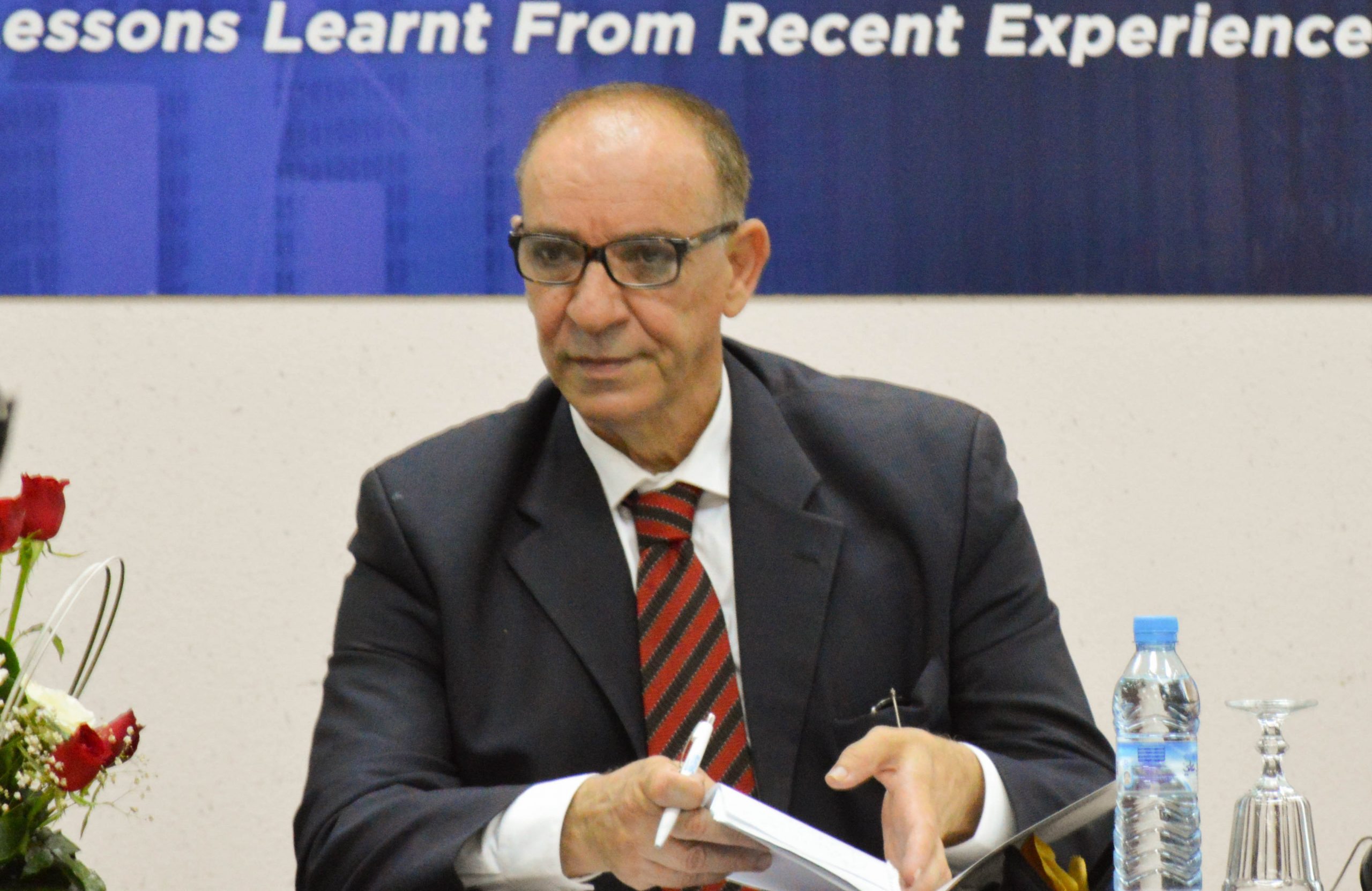
Le Laboratoire d’Economie Appliquée ( LEA) de la Faculté des Sciences Juridiques Economiques et Sociales Rabat - AGDAL en partenariat avec le Policy Center for the New South, a le plaisir de vous inviter à participer à la table ronde organisée sous le thème «Les politiques économiques de relance Post Covid-19 : Regards croisés », qui se tiendra le vendredi 12 juin 2020 à 18h00 (Heure de Rabat). Les politiques économiques de gestion de la crise issue du covid-19 sont en rupture avec les pratiques antérieures. Elles sont audacieuses et révèlent au grand jour la capacité des pays, quand ils mettent en stand-by les prêts à penser- orthodoxes-, à gérer des chocs extrêmes. Il s’agit maintenant d’examiner la capacité des politiques économiques de relance post Covid-19 à l’échelle internationale et au Maroc, de saisir cet effet de révélation, de le traduire en stratégies innovantes à même de reconstruire un Maroc social inclusif et durable.

Speakers
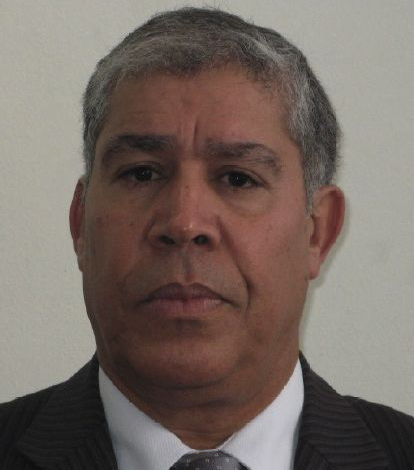
Abdelaaziz Ait Ali
Head - Research in Economics
Abdelaaziz Ait Ali is a principal Economist and head of the Research Department at the Policy Center for the New South. He joined the Center in 2014 after five years of experience at the Central Bank of Morocco. He worked as an economist in the International Studies and Relations Department and was analyzing the real estate price index and financial asset prices for monetary policy and financial stability purposes. Since then, Abdelaaziz has focused on cyclical and structural issues of the Moroccan economy, including macroeconomic management and industrial policy design. He has published articles on the reform of the exchange rate regime in the Moroccan economy and its implications for macroeconomic regulation, as well as on the evolution of the macroeconomic framework over th ...
Idriss El Abbassi
Professor of economics, Mohammed V University
Idriss El Abbassi is a Professor of Economics at Mohammed V University in Rabat and coordinator of the Master’s programme in economics. He holds a PhD from Florida State University, and his research focuses on open-economy macroeconomics, growth, and structural transformation. He teaches at both the Master’s and PhD levels and is a founding member of the Laboratory of Applied Economics. A former director of the EMPRETEC/UNCTAD programme in Morocco, he has also been a visiting professor in London. He co-authored Human Capital and Economic and Social Development in Morocco and has recently published in The Economic and Labour Relations Review and Structural Change and Economic Dynamics. ...
Lahcen Oulhaj
Laboratoire d'Economie Appliquée (LEA), FSJES Agdal
...
Larabi Jaïdi
Senior Fellow
Larabi Jaïdi is a Senior Fellow at the Policy Center for the New South and an Affiliate Professor at Mohammed VI Polytechnic University. His areas of expertise include international economy, economic policies, international economic relations, regional economies, social development, international relations, and Mediterranean studies. He also served on the Special Commission on the New Development Model of Morocco, a consultative body created in November 2019 to formulate the country's new developmental guidelines. Jaïdi is a former Professor at Mohamed V University in Rabat-Agdal and a founding member of both the Centre Marocain de Conjoncture and the Groupement d’Etudes et de Recherches sur la Méditerranée.   Prof. Jaïdi previously served as Advisor to the Prime Minist ...
Saïd Tounsi
Professor and Researcher, Mohammed V University
Saïd Tounsi is a Professor and Researcher at Mohammed V University in Rabat. A specialistin economic policies, particularly fiscal policy, he has authored several studies onpublic debt sustainability and exchange rate regimes in developing countries. He has alsoco-edited collective volumes on macroeconomic policies in Morocco. A former trainer atthe IGF and Bank Al-Maghrib, he combines academic expertise with institutional experiencein analysing national and international economic dynamics. ...

RELATED CONTENT

  • April 28, 2021
    There are three major reasons for central banks to engage on climate change issues. The first is the set of – physical and transition - risks to financial stability potentially brought about by natural disasters and trends derived from climate change. Second, the potential impact of cli...
  • April 26, 2021
    La Tunisie a fêté récemment le 10ème anniversaire de la révolution qui a mis fin à l’ancien régime bénalien et défini les principes de la IIème République. Ayant pour principales doléances la croissance économique et la justice sociale, la révolution tunisienne était exclusivement sociale. Or, l’appropriation de la révolution par l’Assemblée nationale constituante (ANC) et le quartet du dialogue national qui ont privilégié le chantier des réformes démocratiques au détriment des réfo ...
  • Authors
    Sabine Cessou
    April 26, 2021
    At 31, this Moroccan “impact tech” entrepreneur already has an impressive track record. She is not only the founder of Douar Tech, an inclusive tech hub that helps empowering young people and women with digital skills in rural and peri-urban areas in Morocco, but also spent 2020 in Kigali, working as a Project Manager on startups and ICT ecosystems for Smart Africa. This pan-African initiative of Paul Kagame, President of Rwanda, has 30 member countries working on a common digital ...
  • April 20, 2021
    Otaviano Canuto, Policy Center for the New South After peaking in 2007 at around 6% of world GDP, global current-account imbalances declined to 3% of world GDP in the last few years. But they have never left entirely the spotlight, albeit acquiring a different configuration from that wh...
  • April 14, 2021
    When the global financial crisis hit the international economy in 2008, central banks in major advanced economies widened their range of monetary policy instruments, increasingly resorting to unconventional tools. Initially to avoid a deepening of the financial destabilization and bankr...
  • April 13, 2021
    Technologies and Big Data in Shaping African Public Services: Towards Efficient Digital Solutions for Africa Social Good Can technology and digitalization improve and enhance the value we get from public services? Data can change the experience that individuals get from a public service...
  • April 6, 2021
    Les revenus sur la rive Sud de la Méditerranée sont de l'ordre d'un cinquième à un tiers de ceux de la rive Nord, des ratios qui n'ont pas beaucoup évolué au cours de la dernière génération. Ce n'était pas censé se produire. Le Processus de Barcelone, mis en place en 1995 en tant que partenariat entre l'Union européenne et les pays de l'est et du sud de la Méditerranée pour promouvoir la croissance et la stabilité dans la région, l'intégration économique grâce au commerce, à l' ...
  • April 6, 2021
    يخصص مركز السياسات من أجل الجنوب الجديد حلقته الاسبوعية لحديث الثلاثاء لمناقشة الانتعاش الاقتصادي وحملة التطعيم في المغرب، رفقة العربي الجعيدي، باحث بارز بمركز السياسات من أجل الجنوب الجديد. على الرغم أنه من المتوقع أن يؤدي الاختلاف في وتيرة برامج اللقاحات في جميع أنحاء العالم إلى تفاوت...