
RELATED CONTENT
-
 October 09, 2026Can Nigeria’s Dangote refinery help strengthen Africa’s energy security amid disruptions to global supply routes? This discussion considers how expanding local refining capacity can reduc ...
 -
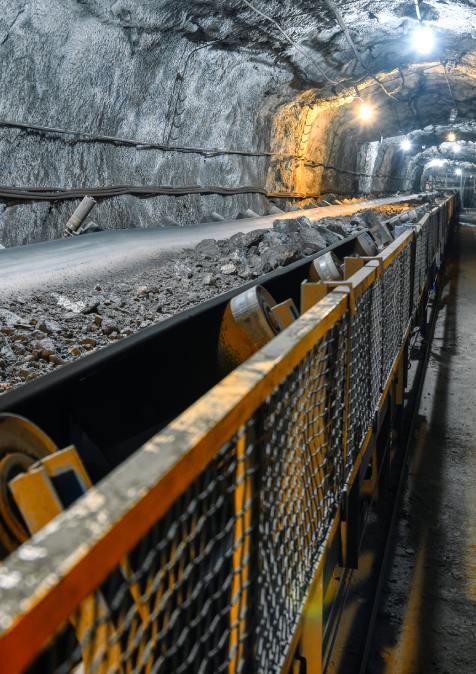 October 2, 2026Le Cameroun dispose d'importants gisements de minerais, notamment de fer, de la bauxite, d'or, de cobalt, de nickel, de manganèse, de calcaire, de marbre, de diamants, entre autres. L'industrie minière du pays est restée dominée par l'exploitation artisanale et à petite échelle, en particulier l'orpaillage, tandis que les hydrocarbures ont représenté l'essentiel des recettes issues des industries extractives. Le pays cristallise ainsi le paradoxe africain : malgré l’ampleur et la di ...
 -
 August 13, 2026Les crises récentes au Moyen-Orient, notamment les attaques ciblant les navires commerciaux en mer Rouge et les tensions autour du détroit d'Ormuz, ont mis en évidence la vulnérabilité des principaux corridors stratégiques du commerce mondial. Plus qu'un bouleversement de l'organisation des échanges, elles accélèrent une transformation déjà engagée, fondée sur la recherche de chaînes de connectivité plus résilientes, la diversification des itinéraires commerciaux et le développement ...
 -
 August 13, 2026The renewed instability in the Middle East has exposed Africa's continued vulnerability to external energy shocks. Shipping disruptions through the Strait of Hormuz, the maritime chokepoint through which roughly one-fifth of global oil and LNG supplies transit, have once again demonstrated that African fuel security remains highly dependent on geopolitical developments beyond the continent. While many African economies have traditionally relied on refined petroleum imports from Gulf ...
 -
 August 13, 2026Recent crises in the Middle East, particularly attacks targeting commercial vessels in the Red Sea and tensions surrounding the Strait of Hormuz, have highlighted the vulnerability of the main strategic corridors of global trade. Rather than fundamentally disrupting the organization of trade flows, these crises are accelerating an ongoing transformation driven by the search for more resilient connectivity chains, the diversification of trade routes, and the development of logistics ...
 -
 August 12, 2026La géographie mondiale des hydrocarbures n'est évidemment pas figée. De nouveaux producteurs de pétrole et/ou de gaz naturel apparaissent suite à des découvertes, le plus souvent réalisées par des compagnies pétrolières internationales. On pense notamment au Mozambique, qui produit et exporte du gaz naturel liquéfié (GNL) depuis la fin 2022, au Sénégal, qui est un producteur de pétrole offshore depuis la mi-2024, et au Sénégal et à la Mauritanie, qui sont devenus conjointement expor ...
 -
 August 5, 2026This paper addresses the persistent challenge of resource dependence in the world's poorest countries, focusing on the ten poorest African nations where natural- resource rents average 14% of income. It argues that four decades of conventional policy advice, which treated resource dependence primarily as a revenue management problem, have failed to help these countries. While stabilization funds and permanent-income frameworks aim to smooth consumption, they do not answer the fundam ...
 -
 July 3, 2026Este Policy Paper también ha sido publicado en inglés y francés por Le Grand Continent La economía marroquí constituye un caso ilustrativo entre las economías de renta media, en un contexto marcado por una creciente fragmentación del entorno internacional, un crecimiento mundial anémico y una desaceleración de la convergencia. Desde 2022, su trayectoria se caracteriza por una relativa solidez, con un crecimiento superior a la media de las economías de la misma categoría. Superi ...
 -
 July 3, 2026This Policy Paper has also been published in French and Spanish by Le Grand Continent Morocco offers a compelling example of how a middle-income economy can navigate a more fragmented global environment, characterized by weak growth and slower convergence. Since 2022, economic activity has remained relatively strong, with growth exceeding that of many comparable economies. Non-agricultural growth has averaged 4.4% since 2022, around 1.3 percentage points above its historical av ...
 -
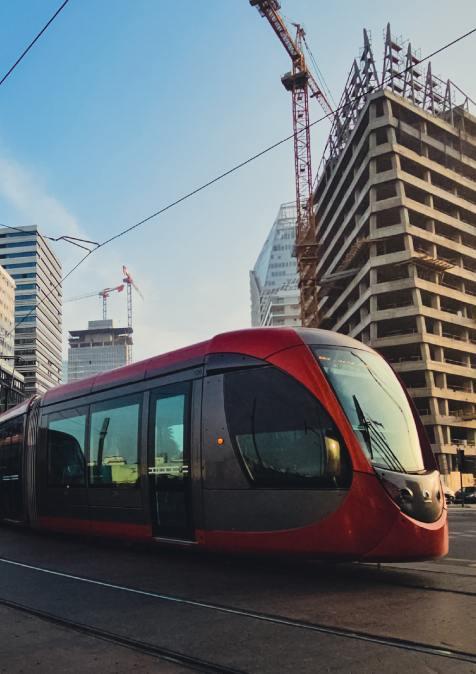 July 3, 2026Ce Policy Paper a également été publiée en anglais et en espagnol par Le Grand Continent Le Maroc offre un exemple éclairant parmi les pays à revenu intermédiaire, dans un contexte marqué par une fragmentation croissante de l’environnement international, une croissance mondiale atone et un ralentissement de la convergence. Depuis 2022, sa trajectoire se distingue par une certaine robustesse, avec un rythme d’expansion supérieur à celui des autres économies de même catégorie. Dé ...

