Interview with James G McGann "Africa Think Tank Summit 2018"

May 14, 2018

James G. McGann, Senior Lecturer and Director Think Tanks and Civil Societies Program, Lauder Institute, University of Pennsylvania

Speakers
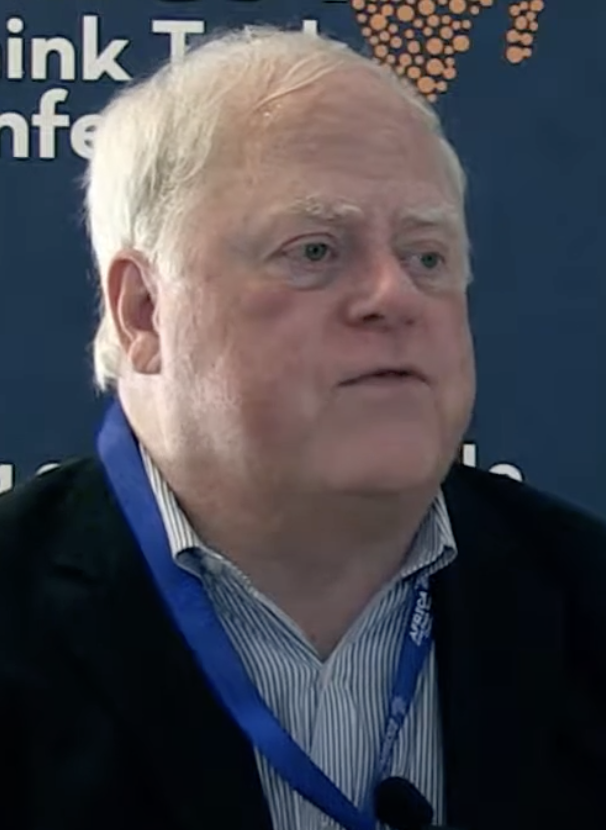
James G. McGann
Senior Lecturer and Director Think Tanks and Civil Societies Program, Lauder Institute, University of Pennsylvania
James G. McGann, Ph.D., is an FPRI (Foreign Policy Reseach Institut) Senior Fellow and Director of its Think Tanks and Foreign Policy Program. He isalso a senior lecturer in International Studiesat the Lauder Institute, director of the Think Tanks and Civil Societies Program (TTCSP) and senior fellow, Fels Institute of Governmentat the University of Pennsylvania. He conductsresearch on the trends and challenges facingthink tanks and policymakersaround the world and providesadvice and technical assistance to think tanks, governments and public and privatedonors on how to improve the quality and impact of policyresearch. Prior to coming to the Lauder Institute Dr. McGannwas assistant director of the International Relations Program, University of Pennsylvania. Hiscurren ...


RELATED CONTENT

  • Authors
    January 13, 2026
    This policy brief was originally published on : euromesco.net This paper examines the nexus between governance structures, digital transformation, sustainability, and port service efficiency through an international comparative lens, with a specific focus on the Tanger Med–Algeciras corridor in the strait of Gibraltar. Using global best practices—from Singapore to Busan and Kaohsiung—it explores how public-private coordination, digital innovation, and green transition policies ...
  • January 8, 2026
    Dans cet épisode d’Africafé, nous abordons la désinformation électorale et ses effets sur l’intégrité des processus démocratiques, la confiance du public et l’acceptation des résultats. À travers les interventions du Professeur Mohammed Benabid et de M. Fethi Debbabi, l’épisode analyse ...
  • January 6, 2026
    La création de l’Alliance des États du Sahel (AES) symbolise une rupture politique et géostratégique majeure, appuyée sur un discours souverainiste et anti-occidental. Deux ans après, Mali, Burkina Faso et Niger peinent à assurer leur intégrité territoriale, à stabiliser leur sécurité intérieure et à bâtir une gouvernance solide. L’intégrité territoriale est un problème commun aux trois États, car dans ces pays, la cohésion de l’État et le contrôle du territoire sont directement men ...
  • January 5, 2026
    This Paper was originally published on sciencedirect.com This study provides an original and significant contribution to evaluating educational service quality in Morocco by leveraging, for the first time, microdata from the Service Delivery Indicators (SDI) survey. The survey covers a nationally representative sample of 300 public and private primary schools across rural and urban areas. The use of SDI data represents a major methodological advancement, shifting away from perc ...
  • January 2, 2026
    Ce Policy Paper analyse les enjeux politiques, économiques et opérationnels du Fonds pour les pertes et dommages, créé pour répondre aux impacts climatiques irréversibles subis par les pays les plus vulnérables. Il clarifie d’abord la notion de pertes et dommages, qui mêle effets économiques et non économiques, et souligne les défis d’attribution liés à la superposition entre chocs climatiques et fragilités structurelles. L’analyse met ensuite en lumière les tensions d’économie poli ...
  • Authors
    with Sâ Benjamin Traoré
    December 31, 2025
    This report was originally published on fondapol.org For 50 years, the Western Sahara conflict has been pending before the international fora.In 1975, Morocco claimed sovereignty over this vast desert territory – which had previously been a Spanish colony – as it considered this territory had previously belonged to her. This view is contested by the Polisario Front, an independence movement supported by Algeria. The international community has adopted an ambivalent attitude, ac ...
  • Authors
    Niccola Milnes
    December 30, 2025
    Fuel access has become a strategic pressure point across Mali and its neighbors. In 2025, Jama’t Nusrat al Islam wal- Muslimeen (JNIM) shifted from sporadic interdictions to a deliberate fuel-blockade strategy intended to pressure Bamako without holding territory. By selectively constraining movement along the Sikasso–Kayes–Bamako corridor, the group turned fuel scarcity into a tool of coercion, governance, and narrative control—shaping behavior in the capital while remaining largel ...