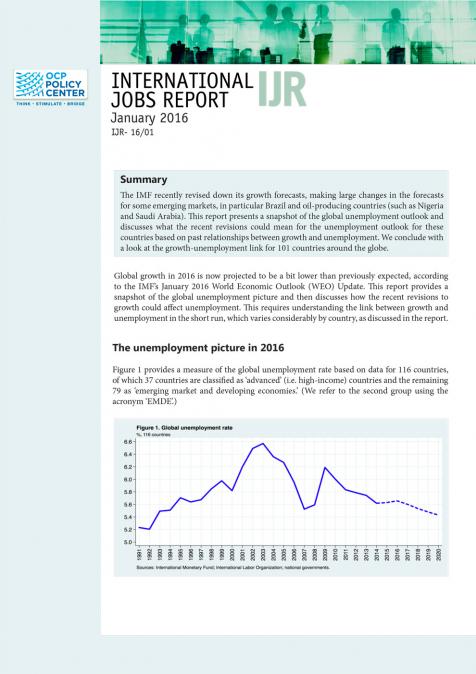
Interview : Ian Lesser - Senior Director for Foreign and Security Policy at the GMF

April 29, 2014

GMF - OCP Policy Center Joint Seminar Series Recent Developments in Turkey: Internal and External Implications

Speakers
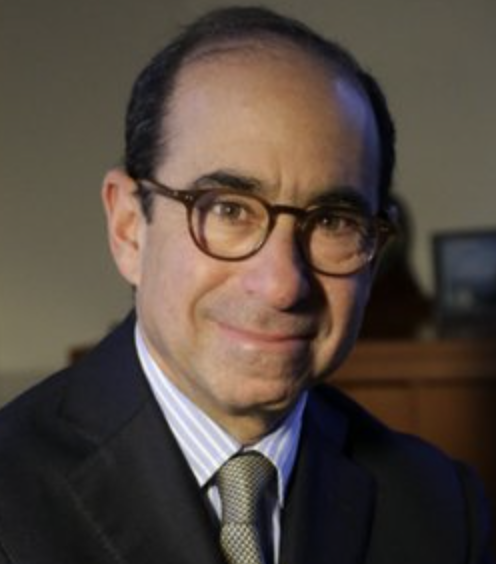
Ian Lesser
Vice President; Executive Director, Transatlantic Center, The German Marshall Fund of the United States, Brussels
Staff Expert Ian Lesser Vice President, Foreign Policy; Executive Director, Transatlantic Center Brussels Expertise: Policy, NATO / Mediterranean & Middle Eastern Affairs / North-South Relations / Terrorism / Proliferation / International Security & Geopolitics / Energy Related Topics: Security and Defense, European Union, Wider Atlantic, Mediterranean , Mediterranean Strategy Group, Turkey, Grexit, NATO, NATO and the Mediterranean, Understanding America Ian Lesser is vice president for Foreign Policy at The German Marshall Fund of the United States (GMF) and a member of GMF’s executive team, managing programs across the organization. He also serves as executive director of the Transatlantic Center, the Brussels office of GMF, and leads GMF’s work on the Mediterranean ...

RELATED CONTENT

  • Authors
    Sabine Cessou
    July 20, 2018
    Lors d’un séminaire, organisé par l’OCP Policy Center, le 20 juin 2018, à Rabat, des experts du jihad dans le Sahel se sont posé la question de l’extension ou du recul de ces groupes armés. La première partie du compte-rendu des discussions a été publiée ici. Selon Lemine Ould Salem, journaliste mauritanien et auteur de plusieurs livres sur le terrorisme dans le Sahel, « il n’existe pas historiquement de jihad sahélien, même si des épisodes historiques du jihad se sont dé ...
  • Authors
    Mokhtar Ghailani
    July 2, 2018
    Le tout dernier ouvrage qui vient d’être publié par l’OCP Policy Center, intitulé « Mutations politiques comparées au Maghreb et au Machrek, 7 ans après le ‘’Printemps arabe’’ », a fait l’objet d’une présentation au public, organisée le 27 juin 2018, à la Faculté des Sciences Juridiques, Economiques et Sociales de l’Université Mohammed V-Agdal- Rabat.  Mr Abdallah Saaf, qui a supervisé l’ouvrage, a ainsi partagé avec l’assistance de l’Amphi I la raison d’être de ...
  • Authors
    Mokhtar Ghailani
    March 30, 2018
    L’OCP Policy Center a eu la primeur de la présentation, par l’historien Jean Pierre Filiu, de son dernier livre « Généraux, gangsters et jihadistes. Histoire de la contre-révolution arabe », la toute première hors de son pays, la France. Une première dont il se réjouira au début du débat-échange autour de son ouvrage, tenue le 28 mars 2018, en partenariat avec l’Institut Français du Maroc. Habitué à faire appel à plusieurs disciplines scientifiques à la fois, telles que l ...
  • Authors
    February 23, 2016
    Deux des plus grands producteurs d'hydrocarbures en Afrique, le Nigeria sur l'Atlantique et la Libye sur la Méditerranée font face aux deux groupes terroristes les plus violents sur le continent. Daech version libyenne et Boko Haram semblent avancer pour se rejoindre dans un espace constitué par trois Etats qui présentent des vulnérabilités favorables à l'extension du terrorisme. Au Cameroun, le chao est à craindre dans l'après Biya. La battle fatigue peut atteindre l'Etat tchadien ...
  • Authors
    Kassim Bouhou
    September 17, 2010
    Before the 9/11 events, US-Maghreb relations were growing stronger, especially after the United States had long left the floor to the Maghreb’s “natural” European partner. Therefore the American action in this region was in line with a mechanism previously set off by Clinton Administration member, Stuart Eizenstat, which aimed at reducing intra regional obstacles and stimulating American investments towards an area where Americans were little-represented. Hence Washington seemed mor ...
  • Authors
    Radhi Meddeb
    September 17, 2010
    The Gulf Cooperation Council (GCC) is a regional organization which was created in 1981, reassembling six Arab countries together: Saudi Arabia, Kuwait, Bahrain, Oman, Qatar, and the United Arab Emirates (UAE). Thanks to their oil income, GCC countries have enjoyed economic boom since 2002, hence breaking with the 1990s economic slow-down. The year 2002 corresponds to the oil prices’ entry in an upward spiral which has resulted in an increase of both income and foreign assets. This ...