Interview avec Thierry de Montbrial, fondateur et Président de IFRI, sur l'état du monde

October 18, 2019

Questions : 1/ Finalement, est-ce que nous vivons dans un monde sans boussole ? 2/ Quels sont les domaines des relations internationales dans lesquels le recul du multilatéralisme se fait-il le plus sentir ? 3/ Dans la guerre froide technologique qui les oppose, Américains et Chinois s’affrontent-ils à armes égales ? 4/ En matière de dissuasion et de non-prolifération nucléaire, vous considérez que le glas a sonné pour la maîtrise des armements. Quelles pourraient en être les conséquences pour l’équilibre mondial ? 5/ Au Sahel, le terrorisme se nourrit des conflits locaux. Le G5 Sahel est-il outillé pour faire face à cette extension ?

Speakers

Thierry de Montbrial
Fondateur et Président de l’Institut Français des Relations Internationales, Fondateur et Président de la World Policy Conference, et Membre de l’Académie des Sciences morales et politiques
Thierry de Montbrial a créé l'Institut français des relations internationales en 1979 dont il est le Président. ll dirige également le rapport annuel de l’Ifri, RAMSES, et la revue Politique Etrangère. En 2008, il a lancé la World Policy Conference. Il est professeur émérite au Conservatoire National des Arts et Métiers. Il a été président du Centre franco-autrichien pour le rapprochement en Europe (1985-2015). Thierry de Montbrial siège au Conseil de plusieurs institutions et entreprises internationales. Il est notamment membre du Conseil d'Administration du CNAM et Président de l’IAB du Groupe OCP (Maroc), membre du Conseil d’Administration de la Fondation Renault. Il a également été membre du Conseil consultatif auprès du Secrétaire général de l’O ...

RELATED CONTENT

  • October 29, 2026
    Luiz Inácio Lula da Silva’s victory brings to an end one of the most closely contested elections in Brazil’s recent history. Before any broader analysis, however, a qualification is necessary. Supreme Court Justice Cristiano Zanin’s controversial decision to extend voting hours sparked debate over the electoral process. Although the measure was not mathematically decisive in Lula’s come-from-behind victory, the episode risks fuelling challenges to the result and further eroding poli ...
  • Authors
    October 29, 2026
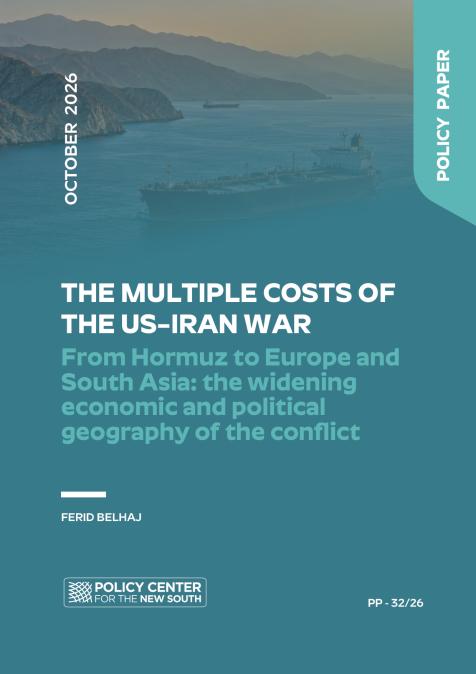
    Wars are decided by those who hold military power, but their costs are increasingly borne by those who have little or no voice in the decisions that start them. The US–Iran war shows this imbalance very clearly. Its economic consequences have gone far beyond the battlefield and have disrupted energy markets, trade routes, food supplies, public finances and investment in the Gulf, Europe, Africa and Asia. The most striking feature of the conflict, however, is not only the size of the ...
  • October 28, 2026
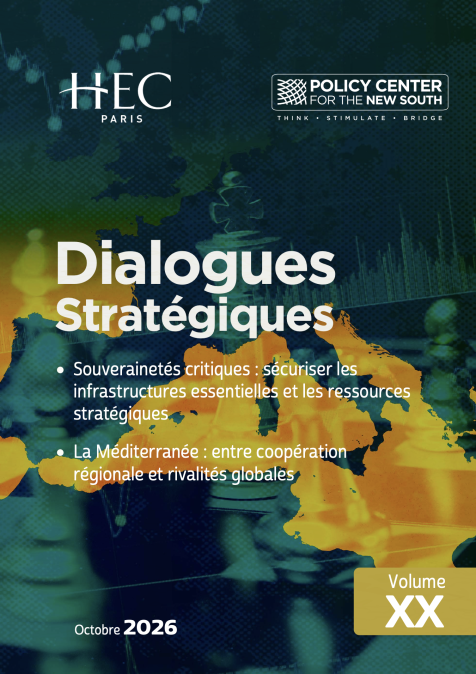
    Depuis 2016, le Policy Center for the New South et le Centre de Géopolitique de l’école HEC Paris organisent chaque année deux éditions des « Dialogues Stratégiques ». Cette plateforme d’analyse et d’échange réunit des experts, des chercheurs provenant de différents think-tanks et du mo...
  • Authors
    Niagalé Bagayoko
    Eugène Berg
    Pierre Berthelot
    Vincent Campredon
    Christophe Chabert
    Alain Oudot De Dainville
    Emmanuel Veron
    October 28, 2026
    Bientôt disponible en vente. Cet ouvrage est issu de la 20e édition des Dialogues Stratégiques, organisée le 6 mai 2026. Il s’articule autour de deux thématiques : « Souverainetés critiques : sécuriser les infrastructures essentielles et les ressources stratégiques » et « La Méditerranée : entre coopération régionale et rivalités globales ». La première partie examine les conditions dans lesquelles les États peuvent protéger leurs infrastructures et maitriser leur accès au ...
  • October 22, 2026
    Strategic hedging is rational when it preserves a worthwhile choice at a tolerable cost while respecting existing commitments. Drawing on the literature on hedging and Latin American autonomy, this Policy Brief examines contrasting illustrations of that proposition. It distinguishes ambiguity about future alignment from uncertainty about existing obligations and explains how clearly bounded commitments can reconcile autonomy with credibility. The cases reveal different vulnerabiliti ...
  • Authors
    Nizar Messari
    October 20, 2026
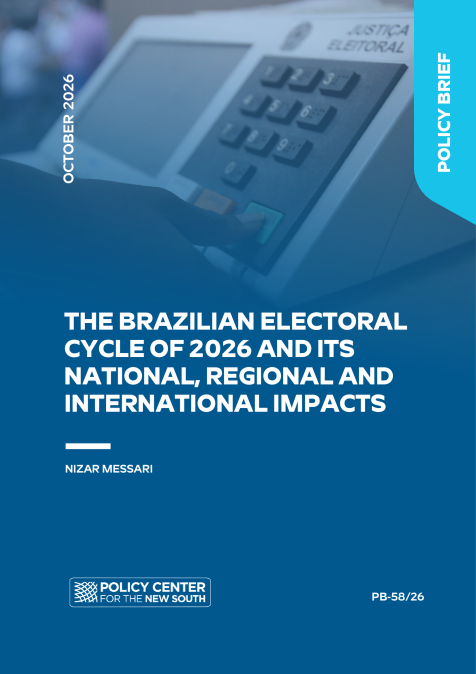
    In October 2026, Brazil will elect its president. It will also renew the entire lower legislative chamber and two-thirds of the upper chamber, elect governors in all states, and renew state legislatures. What will be the impact of these elections nationally, regionally, and internationally? Who are the main presidential candidates, and what are their agendas? What are the main challenges facing Brazil over the coming years? These are the questions that this Policy Brief seeks to ans ...
  • October 15, 2026
    The Policy Center for the New South, in partnership with The Asian Network, is organizing a webinar titled “Emerging Powers and the Remaking of Global Order” to examine the growing role of emerging powers and the Global South at a time of profound transformation in the international sys...
  • October 14, 2026
    في ظل التوترات الجيوسياسية المتصاعدة، تتغير طرق التجارة العالمية وتتبدل معها موازين الممرات الاستراتيجية. تفتح هذه الحلقة من «حديث الثلاثاء» النقاش حول التقاء المسارات البحرية والبرية داخل هذه الممرات، والعوامل التي تتحكم في طبيعة السلع التي تعبرها. وتبحث كذلك في ما يمكن للمغرب أن يجنيه...