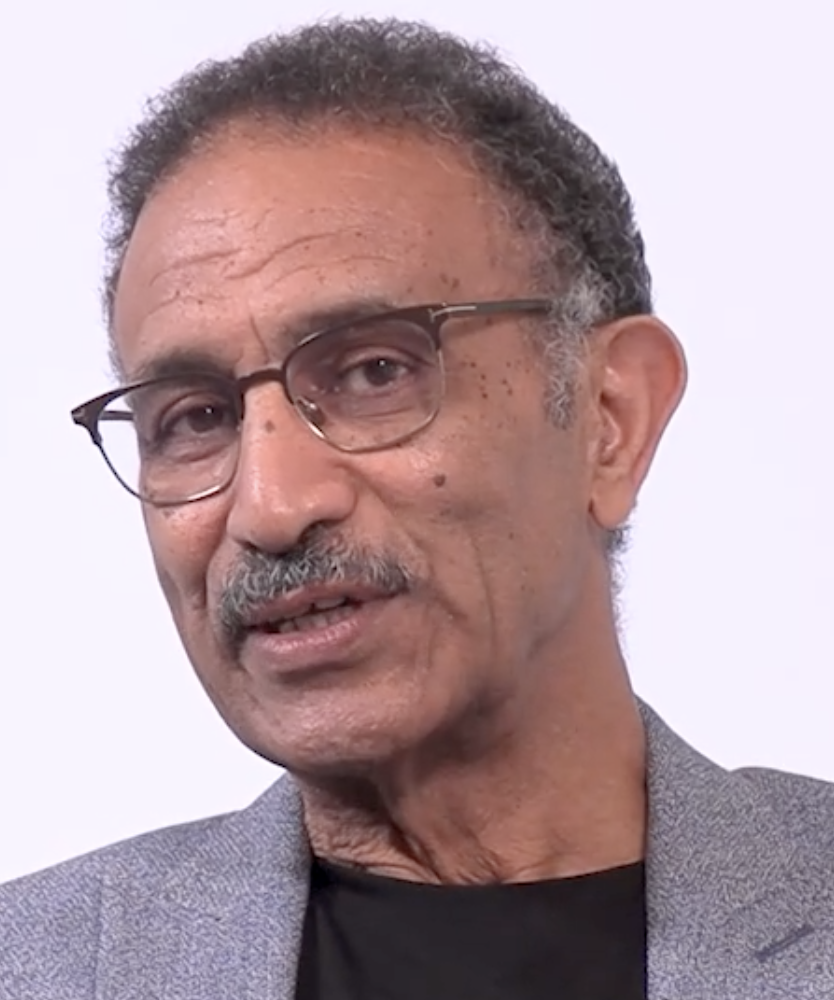
حديث الثلاثاء: الثقافة كقوة ناعمة: إفريقيا في قلب الهوية المغربية

October 7, 2025
Speakers
Ahmed Aydoun
Musicologue et docteur en économie de la culture
...

RELATED CONTENT

  • August 14, 2026
    In this Episode, Arup Banerji discusses why local expertise—not just international advice—should be intentionally embedded in African development policy. He cites cash transfer programs a ...
  • Authors
    Oussama Zennati
    August 4, 2026
    This paper was originaly published on Middle East Development Journal This article examines the impact of remittances on human capital formation, living conditions, and economic participation of women in North African countries. While prior research has explored remittances’ effects on women’s access to fundamental rights, it has not fully captured the social and economic transformations induced by these funds. Our findings indicate that remittances significantly enhance w ...
  • Authors
    Mohamed Benabid
    July 7, 2026
    The rise of generative artificial intelligence technologies is profoundly reshaping the dynamics of disinformation on a global scale. On the African continent, this development is unfolding against a particularly tense backdrop: accelerating digital adoption, persistent institutional vulnerabilities, and an unprecedented series of elections. Synthetic disinformation—deepfakes, automated content, coordinated campaigns—is not an isolated phenomenon there, but acts as a multiplier of p ...
  • July 3, 2026
    Depuis plusieurs semaines, l'Afrique du Sud vivait au rythme d'une échéance sans existence légale. Au 30 juin, des mouvements anti-immigration avaient fixé la date à laquelle les étrangers en situation irrégulière devaient, selon eux, avoir quitté le pays. Le gouvernement Sud-africain a même dû démentir qu'il s'agissait d'une directive officielle du ministère de l'Intérieur. L’initiative a pourtant produit des effets importants : des milliers de ressortissants mozambicains, malawite ...
  • June 30, 2026
    À l'échelle mondiale, les politiques publiques de jeunesse sont confrontées à un double enjeu : répondre à des défis socio-économiques structurels; chômage, précarité, fractures territoriales, tout en intégrant une demande croissante de participation citoyenne effective. (OIT, 2023 ; Nations Unies, 2020) En Afrique, ce défi revêt une dimension singulière compte tenu du poids démographique de la jeunesse et des fragilités persistantes des démocraties locales. (BAD, 2020 ; Mo Ibrahim ...
  • June 30, 2026
    Globally, public policies for youth face a twofold challenge: addressing structural socioeconomic challenges—such as unemployment, precariousness, and regional disparities—while accommodating a growing demand for effective civic participation. (ILO, 2023; United Nations, 2020) In Africa, this challenge takes on a unique dimension given the demographic weight of the youth population and the persistent fragility of local democracies. (AfDB, 2020; Mo Ibrahim Foundation, 2023)Elections ...
  • June 26, 2026
    In Morocco, the issue of young NEETs (Not in Employment, Education, or Training) is a national emergency, fueled by 300,000 students dropping out of school each year. In response to this challenge, the “New Generation Second Chance School” (E2C-NG) model has proven its effectiveness by achieving an exceptional employment rate of 81%.However, this institutional success rests entirely on a local network of organizations that is now under strain. A previously unpublished analysis of da ...
  • June 26, 2026
    Au Maroc, la problématique des jeunes NEETs (Ni en emploi, ni en études, ni en formation) constitue une urgence nationale, alimentée par 300 000 abandons scolaires annuels. Face à ce défi, le modèle de l'École de la Deuxième chance nouvelle génération (E2C-NG) a démontré sa pertinence en affichant un taux d'insertion exceptionnel de 81 %.Cependant, ce succès institutionnel repose intégralement sur un tissu associatif local aujourd'hui fragilisé. L'analyse inédite des donné ...
  • June 26, 2026
    Three years after the adoption of the first National Action Plan (NAP) on the Women, Peace and Security (WPS) Agenda, Morocco has made real institutional progress, but implementation is still inadequate. The extension of the NAP opens a window of opportunity to prepare a second, more ambitious and operational cycle.This Policy Brief identifies four persistent obstacles: a virtually stagnant female employment rate of 19.1%, less than 3% female representation in peacekeeping contingen ...