حديث الثلاثاء: آفاق التعاون بين كوريا الجنوبية و إفريقيا

July 29, 2022

يخصص مركز السياسات من أجل الجنوب الجديد حلقة برنامجه الأسبوعي "حديث الثلاثاء"   لمناقشة آفاق التعاون بين كوريا الجنوبية و إفريقيا مع المصطفى الرزرازي، الباحث البارز بمركز السياسات من أجل الجنوب الجديد.

شهدت العلاقات الكورية الإفريقية إنطلاقاً من العقد الأول من الألفية تطوراً ملحوظاً اتسم بإرتفاع مهم في مستوى المبادلات التجارية بين الجانبين و تكثيف وتيرة المشاورات السياسية بالإضافة إلى توقيع عديد من الاتفاقيات في مختلف المجالات السياسية و الاقتصادية و الثقافية . و هي الديناميكية التي تجلت على سبيل المثال  في تنظيم كوريا الجنوبية سنة 2022 لأشغال القمة الأفريقية الكورية الخامسة بحضور و مشاركة عدد من وزراء الخارجية الأفارقة و ممثلين عن الجماعات الاقتصادية الإقليمية.

و سنعود من خلال هذه الحلقة إلى أبرز محطات و عوامل تطور العلاقات الكورية الافريقية علاوةً عن أهم نتائج المنتدى كإطار تشاور مرجعي بين الجانبين و الأفاق المستقبلية لهذه العلاقات في ظل التوجه الرامي إلى تنويع الشركاء الخارجين من قبل الإتحاد الافريقي.     
Speakers
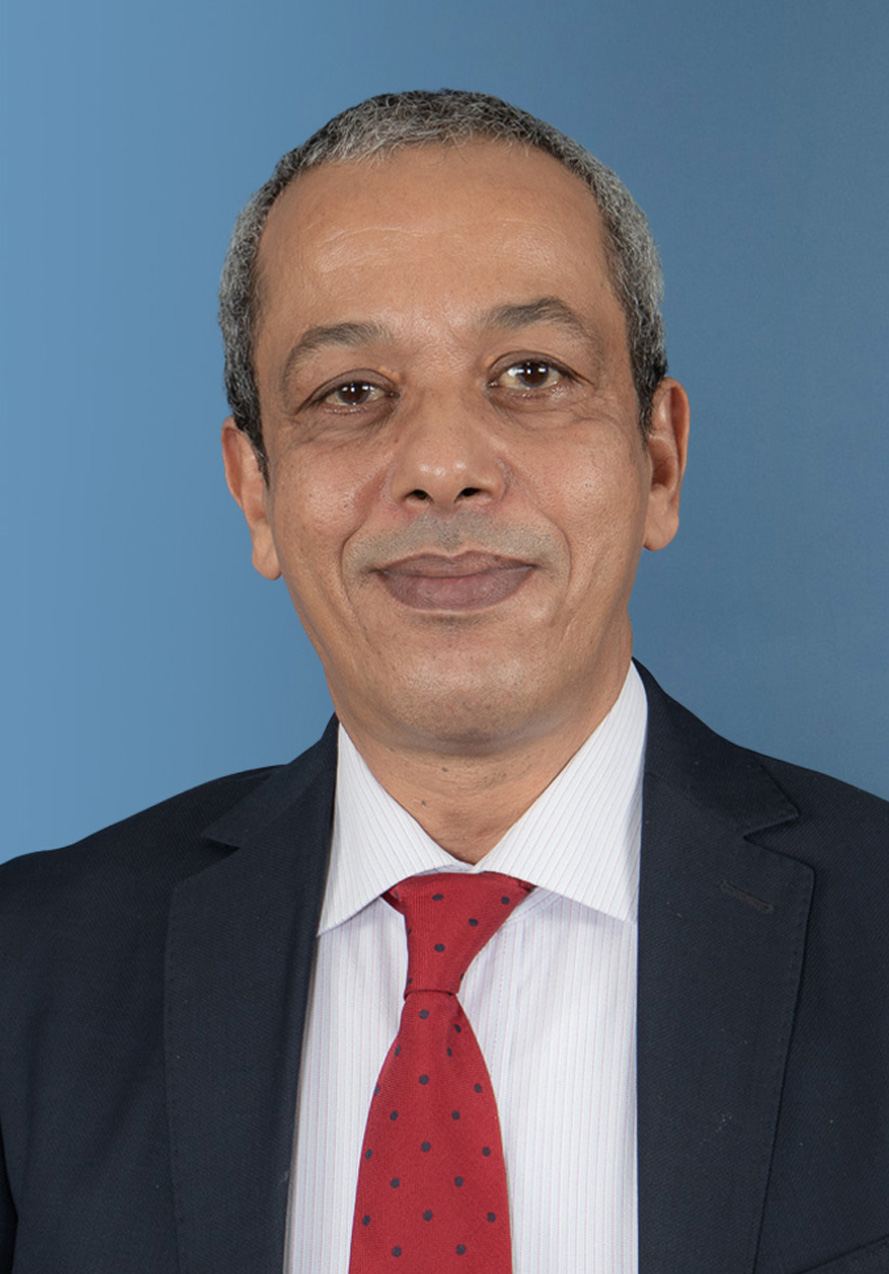
El Mostafa Rezrazi
Senior Fellow
Dr El Mostafa Rezrazi is a professor of Crisis Management, and Security Studies and a Senior Fellow at the Policy Center for the New South who focuses on Terrorism, Security and East Asia studies. His area of Expertise covers Afro-Asian Affairs, Strategic & Security Studies, Terrorism, Extremism and Deradicalization, mainly from the view of Criminal; Legal and Forensic Psychology.  He got his Ph.D. in Regional & International Affairs from the University of Tokyo in 1998, and later a Doctorate from the University of Mohammed V on the Psychological dynamisms of Suicide Bombers (2014). He is the executive director of the Moroccan Observatory on Extremism and Violence, Director of the African Center for Asian Studies, Rabat. Currently, he is Visiting Professor a ...
Oussama Tayebi
Senior International Relations Specialist
Oussama Tayebi is a Senior International Relations Specialist at the Policy Center for the New South (PCNS).At the PCNS, Oussama Tayebi primarily conducts research on governance, peace, and security issues in Central Africa. Before joining the PCNS in 2019, Oussama Tayebi contributed to the activities of the UN Women’s multi-country office for the Maghreb and the Paris office of the ONE Campaign (NGO), providing support for advocacy initiatives on the Africa-EU partnership and official development cooperation issues.Oussama Tayebi holds a bachelor’s degree in political science from the School of Governance and Economics in Rabat, Morocco, and a master’s degree in international relations from Sciences Po Aix, France.Oussama Tayebi is fluent in Arabic, English, and French. ...

RELATED CONTENT

  • Authors
    Youssef Amrani
    December 22, 2015
    The geopolitical situation currently prevailing in the Mediterranean region is difficult and complex, notably due to the emergence of a new strategic equation raising fears about a new outbreak of violence. In this troubled context, Morocco, under the leadership of HM King Mohammed VI, has been engaged in a democratic process, based on an inclusive approach that he leads with faith and determination. The Mediterranean indeed retains a triple vocation of being an intercultural refer ...
  • May 22, 2015
    Le Maroc dispose d’un espace maritime stratégique grâce auquel il peut renforcer ses attributs de puissance. Cet atout géopolitique et économique doit être porté par une véritable ambition nationale maritime. Quels sont les défis sécuritaires à surmonter et quelles sont les opportunités qui s’offrent aux Maroc sur le plan géopolitique? Autant de questions qui interpellent pouvoirs publics et think thanks nationaux. A ce titre, OCP Policy Center organise un Colloque sur la ...
  • Authors
    Lea Metke
    March 13, 2015
    Le 2 décembre 2014, l’Institut français des relations internationales (Ifri) et l’OCP Policy Center ont organisé un séminaire intitulé « Des émergents au défi du retour de la géopolitique : regards croisés économiques et géopolitiques » à Rabat. Intervenants et experts se sont réunis pour discuter du rapport entre émergence et puissance à travers plusieurs études de cas: Chine, Russie, Turquie et Maroc. Chine : une puissance qui peine à s'assumer Après la crise ...
  • Authors
    Mohamed Mouline
    January 1, 2014
    L’Afrique du Sud est une république fédérale, fondée sur une démocratie parlementaire. Avec une superficie de 1,2 million de km² et une population de 50 millions d’habitants, elle est la première puissance économique du continent africain, représentant, à elle seule, 30 % du PIB de l’Afrique Subsaharienne et 66 % de celui de l’Afrique Australe. Son PIB est de 420 milliards de dollars et son PIB par habitant est de 5 860 dollars. Ce pays est parvenu à réinsérer son économie dans les ...
  • Authors
    Ian Lesser
    November 18, 2013
    This policy brief argues for a closer relationship between Morocco and the United States. Morocco’s geo-economic position is evolving in ways that will shape U.S. and international interests in the country and open new avenues for cooperation. Key drivers of change in this context include Morocco’s stake in greater economic integration in the Maghreb, a growing role in Africa, new energy and infrastructure projects, and the emergence of Morocco as a hub for communications around th ...
  • Authors
    Abderrahmane Mebtoul
    April 1, 2011
    Pièce maîtresse dans la région euroméditerranéenne, le Maghreb est sollicité par l'Union européenne, et plus récemment par les Etats-Unis, dans le cadre d'une compétition entre ces deux pôles dans leur recherche d'une hégémonie économique. Plusieurs années après que l'Accord d'Association avec l'Europe est entré en vigueur, a-t-il permis une coopération économique, financière et sociale orientée vers une véritable accumulation du savoir-faire organisationnel et technologique ? Quell ...
  • Authors
    François Gemenne
    March 1, 2011
    This paper analyzes the future of migrations related to climate changes and environment degradations. He shows how the dominant public reasoning remains inappropriate for addressing these issues, because of the Western/Northern countries' misconception of the relation between migration and environmental changes, including the cultural and political biases these countries show in the solutions they propose. The discrepancy between public policies and the actual reality of climatic an ...
  • From

    13
    8:30 am October 2026
     Agriculture across the Global South is undergoing a period of profound transformation. Countries are seeking new approaches to improve productivity, strengthen food and nutrition security, build climate resilience, enhance rural livelihoods, and create more inclusive and sustainable agri-food systems. In this context, South-South Cooperation (SSC) has emerged as an increasingly relevant mechanism for accelerating agricultural transformation, enabling countries to exchange technologies, policy experiences, institutional models, and locally adapted innovations. Unlike conventional models of technology transfer, South-South cooperation offers opportunities for countries to learn from solutions that have been developed and tested in contexts with similar agro-ecological, soc ...
  • From

    10
    5:30 pm September 2026
    This episode of Africafé features H.E. Abdisaid Muse Ali, former Somali Foreign Minister, discussing Somalia's federal system tensions, the decline of Western support for peacekeeping missions, the Ethiopia-Somaliland MOU dispute over Red Sea access, and the growing role of Turkey and Gulf states in the region. He calls for durable political settlement and greater African ownership of security solutions. ...
  • From

    02
    5:30 pm July 2026
    This episode explores Russia’s growing influence in Africa through media, information warfare, and anti-Western narratives. It examines how Moscow uses historical ties, social media, local influencers, and security partnerships to shape perceptions, while questioning the real scope and long-term impact of its presence on the continent. ...