
When this interview was recorded, Argentina had just sworn in a new president of the Nation, raising many questions about the political future of the South American country. The freshly installed Head of State had led a peculiar campaign, had promised to slash government spending, in a country where half the population receives support from the State. His radical rhetoric against the political elite had galvanized the youth, but also contributed to stoke fear on the future of democracy in Argentina. In this interview, Camila Crescimbeni, former MP and member of the ADEL 2023 cohort, answered questions on her own political engagement and on her perception of what the close future of Argentina might look like.
RELATED CONTENT
-
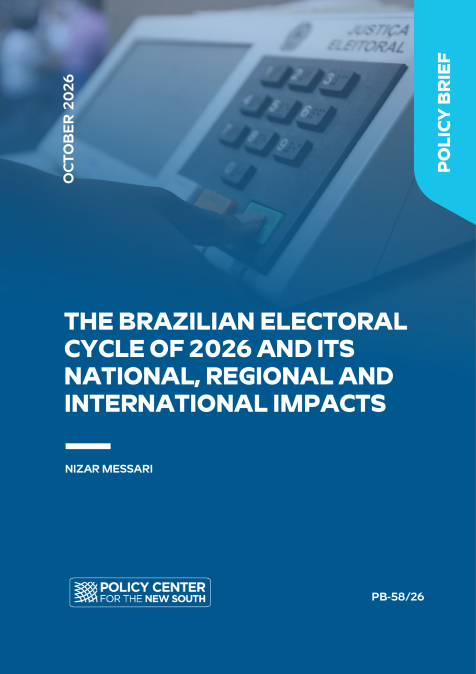 October 20, 2026In October 2026, Brazil will elect its president. It will also renew the entire lower legislative chamber and two-thirds of the upper chamber, elect governors in all states, and renew state legislatures. What will be the impact of these elections nationally, regionally, and internationally? Who are the main presidential candidates, and what are their agendas? What are the main challenges facing Brazil over the coming years? These are the questions that this Policy Brief seeks to ans ...
 -
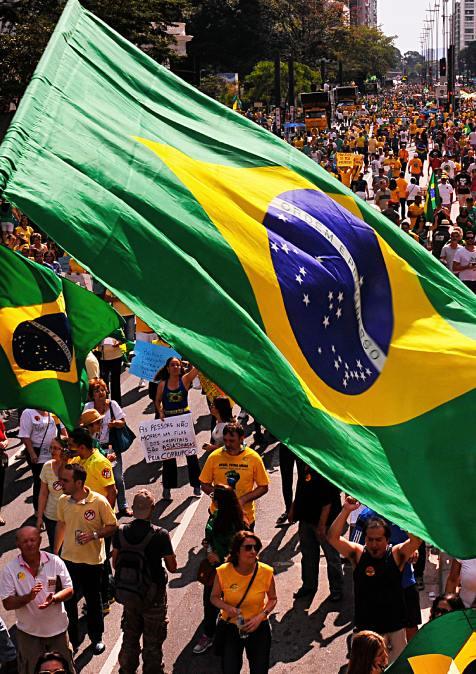 October 7, 2026Brazil's election poses a question that extends well beyond Latin America: how much freedom does a country retain to define its international role when external pressure collides with domestic political exhaustion? For the Global South, the answer matters more than any foreign government's preference regarding the next occupant of the presidential palace. Strategic autonomy remains fragile if every change of government puts a country's freedom of action back up for negotiation. ...
 -
 October 02, 2026Building on his Policy Brief "Latin America, World Politics and the Great Powers", Nizar Messari examines how recent developments are reshaping U.S. influence in the region and affecting ...
 -
 September 30, 2026You can imagine how often I've been asked to comment on where the Brazilian economy is headed after the election. With polls pointing to a runoff on October 25 and currently showing a statistical tie between Luiz Inácio Lula da Silva and Flávio Bolsonaro in vote simulations, I'm naturally asked about their economic programs and about the country's relations with the United States. ...
 -
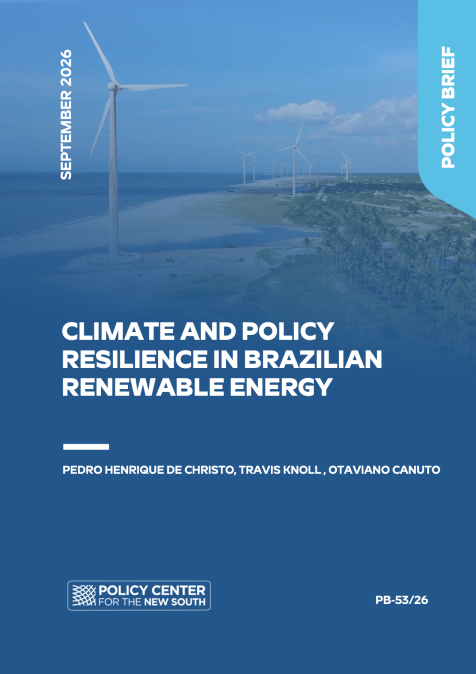 September 18, 2026The Brazilian context involving a clean-electricity base, a more balanced lobbying landscape, and mounting climate and social pressure, makes it more difficult for the kind of abrupt and unrestrained energy policy swing seen in Colombia. The trend in Brazil tends to be more economically viable for renewables. However, these structural conditions by themselves will not guarantee the success of the transition. Fruition will depend on whether policymakers use this window to prepare for ...
 -
 August 12, 2026La géographie mondiale des hydrocarbures n'est évidemment pas figée. De nouveaux producteurs de pétrole et/ou de gaz naturel apparaissent suite à des découvertes, le plus souvent réalisées par des compagnies pétrolières internationales. On pense notamment au Mozambique, qui produit et exporte du gaz naturel liquéfié (GNL) depuis la fin 2022, au Sénégal, qui est un producteur de pétrole offshore depuis la mi-2024, et au Sénégal et à la Mauritanie, qui sont devenus conjointement expor ...
 -
 July 13, 2026On “marinetraffic.com”, thousands of triangles fill a map of the world’s ports and oceans, each representing the active location and destination of a ship, reported the “McGill International Review” (April 16, 2026) adding,” suspicious tankers are plentiful among them.” One of these vessels, marked by a red triangle, appears, zoomed, as “Monique”, a twenty-year-old vessel, aka Tokyo, Phuket and Elysia. Its old age and the frequent name change, suspects reporter Julnar Alzuki, “indic ...
 -
 June 16, 2026The Policy Center for the New South (PCNS) and the Mexican Council on Foreign Relations (COMEXI) organized a joint webinar under the theme “Protecting Migrants’ Rights under Externalized Migration Control: A Comparative Dialogue between Morocco and Mexico” on June 4, 2026. Migration go...
 -
May 12, 2026This third episode of the series on social protection in Latin America explores the governance and financing mechanisms needed to build sustainable and resilient social systems. The discussion highlights regional lessons on fiscal sustainability, digital governance, and institutional co...
-
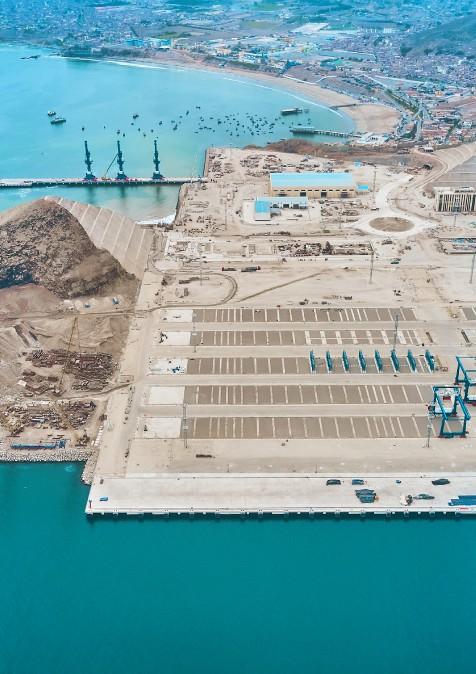 April 30, 2026The commercial and geopolitical interdependence between China and Latin America makes any U.S. claim to promote a "decoupling" between them impractical. Digital technologies and critical minerals will be in the crosshairs of the North American National Security Strategy ...

