Foresight & the Complexity of the Future

September 18, 2023

The future in a rapidly evolving world is marked by both exciting possibilities and significant challenges. Technological advancements, shifting global dynamics, and changing societal expectations all contribute to a future that is difficult to predict with certainty. However, there are several key aspects to consider when contemplating what lies ahead. The pandemic and crises of recent years have had a profound impact on shaping our anticipation of the future. They have exposed vulnerabilities in our systems and highlighted the need for resilience and preparedness. What does the future hold for us in a world that’s evolving rapidly ? How did the pandemic and crises shape your anticipation of the future ?

Speakers

RELATED CONTENT

  • From

    11
    10:00 am November 2026
    Depuis 2021, le Policy Center for the New South, le Programme des Nations Unies pour le développement et le Groupe de la Banque mondiale portent conjointement l’initiative « Parlons Développement », une plateforme de réflexion collective sur les enjeux du développement durable au Maroc. Organisée avec différents partenaires, notamment du monde académique et de la société civile, cette plateforme destinée à la jeunesse vise à rapprocher les débats stratégiques de ses préoccupations et à favoriser le dialogue autour de réponses concrètes aux défis du développement.Dans cette continuité, la 25ᵉ édition de « Parlons Développement », organisée en partenariat avec la Faculté des Sciences Juridiques, Économiques et Sociales de l’Université Mohammed Premier d’Oujda, sera consacrée au ...
  • Authors
    Aziz Ajbilou
    Ouidade Sabri
    November 4, 2026
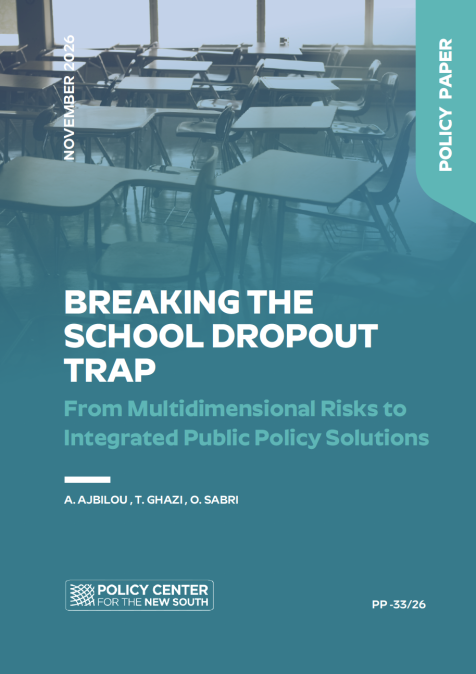
    School dropout remains a major challenge for education systems and public policy, with lasting consequences for human capital, labor market integration, social cohesion, and long-term economic growth. Despite sustained efforts to expand access to schooling, many countries continue to experience high dropout rates, particularly at key transition points in lower- and uppersecondary education. Policy responses have often relied on fragmented, sector-specific interventions—addressing ed ...
  • Authors
    Giovanna Rinaldo
    November 4, 2026
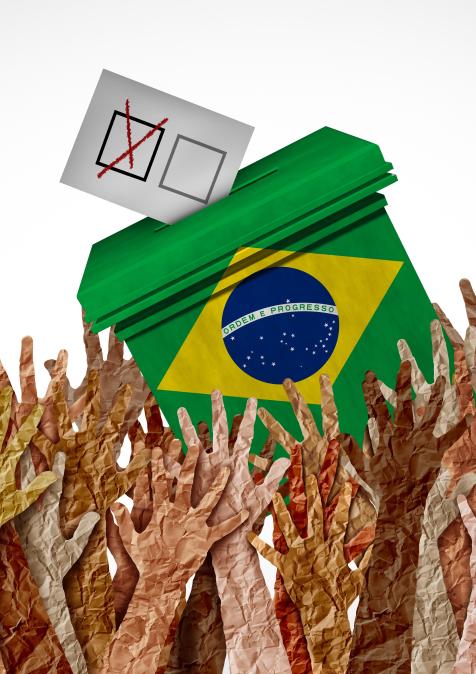
    Brazil’s presidential election, which concluded on October 25, 2026, was above all a digital battle. This is nothing new; the impact of social media on elections has been widely analyzed since Barack Obama's 2008 win marked a turning point for digital campaigning worldwide. Almost two decades later, social media is an entirely different breed, with a life of its own – and still very little regulation within electoral politics. The danger, however, is that digital players now also in ...
  • October 29, 2026
    Luiz Inácio Lula da Silva’s victory brings to an end one of the most closely contested elections in Brazil’s recent history. Before any broader analysis, however, a qualification is necessary. Supreme Court Justice Cristiano Zanin’s controversial decision to extend voting hours sparked debate over the electoral process. Although the measure was not mathematically decisive in Lula’s come-from-behind victory, the episode risks fuelling challenges to the result and further eroding poli ...
  • October 27, 2026
    تتناول هذه الحلقة من «حديث الثلاثاء» الطريقة التي يتصور بها الشباب المغربي مستقبلهم داخل المغرب وخارجه، من خلال «الخرائط الذهنية» التي تتشكل لديهم حول الهجرة. كما تناقش دور الأسرة والمدرسة والمحيط الاجتماعي وشبكات التواصل في صياغة نظرتهم إلى الفرص والطموحات وخيارات التنقل، وتتوقف عند ال...
  • Authors
    October 27, 2026
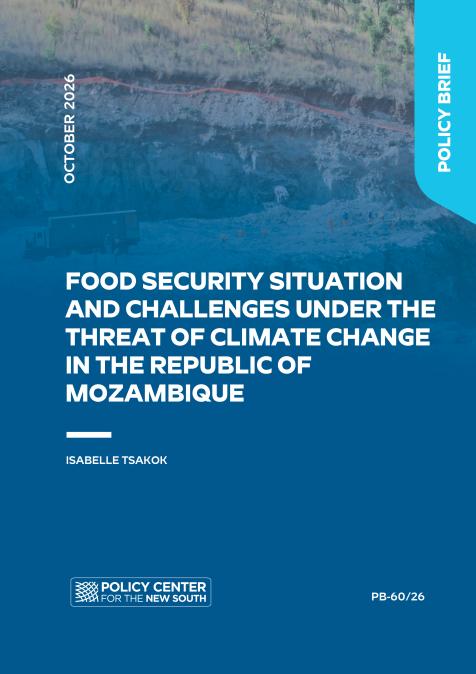
    Mozambique’s extractive-industry development model is a textbook case of how enormous FDI funds derived from its rich mineral base have not been leveraged to   promote inclusive economic growth and generate food security for all. It is a textbook case of the resource curse.  Instead, only a few have benefitted, leaving the poor and vulnerable, who constitute the vast majority, to struggle unassisted. These include smallholders in subsistence-oriented agriculture ...
  • October 23, 2026
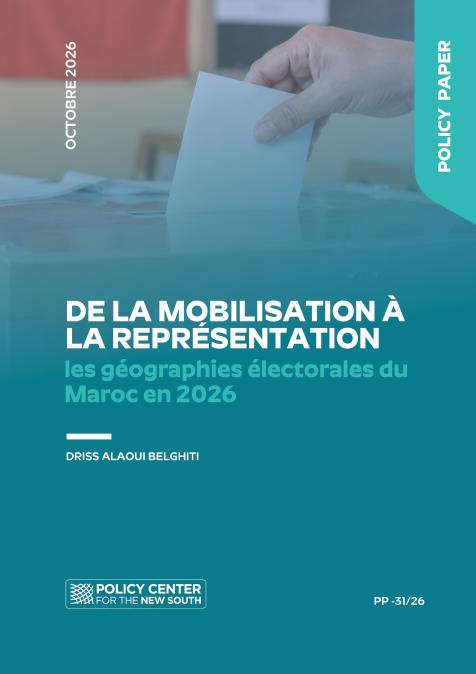
    Ce Policy Paper analyse les élections législatives marocaines du 23 septembre 2026 à travers l’articulation entre participation, implantations partisanes et conversion des suffrages en sièges. Il s’appuie sur les résultats des 92 circonscriptions locales, les données démographiques et socio-économiques du Haut-Commissariat au Plan et une comparaison avec le scrutin régional. L’analyse met en évidence une mobilisation très inégale, marquée par la faible participation de plusieurs gra ...
  • Authors
    Nizar Messari
    October 20, 2026
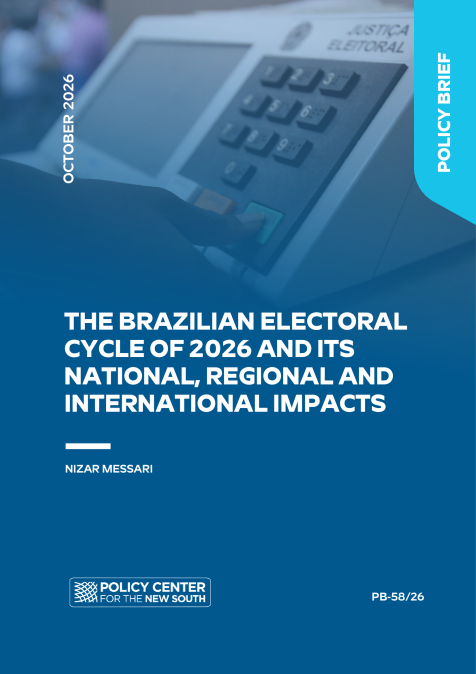
    In October 2026, Brazil will elect its president. It will also renew the entire lower legislative chamber and two-thirds of the upper chamber, elect governors in all states, and renew state legislatures. What will be the impact of these elections nationally, regionally, and internationally? Who are the main presidential candidates, and what are their agendas? What are the main challenges facing Brazil over the coming years? These are the questions that this Policy Brief seeks to ans ...
  • Authors
    Chaimae Bourjij
    October 16, 2026
    The author of this opinion, Chaimae Bourjij, is a 2019 alumna of the Atlantic Dialogues Emerging Leaders Program. An election result tells only part of a country’s political story. The rules that turn votes into seats also shape which voices reach Parliament, how local interests are represented, and whether any party can claim a clear mandate. Morocco’s 2026 vote invites this wider reading: not only who came first, but how the electoral framework distributes political ...