In this episode, we interviewed Mr. Arkebe Oqubay Metiku, British Academy Global Professor, SOAS University of London around Africa's industrial policies and their impact on growth. We discussed key elements such as innovation, regional collaboration, sustainability, and intellectual property protection. Mr. Arkebe shared his insights on pivotal sectors like technology, manufacturing, and services, highlighting their role in driving economic prosperity. We also addressed how industrial policies foster collaboration among African nations through regional value chains. The episode touched on the complexities of a green industrial strategy, examining trade-offs between economic growth, environmental sustainability, and social equity.
Speakers

Ahmed Ouhnini
Economist, Policy Center for the New South
Ahmed Ouhnini is an Economist at the Policy Center for the New South. His research area covers agricultural economics, human and social development. Previously, he has worked as a researcher at the Paris School of Economics (PSE) and has also a record of working in consulting services in Morocco. Ahmed holds an engineering Diploma in Agriculture and Rural Development from the National School of Agriculture of Meknes and a Master’s Degree in Law, Economics and Management from the Paris 1 Pantheon Sorbonne Institute of Development.
...
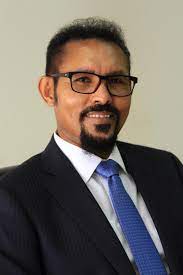
Arkebe Oqubay Metiku
British Academy Global Professor, SOAS University of London
Arkebe Oqubay (PhD) is a distinguished scholar-practitioner. He is a British AcademyGlobal Professor at SOAS University of London. He is a former Senior Minister and hasserved as a Special Advisor to three successive prime ministers of Ethiopia. He has been atthe centre of policymaking in Ethiopia for over 30 years, successfully leading bold reformsand playing a pivotal role in Ethiopia’s economic transformation. He is the former Mayorof Addis Ababa, recognized for transforming the city. He has led the boards of key publicenterprises, including Ethiopian Airlines. Dr Arkebe’s research focuses on structural transformation,catch-up, green transformation, and industrial policy with a focus on Africa. DrArkebe currently gives policy advice to, and consults for, African gover ...