Africafé: Electoral Reforms in Africa

September 19, 2024

Electoral processes in Africa face significant challenges that undermine democratic ideals. Despite ongoing efforts to enhance electoral integrity, many nations struggle to conduct credible elections. In this episode, Dr. Sharamo examines the current landscape of electoral reforms across the continent, addressing both the challenges and opportunities that exist. He analyzes how electoral processes have evolved, highlighting persistent issues that threaten democracy.

The conversation will explore regional disparities, focusing on varying political contexts and identifying countries that have made notable strides in electoral reforms. He will also examine the impact of digitalization and its effects on transparency and voter confidence, especially in areas with limited digital literacy. This discussion will provide insights into the future of democracy in Africa and the essential steps needed to build more resilient electoral systems.
Speakers
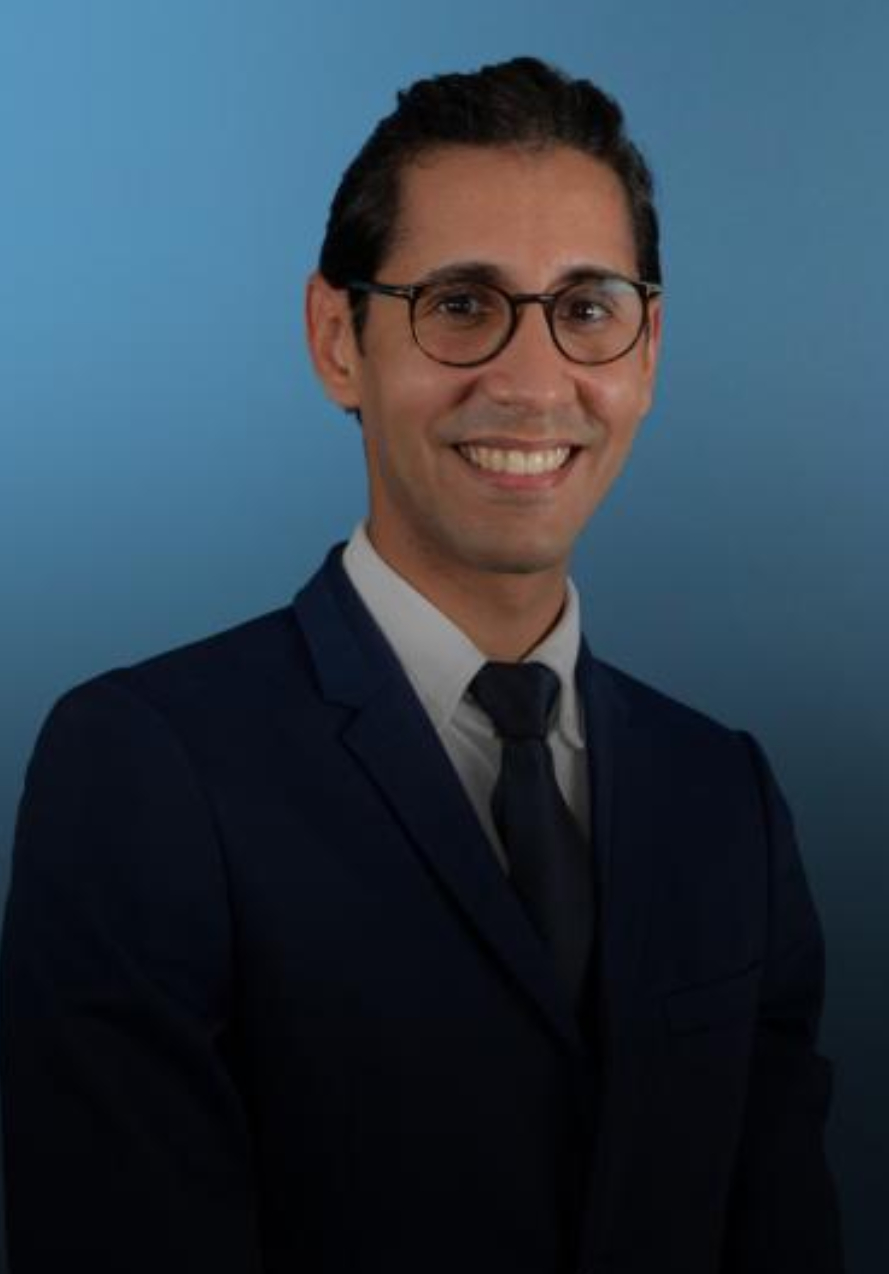
Ahmed Ouhnini
Economist, Policy Center for the New South
Ahmed Ouhnini is an Economist at the Policy Center for the New South. His research area covers agricultural economics, human and social development. Previously, he has worked as a researcher at the Paris School of Economics (PSE) and has also a record of working in consulting services in Morocco. Ahmed holds an engineering Diploma in Agriculture and Rural Development from the National School of Agriculture of Meknes and a Master’s Degree in Law, Economics and Management from the Paris 1 Pantheon Sorbonne Institute of Development. ...
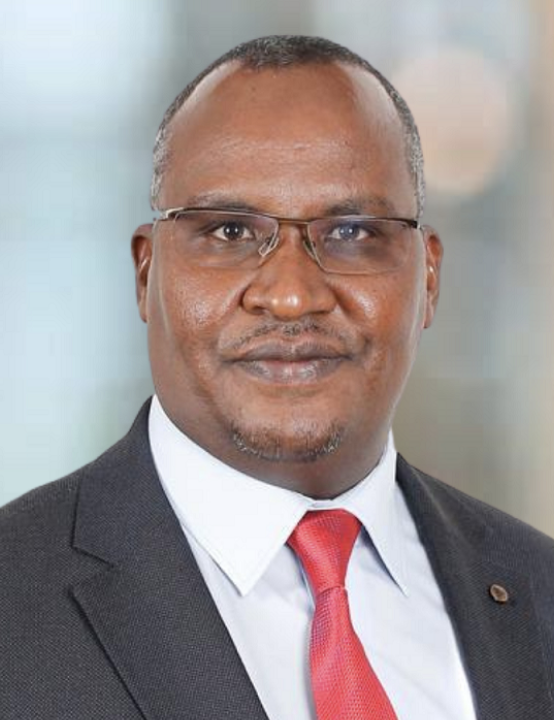
Roba Sharamo
Director of the International Institute for Democracy and Electoral Assistance  
...

RELATED CONTENT

  • Authors
    with Sâ Benjamin Traoré
    December 31, 2025
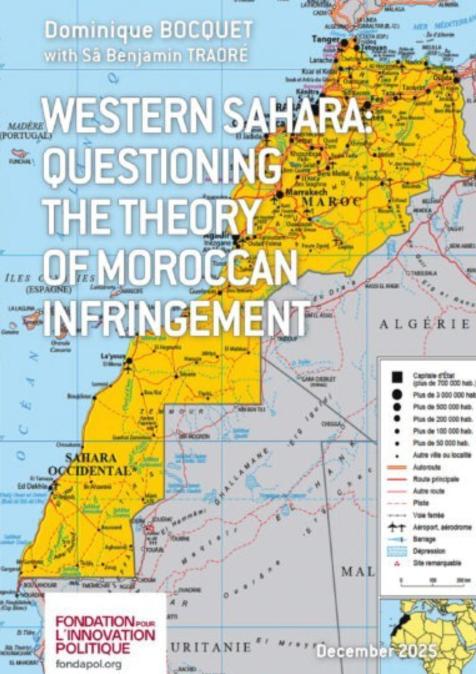
    This report was originally published on fondapol.org For 50 years, the Western Sahara conflict has been pending before the international fora.In 1975, Morocco claimed sovereignty over this vast desert territory – which had previously been a Spanish colony – as it considered this territory had previously belonged to her. This view is contested by the Polisario Front, an independence movement supported by Algeria. The international community has adopted an ambivalent attitude, ac ...
  • Authors
    December 3, 2025
    La résolution 2797 du Conseil de sécurité des Nations Unies ne marque pas la fin d’un dossier, mais l’aboutissement d’une gestion magistrale du temps. Le Maroc n’a pas seulement gagné des appuis, il a gagné le tempo.
En combinant le Chronos de la constance et le Kairos de l’opportunité, il a démontré qu’une politique étrangère pouvait s’appuyer sur la philosophie du temps autant que sur la géopolitique.Cette diplomatie du temps maîtrisé peut aujourd’hui être considérée comme une doc ...
  • Authors
    December 3, 2025
    Resolution 2797 of the United Nations Security Council does not mark the end of an issue, but the culmination of masterful time management. Morocco has not only won support, it has won the tempo. By combining the Chronos of constancy and the Kairos of opportunity, it has demonstrated that a foreign policy can be based on the philosophy of time as much as on geopolitics.This diplomacy of controlled time can today be seen as an implicit doctrine of the Kingdom: a strategy in which pat ...
  • Authors
    November 7, 2025
    « Désormais, il y aura un avant et un après 31 octobre 2025 ». C’est en ses termes forts que c’est adressé Sa Majesté le Roi à son peuple quelques minutes après l’adoption par le Conseil de sécurité des Nations-Unies de la résolution 2797 qui demande clairement aux parties au différend sur le Sahara de participer aux discussions sans conditions préalables et sur la base exclusive du plan d’autonomie proposé par le Maroc. Ce Momentum stratégique devrait constituer une raison pro ...
  • Authors
    November 7, 2025
    "From now on, there will be a before and after October 31, 2025". These were the strong words spoken by His Majesty the King to his people a few minutes after the adoption by the United Nations Security Council of resolution 2797, which clearly calls on the parties to the Sahara dispute to take part in discussions without preconditions and on the exclusive basis of the autonomy plan proposed by Morocco.This strategic Momentum should be a source of deep satisfaction for national dipl ...
  • November 05, 2025
    Cet épisode revient sur la trajectoire politique et économique de l’Algérie depuis le mouvement du Hirak en 2019. Il analyse la consolidation du pouvoir militaire, les limites de la trans ...
  • Authors
    avec le concours de Sâ Benjamin Traoré
    October 31, 2025
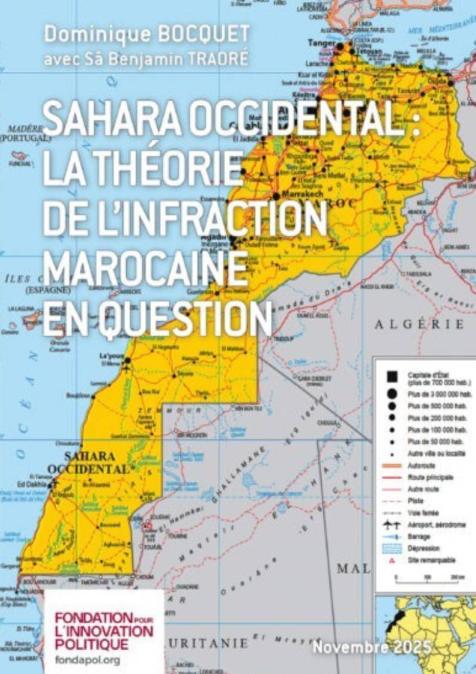
    Ce rapport a été initialement publié sur fondapol.org Depuis 50 ans, le conflit du Sahara occidental est pendant devant les instances internationales.En 1975, le Maroc a fait acte de souveraineté sur ce vaste territoire désertique, jusque-là colonie espagnole. Il estime qu’il lui avait antérieurement appartenu. Ce point de vue est contesté par le Front Polisario, mouvement indépendantiste soutenu par l’Algérie. La communauté internationale a adopté une attitude ambivalente, ret ...
  • Authors
    Fatim Zohra Azouzou
    October 29, 2025
    Ghana’s President John Dramani Mahama has made pragmatism the orienting principle of his foreign policy to reach a dual goal: (a) economic recovery, and (b) containment of the terrorist threat. Two recalibrations illustrate this shift. First, strategic convergence with Morocco: on January 7, 2025, Accra suspended recognition of the so-called ‘Sahraoui Arabe Democratic Republic’ and endorsed Morocco’s Autonomy Plan for the Moroccan Sahara. This opened the door to expanded economic co ...
  • Authors
    Fatim Zohra Azouzou
    October 29, 2025
    Le Président ghanéen Dramani Mahama fait du pragmatisme le principe directeur de la politique étrangère de son pays pour répondre à un double impératif : redressement économique et endiguement de la menace terroriste. Deux recalibrages en constituent les preuves empiriques. D’abord, la convergence stratégique avec le Maroc : le 7 janvier 2025, Accra suspend sa reconnaissance de la pseudo-« rasd » et endosse le Plan d’autonomie marocain, ouvrant la porte à de nouvelles pistes de coop ...