Africafé: Dette et développement en Afrique

April 18, 2024

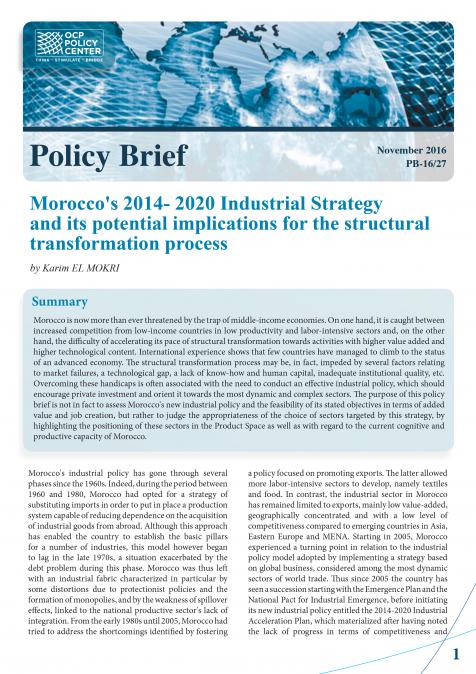
Dans cet épisode, nous accueillons M. Badr Mandri, Economiste au Policy Center for the New South qui partage son analyse sur « La Dette et développement en Afrique ». Plusieurs pays d'Afrique ont déclaré un défaut de paiement ou se sont engagés dans des initiatives de suspension du service de la dette en raison de problèmes financiers. Les études montrent qu’une grande partie de ces pays sont vulnérables face aux chocs exogènes, rendant plus fréquents les épisodes de tension sur la liquidité et les mène au bord de l’insolvabilité. Ces événements laissent entendre qu’une nouvelle crise de la dette sur le continent est en train de se profiler et malgré les efforts engagés par chaque pays pour mobiliser des ressources domestiques, le recours à l'endettement demeure un levier majeur pour financer le développement et les projets structurants.

Au cours de la dernière décennie, le profil des créanciers s’est diversifié avec la présence de pays émergents et des acteurs du secteur financier privé qui ont élargi le paysage des prêteurs dans le continent. Cette situation qui a permis de contribuer à l’afflux de ressources supplémentaires mais également à alourdir la dette publique. Alors que la question du traitement de la dette africaine est au cœur des discussions sur l'architecture financière internationale nous tenterons dans cet épisode d’analyser la situation de l’endettement dans le continent et les solutions envisagées pour une meilleure prise en compte du profil de la dette africaine.

Speakers
Ahmed Ouhnini
Economist, Policy Center for the New South
Ahmed Ouhnini is an Economist at the Policy Center for the New South. His research area covers agricultural economics, human and social development. Previously, he has worked as a researcher at the Paris School of Economics (PSE) and has also a record of working in consulting services in Morocco. Ahmed holds an engineering Diploma in Agriculture and Rural Development from the National School of Agriculture of Meknes and a Master’s Degree in Law, Economics and Management from the Paris 1 Pantheon Sorbonne Institute of Development. ...
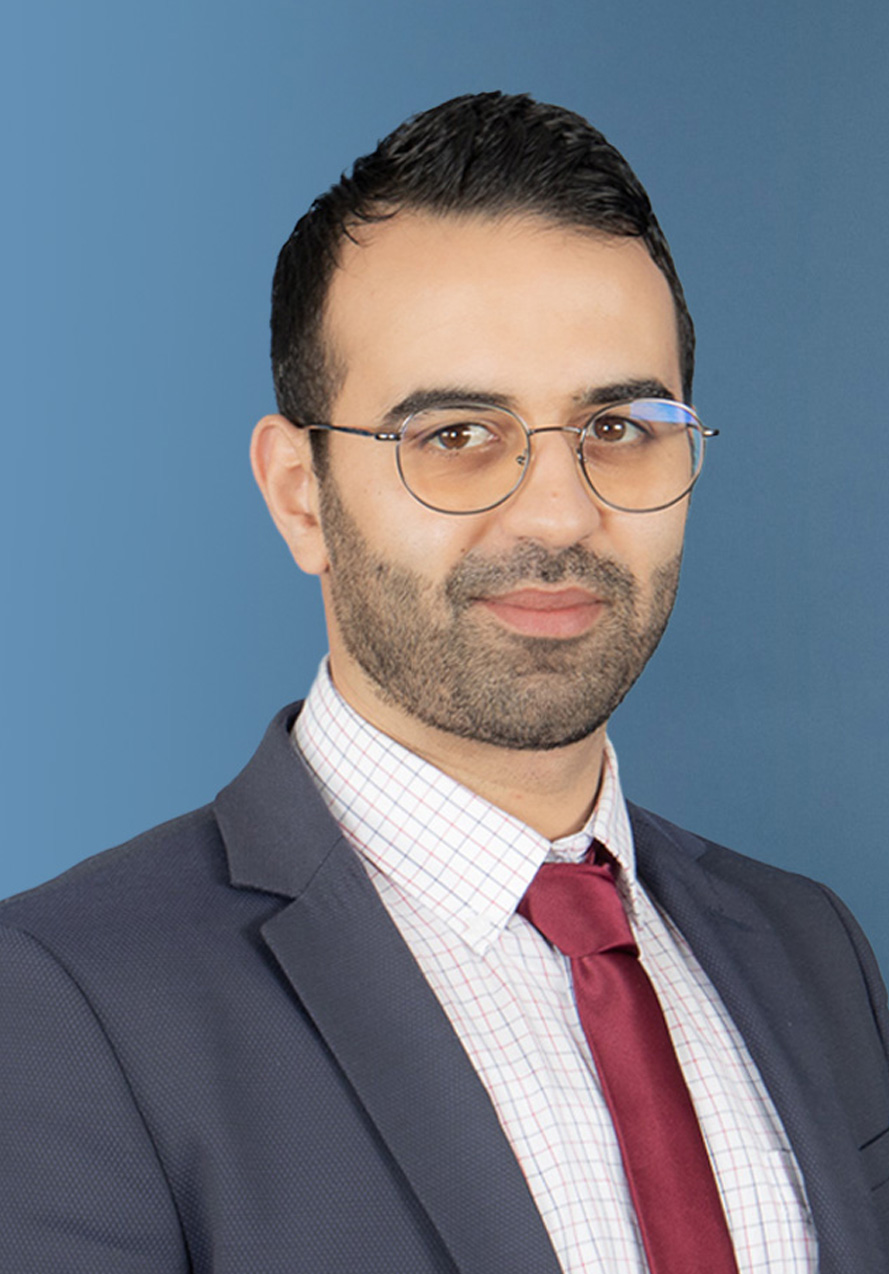
Badr Mandri
Economist
Badr Mandri is a Senior Economist at the Policy Center for the New South (PCNS), after an experience at Morocco's Haut-Commissariat au Plan (HCP). His research focuses primarily on macroeconomics, commodity markets, and development economics, having notably directed a collective volume on human capital. He also serves as an executive trainer at Mohammed VI Polytechnic University (UM6P), delivering specialized programs on public finance and fiscal policy for public sector professionals.Badr Mandri holds a Master's degree in Applied Economics from Mohammed V University in Rabat. ...

RELATED CONTENT

  • Authors
    Russel Dinh
    January 27, 2016
    The IMF recently revised down its growth forecasts, making large changes in the forecasts for some emerging markets, in particular Brazil and oil-producing countries (such as Nigeria and Saudi Arabia). This report presents a snapshot of the global unemployment outlook and discusses what the recent revisions could mean for the unemployment outlook for these countries based on past relationships between growth and unemployment. We conclude with a look at the growth-unemployment link f ...
  • Authors
    Nisrine Ouazzani
    January 6, 2016
    The economic growth of the African continent and its positioning as an emerging force is a reality no longer questioned. Optimism surrounding the Africa rising narrative is supported by a growing young workforce, an expanding middle class, new discoveries of natural resources and minerals, relative political stability and infrastructure developments. Economic and international financial actors now recognize the potential that the continent represents for the world economy, consider ...
  • Authors
    December 23, 2015
    Global economic growth is likely to be a little better in 2016 than this year’s lackluster outcome. The ongoing slow recovery in the United States and Europe is likely to continue. However, weakness in China as well as several large emerging markets, and sluggishness of world trade, mean that risks are weighted on the downside of this forecast. Morocco, which is reliant on European markets, is a heavy importer of oil, and whose currency has devalued in effective terms, should find t ...
  • Authors
    December 14, 2015
    The end of supply chain is the natural corollary of the sustained price fall of virtually all commodities observed over the past many months. If it appears premature to state exactly what is the impact of this deconsolidation in the commodities value chain, it is believed that the strategic role of physical trading is strengthening. Under such circumstances, the industrial strategies of developing countries and commodity exporters may have to evolve and, in priority, foster optimizi ...
  • Authors
    November 25, 2015
    The contribution that the diaspora makes to development in the country of origin is examined. Drawing on a recent World Bank survey of migrants from the MENA countries, the needs of the diaspora and the development role it can play through its organizations are reviewed. A constructive interaction with the diaspora can be greatly enhanced by supportive policies in the country of origin. The main focus of the paper is on the Middle East and North African region, and more specifically ...
  • Authors
    Karim El Mokri
    Aziz Ragbi
    Said Tounsi
    November 23, 2015
    The issue of a powerful fiscal policy comeback is not only being debated in Europe. It is also interesting for Morocco, in many respects. If in Europe there is controversy between the proponents of the structural budgetary balance rule and critics of restrictive policies in the context of major financial and recessive shocks, in the South of the Mediterranean fiscal policy is caught between the multiple social and economic requirements and the constraint of sustainability. ...
  • Authors
    Edité par:
    Karim El Mokri
    Aziz Ragbi
    Said Tounsi
    November 23, 2015
    Depuis le déclenchement de la crise économique et financière internationale, la politique budgétaire a connu un vif regain d’intérêt dans les arènes académiques et dans les débats des policy-makers, aussi bien dans les pays avancés que ceux en voie de développement. Pour un pays en voie de développement comme le Maroc, l’importance de la politique budgétaire réside dans le potentiel qu’elle offre en matière de stabilisation du cycle économique et de relance de l’activité en période ...