AD 2021: Covid-19 and Debt for All

December 17, 2021

The last decade has been marked by a long period of debt accumulation, particularly in emerging and developing economies. Loose financing conditions and low interest rates encouraged these countries to borrow to meet their financing needs. Today, in the context of the global crisis caused by the Covid-19 pandemic, the situation is becoming more worrying.  The increase in public spending on health and social protection, combined with the decrease in tax revenues, has led to a widening of deficits and an acceleration of the pace of indebtedness, which has added to the upward trend already underway since 2010. The world is thus faced with a dilemma: ensuring a sustainable economic recovery without exacerbating the risks of a global debt crisis. Should we be more concerned about the economic recovery or the debt situation? Are we facing a trade-off? Have the initiatives taken by the international community so far, in support of certain countries, to mitigate their risks of over-indebtedness and default, been sufficient and effective? How to maintain the development momentum for countries facing a liquidity shortage? How to reform the international architecture to reduce the risk of future debt crises?
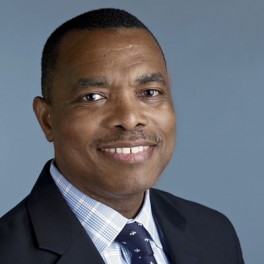

Speakers
John Yearwood
President and CEO, Yearwood Media Group
An award-winning multimedia journalist, John Yearwood is President and CEO of Yearwood Media Group, a global consulting and content creation firm. In his role as President/CEO of Yearwood Media, he advises companies seeking to do business in emerging markets, with a particular focus on Africa and Asia. In 2019, he was appointed honorary chair of the the National Association of Black Journalists annual convention, which convened 4,100 black journalists in Miami. He sits on several boards, including the Austria-based International Press Institute, where he is the former chairman. Former world editor of the Miami Herald. The World Desk won numerous awards under his leadership, including two McClatchy Company President’s Awards and the Arthur Ross Award for best coverage of Latin ...
Rym Ayadi
Founder and Scientific Director, Euro-Mediterranean Economists Association
Rym Ayadi is the Founder and President of the Euro – Mediterranean Economists Association (EMEA). She is Founder and Director of the Euro-Mediterranean and African Network for Economic Studies (EMANES). She is Senior Advisor at the Centre for European Policy Studies (CEPS); Professor at the Bayes Business School, City University of London and Member of the Centre for Banking Research (CBR); Chair of the European Banking Authority – Banking Stakeholders Group (EBA- BSG). She is also Associated Scholar at the Centre for Relationship Banking and Economics (CERBE) at LUMSA University in Rome. ...

RELATED CONTENT

  • Authors
    July 11, 2016
    The Chinese economy is rebalancing while softening its growth pace. China’s spillovers on the global economy have operated through trade, commodity prices, and financial channels. The global reach of the effects from China’s transition have recently been illustrated in risk scenarios simulated for Latin American and the Caribbean economies.  The Chinese economy is rebalancing while softening its growth pace… The weight of the Chinese economy in the global economy rose on its ...
  • Authors
    Under the Supervision of
    Philippe Chalmin
    July 4, 2016
    Guinea’s bauxite, Moroccan phosphates, Nigerian Bonny Light, Zambian copper, Côte d'Ivoire’s cocoa, Ethiopian coffee or Madagascar’s vanilla: all are examples demonstrating that raw materials have a dimension that is as global as it is local. Global by the markets on which they are traded, local by their quality, a key element of their price, and their macroeconomic impact, particularly for Africa. In line with the 2016 CyclOpe report, which celebrates three decades of existence thi ...
  • June 30, 2016
    Latin American economies are facing two historically defining challenges. First, how to cope with the end of the commodities “super-cycle” and the prospect of a long period of low prices for basic natural resources. After all, raw materials production and semi-industrialized goods encompass most of their comparative advantages. Second, and even more exacting, how to adjust to the present disruptive transition from an old to a new global economic and social model. The 20th century in ...
  • Authors
    June 27, 2016
    The referendum in favor of the exit of Britain from the European Union (“Brexit”) marks a sad day for Britain and for Europe. It represents a victory of nationalism over the liberal economic order, in the country that inspired the ideas that lie at its foundations. The referendum probably signals the end of an experiment widely supported by the young, the elites and most economists, but which has failed in the eyes of the majority of British people. For Britain, the economic risks a ...