Vision et rôle du Policy Center for the New South

October 11, 2023
Speakers
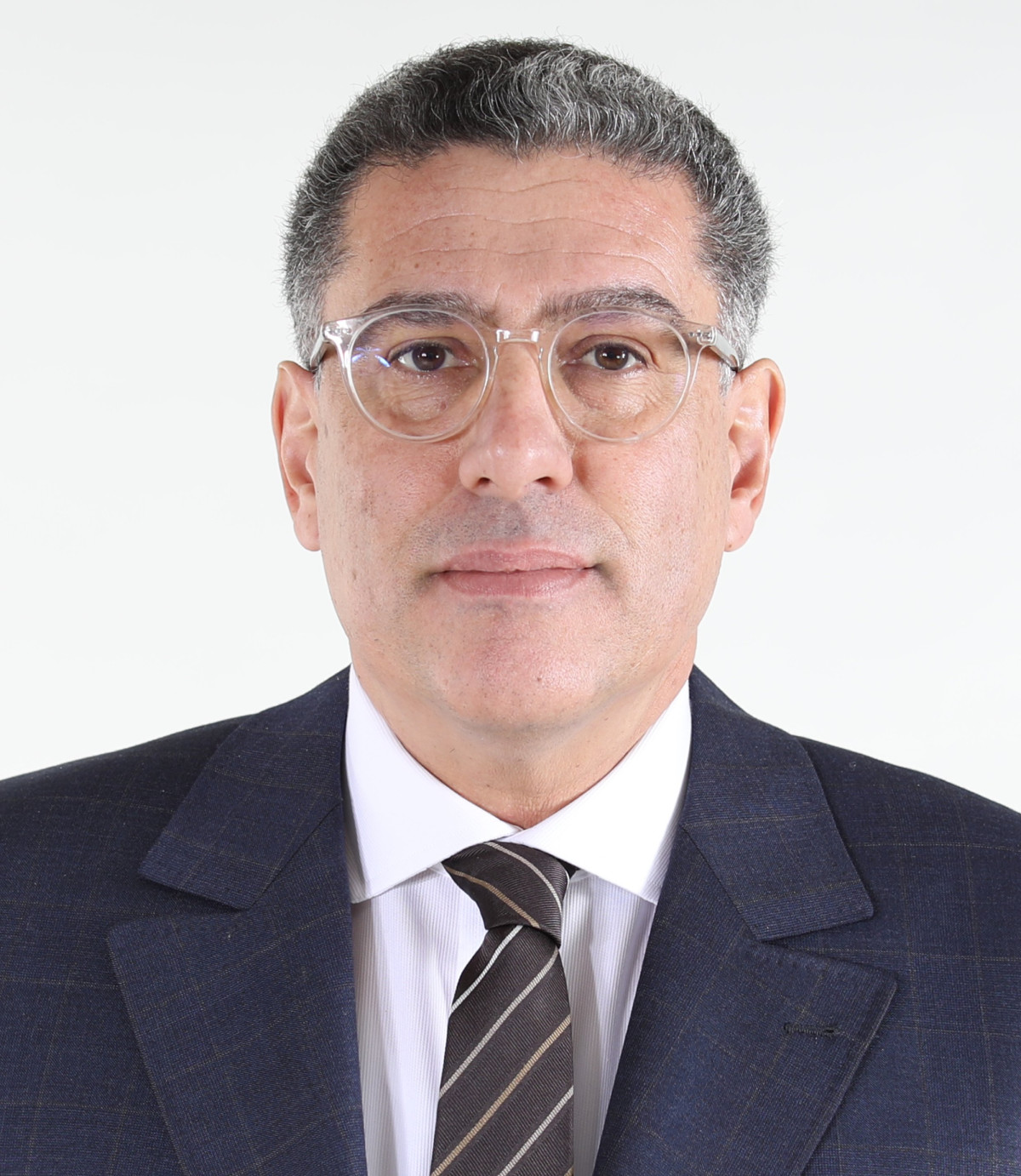
Karim El Aynaoui
Executive President
Karim El Aynaoui is Executive President of the Policy Center for the New South. He is also Executive Vice-President of Mohammed VI Polytechnic University and Dean of its Humanities, Economics and Social Sciences Cluster.  Karim El Aynaoui is an economist. From 2005 to 2012, he worked at the Central Bank of Morocco where he held the position of Director of Economics, Statistics, and International Relations. At the Central Bank of Morocco, he was in charge of the Research Department and equally a member of the Governor’s Cabinet. Previously, he worked for eight years at the World Bank as an Economist for its regional units of the Middle East and North Africa and Africa. Karim El Aynaoui has published books and journal articles on macroeconomic issues in developing ...

RELATED CONTENT

  • March 18, 2026
    Le premier sommet des BRICS, tenu à l’initiative de la Russie en 2009, sera suivi de 16 autres, le dernier étant celui de Rio dont les travaux se sont déroulés les 6 et 7 juillet 2025. Jusqu’en 2022, un seul élargissement est intervenu, celui accueillant l’Afrique du Sud, transformant les BRIC en BRICS. À partir de 2023, en revanche, trois sommets, ceux de 2023, 2024 et 2025, vont se solder par la transformation des BRICS en BRICS+5, accueillant 5 nouveaux pays membres, en ...
  • March 13, 2026
    Dans cet épisode, nous examinons comment la finance climat peut catalyser la transition énergétique en Afrique, en mobilisant des instruments innovants et des partenariats public-privé pour soutenir des projets durables, tout en surmontant les défis d’accès au capital et d’infrastructur...
  • Authors
    March 13, 2026
    While acknowledging the centrality of security tensions and potential conflict in the Gulf, this essay intentionally sets aside a detailed treatment of military and hard-power dynamics, concentrating instead on the geoeconomic logics of capital, infrastructure, energy, and connectivity, through which Gulf states now articulate power in a fragmented world order.It examines the emergence of a new tripartite or three-pillar power configuration in the Gulf, arguing that Saudi Arabi ...
  • Authors
    March 12, 2026
    Historically, manufacturing has served as the primary pathway to economic development, offering strong scale economies, learning-by-doing effects, and the capacity to generate the foreign exchange necessary to import capital goods and technology. However, advances in robotization and artificial intelligence (AI) are fundamentally undermining manufacturing’s traditional role, making it increasingly skill- and capital-intensive while limiting its ability to absorb labor. Thi ...
  • March 10, 2026
    بمناسبة اليوم العالمي لحقوق المرأة في 8 مارس، يتناول هذا اللقاء وضعية المرأة القروية في المغرب والتحولات التي عرفها دورها في التنمية الاقتصادية والاجتماعية خلال السنوات الأخيرة. كما يسلط الضوء على مساهمتها الكبيرة في الأنشطة الفلاحية والأسرية، رغم أن جزءاً مهماً من عملها يظل غير مرئي أو...
  • Authors
    Jonathan Berkshire Miller
    March 10, 2026
    At the Atlantic Dialogues in December 2025, I argued that a period was underway in which trade and security could no longer be analytically or practically separated. Assessments have solidified in recent months regarding the emergence of a geoeconomic world order. Geoeconomics was a gradual transition from a purely geopolitical focus on military force, to an emphasis on economics to gain competitive advantage. It is no longer a transitional phase, but an emerging structural componen ...
  • Authors
    Inácio F. Araújo
    Geoffrey J.D. Hewings
    March 6, 2026
    By mapping Iraq’s economic structure in detail, the Multiregional Social Accounting Matrix (MRSAM) sheds light on regional interdependencies and distributional dynamics, offering a critical foundation for evidence-based policy design. Key MessagesIraq is dependent on oil, but this dependence is felt unevenly. In 2013, oil accounted for nearly half of GDP, over 90% of exports, and almost all fiscal revenues, but less than 2% of jobs; benefits from oil were concentrated in Basra ...