The impact of COVID-19 in Ethiopia and Africa - Interview of Yonas Adeto by Mohammed Loulichki

April 9, 2020

‪In an interview with Mohammed Loulichki, the director of the Institute for Peace and Security Studies, Yonas Adeto, gives his thoughts on the measures taken in Ethiopia and Africa.

Speakers
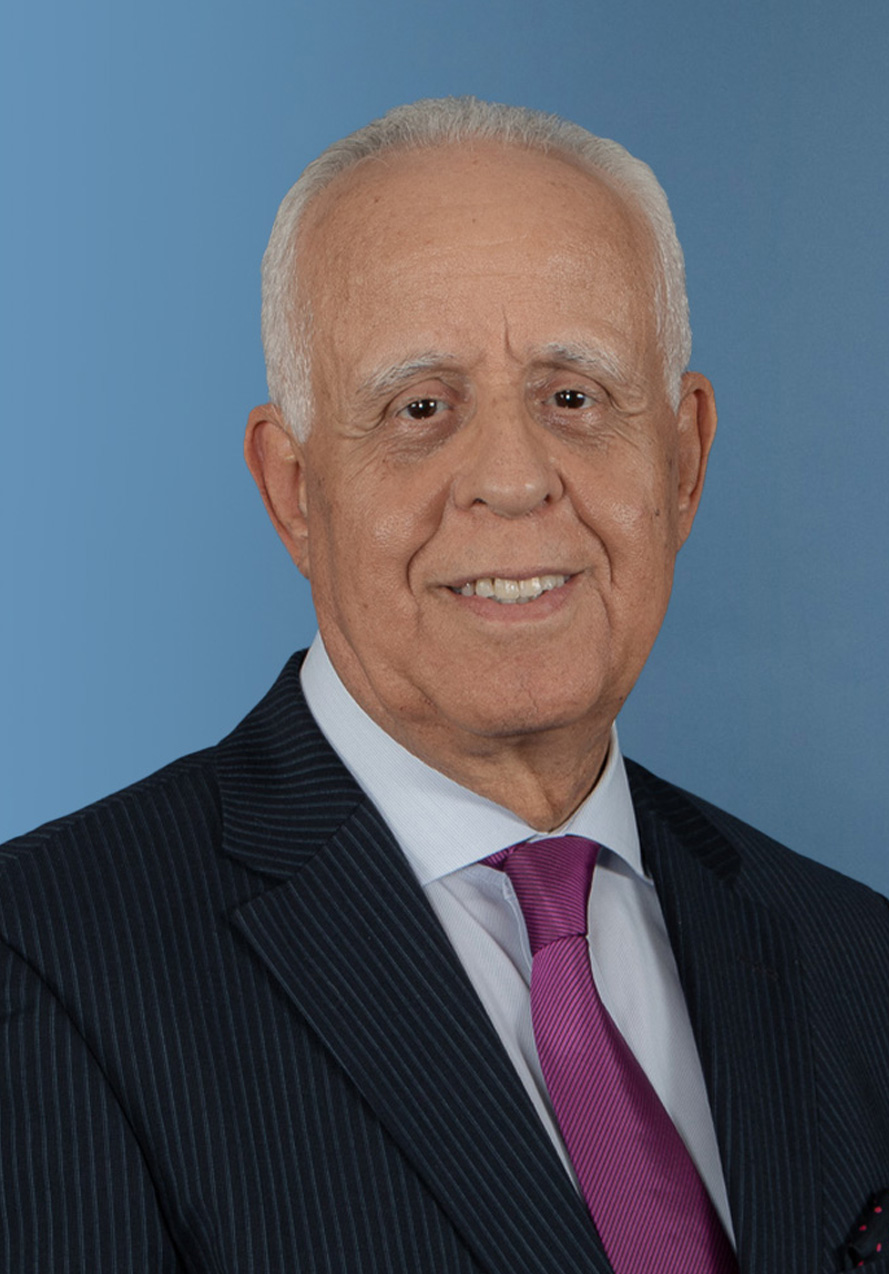
Mohammed Loulichki
Senior Fellow
Mohammed Loulichki is a Senior Fellow at the Policy Center for the New South and an Affiliate Professor at Mohammed VI Polytechnic University. He brings over 40 years of comprehensive experience in diplomacy, conflict resolution, and human rights. He has served in various roles including as a member and Deputy Head of the Moroccan delegation to the 3rd Conference on the Law of the Sea (1982-1990), Head of the Department of Legal Affairs and Treaties at the Ministry of Foreign Affairs (1988-1991), and General Director for Multilateral Affairs in the same ministry (2003-2006).   He also acted as Morocco's Ambassador to Hungary, Bosnia-Herzegovina, and Croatia (1995-1999), and was the Moroccan Government's Ambassador Coordinator with MINURSO (1999-2001). Furthermore, he se ...
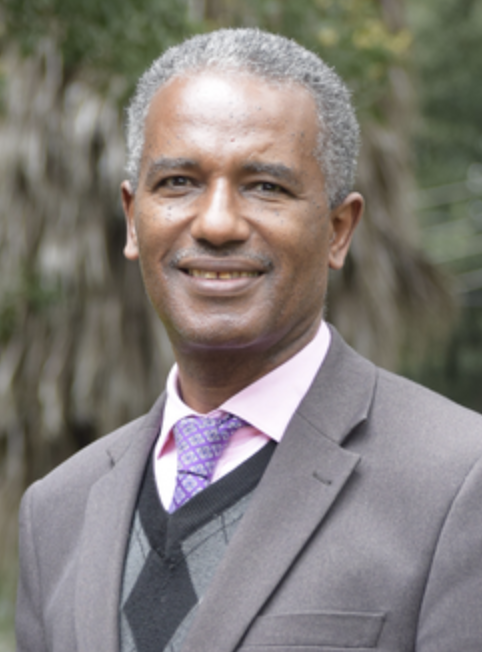
Yonas Adeye Adeto
Commissioner, the Ethiopian National Dialogue Commission and Former Director, Institute for Peace and Security Studies (IPSS)
Associate Professor of Peace Studies, Former Director, Institute for Peace and Security Studies (IPSS), Addis Ababa University (AAU); Current Commissioner, the Ethiopian National Dialogue Commission (ENDC). He has published peer reviewed articles in international journals, and edited book chapters on: Peacebuilding, Conflict Resolution, Security Sector Governance, Peace Education, Preventing Violent Extremism/Terrorism, Diplomacy, International Relations and Global as well as Regional Security. He has taught at Addis Ababa University over twenty-five years and is currently offering various courses related to theories, issues and praxis of Peace, Global and Regional Security to MA and PhD programmes at IPSS and elsewhere in Africa and beyond. Dr. Adeto holds a PhD in Peace Stud ...

RELATED CONTENT

  • September 25, 2026
    Dans cet épisode d’Africafé, Amadou Diop analyse les défis de sécurité maritime auxquels font face les pays de l’Afrique atlantique, de la piraterie aux trafics transfrontaliers. Il souligne la nécessité de mutualiser les moyens et de partager l’information entre États. L’échange aborde...
  • Authors
    Marianna Albuquerque
    September 23, 2026
    The author of this opinion, Marianna Albuquerque, is a 2022 alumna of the Atlantic Dialogues Emerging Leaders Program.As world leaders gather in New York for the 81st United Nations General Assembly, climate change returns to the center of multilateral diplomacy under markedly different circumstances. The debate is no longer confined to whether the world must decarbonize, but increasingly centers on how the transition will happen, who will bear its costs, who will capture ...
  • Authors
    Luladay Berhanu Mengistie
    Guillaume Gérout Suominen
    September 21, 2026
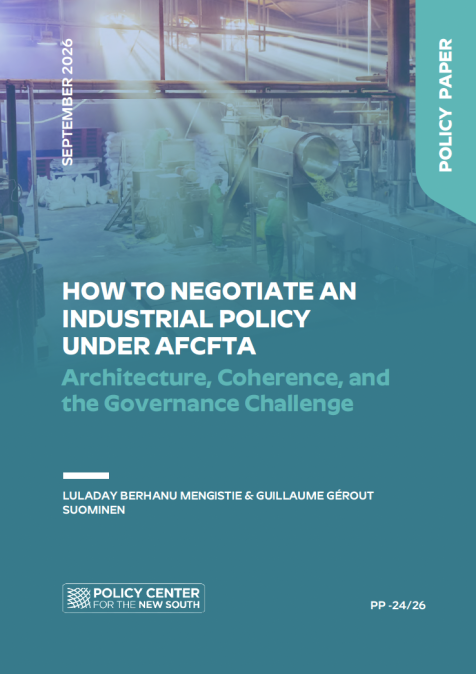
    The African Union Summit of February 2026 instructed the African Continental Free Trade Area (AfCFTA) Council of Ministers to negotiate a Protocol on Industrial Policy and Development. This work, handled without adequate preparation, is likely to reproduce the weaknesses it is meant to remedy. This paper is a conceptual mapping exercise, written to raise the preparatory questions before drafting begins, rather than to prescribe outcomes.It proceeds in five sections:1. It works towar ...
  • Authors
    Joana Ama Osei-Tutu
    September 12, 2026
    The author of this opinion, Joana Ama Osei-Tutu, is a 2017 alumna of the Atlantic Dialogues Emerging Leaders Program.South-South cooperation (SSC) is often presented as an alternative to the hierarchical relationships that have historically characterized international development. In principle, SSC means Global South countries learn from one another, share expertise and resources, and develop solutions grounded in their own experiences, rather than importing models designe ...
  • September 11, 2026
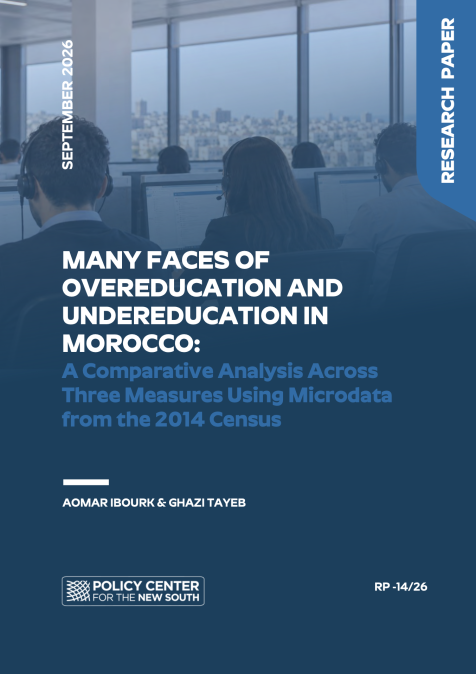
    Le marché du travail marocain connaît, depuis les années 2000, une expansion continue de la scolarisation qui ne s'est pas accompagnée d'une transformation équivalente de la structure productive de l'économie, ouvrant la voie à des situations d'inadéquation verticale entre le niveau de formation des actifs occupés et les exigences des emplois qu'ils occupent. La présente étude analyse les déterminants du déclassement (sur-éducation) et du surclassement (sous- éducation) à partir des ...
  • September 11, 2026
    Since the early 2000s, the Moroccan labour market has experienced continuous educational expansion that has not been matched by an equivalent transformation of the economy's productive structure, giving rise to situations of vertical mismatch between employed workers' education levels and the requirements of the jobs they hold. This study analyzes the determinants of overeducation and undereducation using anonymized microdata from the 2014 General Population and Housing Census (RGPH ...