حديث الثلاثاء - اليمين المتطرف: أيديولوجية عابرة أم تحول سياسي دائم؟

September 17, 2024

في السنوات الأخيرة، شهدت الساحة السياسية الأوروبية والعالمية تصاعدًا ملحوظًا في نفوذ ما يُسمى بـ "اليمين المتطرف"، مما أدى إلى بروز أسئلة ملحة حول طبيعة هذا التيار وأسبابه وتداعياته. هل نحن أمام أيديولوجية راسخة أم مجرد رد فعل عابر تجاه التغيرات الاقتصادية والاجتماعية؟ وما مدى ارتباط هذه الحركات باليمين التقليدي؟ أم أنها تمثل ظاهرة منفصلة تمامًا؟ بالإضافة إلى ذلك، يُثار التساؤل حول ما إذا كانت هذه الظاهرة محصورة في أوروبا أم تمتد لتشمل مناطق أخرى من العالم

Speakers

Abdelhak Bassou
Senior Fellow
Abdelhak Bassou is a Senior Fellow at the Policy Center for the New South and a non-resident senior fellow at the Atlantic Council’s Africa Center. He is also an Affiliate Professor at Mohammed VI Polytechnic University. Bassou has had an extensive career in Moroccan National Security, where he served in various capacities including as head of the border division from 1978 to 1993. He was the former director of the Royal Institute of Police in 1998 and served as Head of Regional Security (Errachidia 1999-2003, Sidi Kacem 2003-2005) and as Central Director of General Intelligence from 2006 to 2009.   He holds a master's degree in political science and international studies from the Faculty of Law, Economics, and Social Sciences in Rabat. His academic research delves into ...
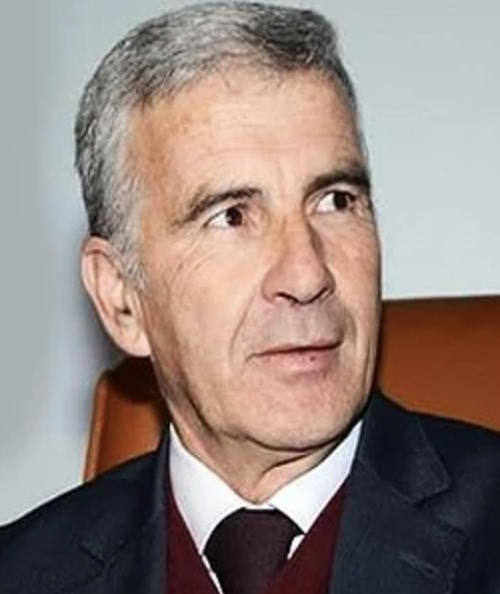
Hassan Boukantar
Professeur de Relations Internationales à l'Université Mohammed V de Rabat
...

RELATED CONTENT

  • Authors
    Khalid R. Temsamani
    February 26, 2026
    La multiplication des crises systémiques à l’échelle mondiale – qu’elles soient environnementales, sanitaires, énergétiques ou liées aux enjeux de sécurité globale – impose une évolution profonde des modes d’action diplomatique. Dans ce contexte, l’intégration structurée des connaissances scientifiques dans les relations internationales apparaît comme une condition déterminante pour la formulation de réponses collectives efficaces et légitimes. La diplomatie scientifique s’inscrit a ...
  • Authors
    Samir Bhattacharya
    Abhishek Khajuria
    February 26, 2026
    Sports diplomacy can be defined as a foreign-policy approach that uses sport as a tool to advance national interests, shape international perceptions, and foster cross-border engagement. As a subset of cultural and public diplomacy, it operates where politics, identity, and popular culture intersect. In an increasingly polarised and fragmented global order, sports diplomacy has emerged as one of the ‘softest’ of soft-power instruments, able to reach audiences that traditional diplom ...
  • February 19, 2026
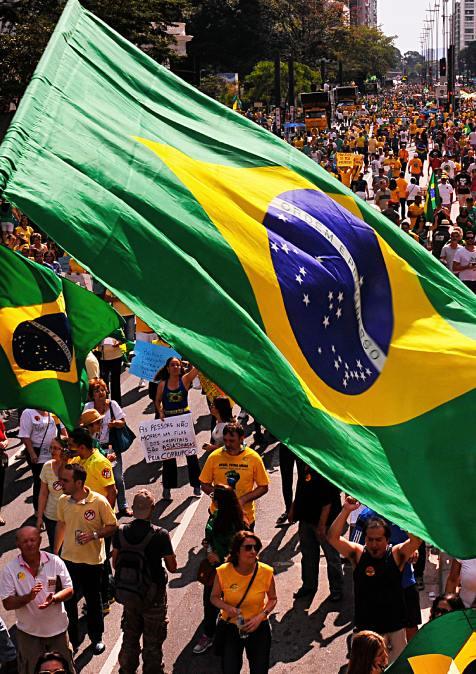
    This Africafe's episode examines Brazil-Africa relations: historical ties shaped by the slave trade and diaspora, Lula’s trade expansion, and competition with China/EU. It explores South-South diplomacy’s potential to reshape global institutions, the role of “South Atlanticism,” and fut...
  • Authors
    February 17, 2026
    La Marche Verte fait partie de ces moments féconds qui n’ont pas cessé d’influer sur le cours des événements politiques du Maroc, par la place qu’elle a prise, dès le départ, dans la longue durée, le contexte dans lequel elle s’est déployée, la logique des interactions dans laquelle elle s’est inscrite par ses causes et ses effets, et comme une des figures éclatantes du récit national. ...
  • Authors
    Amine Ghoulidi
    February 5, 2026
    This Paper was originally published on orient-online.com  The Western Mediterranean’s exposure to the Sahel is usually framed in terms of security spillovers and crisis management. This paper argues that this framing misreads how Sahelian access conditions now shape Mediterranean integration. Morocco’s Atlantic Initiative is a state-led corridor strategy combining Atlantic port infrastructure, inland transit routes, and energy systems to connect landlocked Sahelian economi ...
  • February 4, 2026
    This article examines the quiet but profound implications of the erosion of U.S.-led hegemony for small and vulnerable states of the New South. While the post-1945 international order was never egalitarian, it offered predictability: power was organized through law, and sovereignty for weaker states rested less on justice than on procedural stability. Davos 2026 marked a turning point in the public acknowledgment of that system’s unraveling. Statements by leading Western figures rev ...
  • January 21, 2026
    The Policy Center for the New South hosted a seminar on January 16, 2026, titled “Crisis or Opportunity? Multilateralism in a Polycentric World.”The discussion addressed the growing strain on global cooperation amid overlapping financial, climate, security, and technological shocks, occ...