Africafé: Le trafic des médicaments falsifiés en Afrique

August 15, 2024

Selon l'Organisation mondiale de la santé (OMS), environ 42% des médicaments vendus en Afrique sont falsifiés. Ces produits, souvent sous-dosés, mal étiquetés, voire totalement inefficaces, peuvent entraîner des échecs thérapeutiques, des résistances aux traitements, voire des décès, notamment dans la lutte contre des maladies telles que la malaria, la tuberculose et le VIH. Plusieurs facteurs contribuent à la propagation de ces médicaments falsifiés : les faiblesses des systèmes de santé incitent les patients à se tourner vers des sources non officielles, le manque de régulation et de surveillance due à des ressources et une expertise limitées, ainsi que la corruption au sein des systèmes de santé facilitent l'introduction et la distribution de ces produits contrefaits. Les répercussions économiques et sociales sont profondes : les patients dépensent leurs maigres ressources pour des médicaments inefficaces, tandis que les systèmes de santé doivent gérer les complications résultantes, sapant ainsi la confiance dans les autorités publiques.

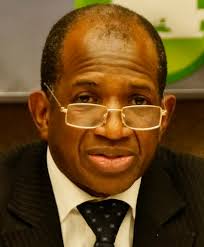
Pour approfondir ce fléau, nous avons l'honneur d’inviter M. Kabiné Komara, ancien Premier ministre de Guinée et expert en développement économique et politiques de santé publique. Il partage avec nous ses perspectives sur les défis posés par le trafic de médicaments falsifiés en Afrique et les solutions envisageables pour y faire face dans les années à venir.
Speakers
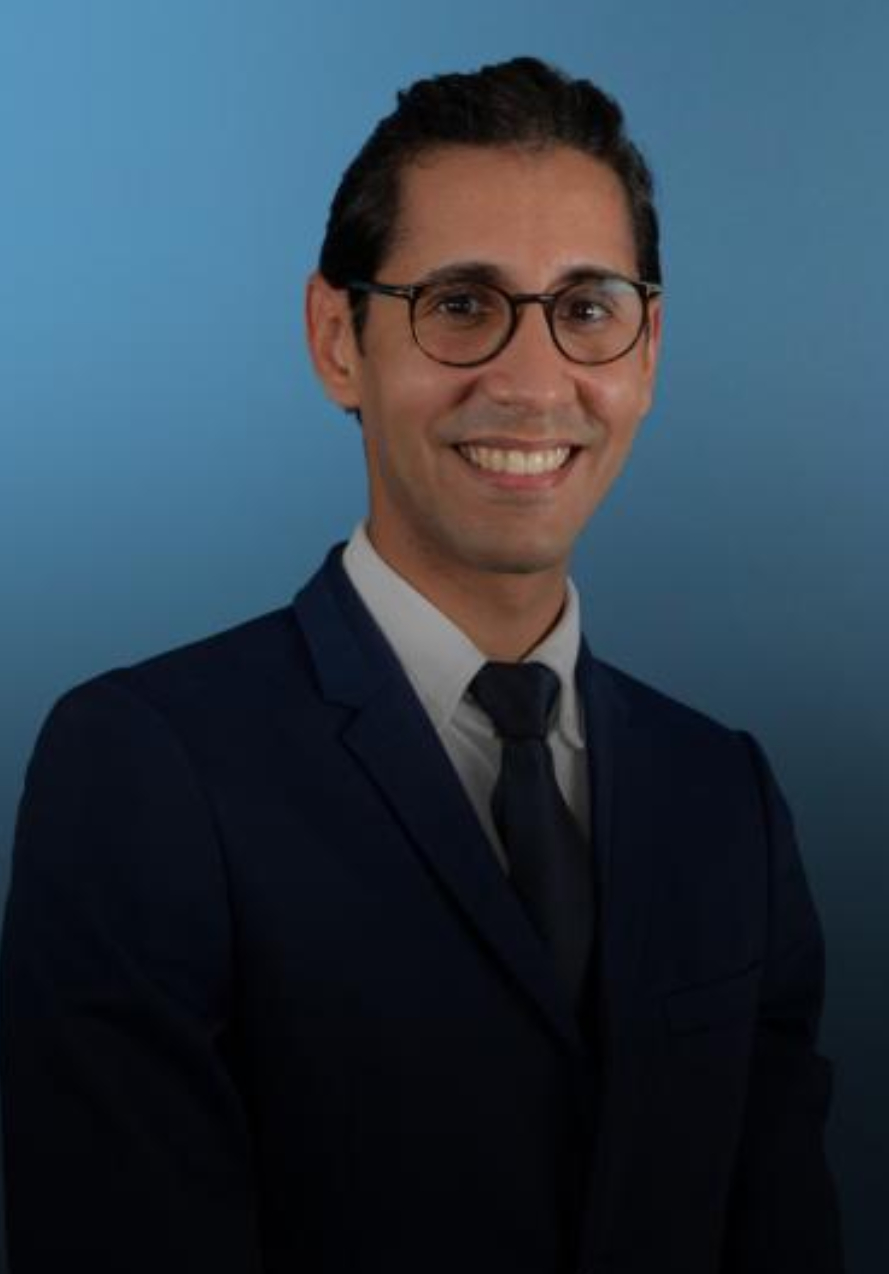
Ahmed Ouhnini
Economist, Policy Center for the New South
Ahmed Ouhnini is an Economist at the Policy Center for the New South. His research area covers agricultural economics, human and social development. Previously, he has worked as a researcher at the Paris School of Economics (PSE) and has also a record of working in consulting services in Morocco. Ahmed holds an engineering Diploma in Agriculture and Rural Development from the National School of Agriculture of Meknes and a Master’s Degree in Law, Economics and Management from the Paris 1 Pantheon Sorbonne Institute of Development. ...

RELATED CONTENT

  • September 25, 2026
    Dans cet épisode d’Africafé, Amadou Diop analyse les défis de sécurité maritime auxquels font face les pays de l’Afrique atlantique, de la piraterie aux trafics transfrontaliers. Il souligne la nécessité de mutualiser les moyens et de partager l’information entre États. L’échange aborde...
  • Authors
    Marianna Albuquerque
    September 23, 2026
    The author of this opinion, Marianna Albuquerque, is a 2022 alumna of the Atlantic Dialogues Emerging Leaders Program.As world leaders gather in New York for the 81st United Nations General Assembly, climate change returns to the center of multilateral diplomacy under markedly different circumstances. The debate is no longer confined to whether the world must decarbonize, but increasingly centers on how the transition will happen, who will bear its costs, who will capture ...
  • Authors
    Luladay Berhanu Mengistie
    Guillaume Gérout Suominen
    September 21, 2026
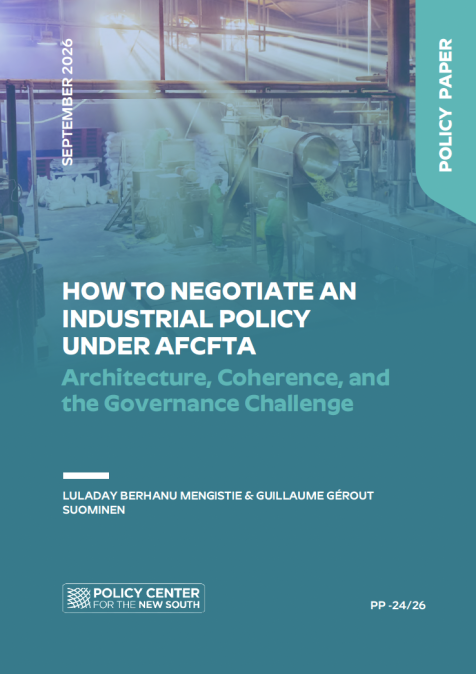
    The African Union Summit of February 2026 instructed the African Continental Free Trade Area (AfCFTA) Council of Ministers to negotiate a Protocol on Industrial Policy and Development. This work, handled without adequate preparation, is likely to reproduce the weaknesses it is meant to remedy. This paper is a conceptual mapping exercise, written to raise the preparatory questions before drafting begins, rather than to prescribe outcomes.It proceeds in five sections:1. It works towar ...
  • Authors
    Joana Ama Osei-Tutu
    September 12, 2026
    The author of this opinion, Joana Ama Osei-Tutu, is a 2017 alumna of the Atlantic Dialogues Emerging Leaders Program.South-South cooperation (SSC) is often presented as an alternative to the hierarchical relationships that have historically characterized international development. In principle, SSC means Global South countries learn from one another, share expertise and resources, and develop solutions grounded in their own experiences, rather than importing models designe ...
  • September 11, 2026
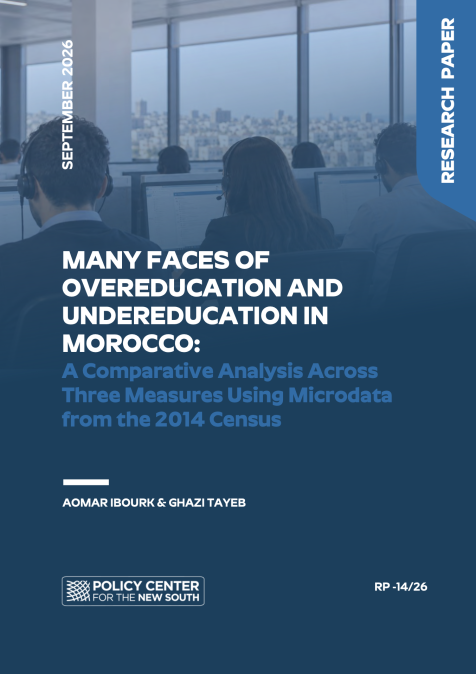
    Le marché du travail marocain connaît, depuis les années 2000, une expansion continue de la scolarisation qui ne s'est pas accompagnée d'une transformation équivalente de la structure productive de l'économie, ouvrant la voie à des situations d'inadéquation verticale entre le niveau de formation des actifs occupés et les exigences des emplois qu'ils occupent. La présente étude analyse les déterminants du déclassement (sur-éducation) et du surclassement (sous- éducation) à partir des ...
  • September 11, 2026
    Since the early 2000s, the Moroccan labour market has experienced continuous educational expansion that has not been matched by an equivalent transformation of the economy's productive structure, giving rise to situations of vertical mismatch between employed workers' education levels and the requirements of the jobs they hold. This study analyzes the determinants of overeducation and undereducation using anonymized microdata from the 2014 General Population and Housing Census (RGPH ...