Africafé: Innovations and Industrial Policies in Africa

December 28, 2023

In this episode, we interviewed Mr. Arkebe Oqubay Metiku, British Academy Global Professor, SOAS University of London around Africa's industrial policies and their impact on growth. We discussed key elements such as innovation, regional collaboration, sustainability, and intellectual property protection. Mr. Arkebe shared his insights on pivotal sectors like technology, manufacturing, and services, highlighting their role in driving economic prosperity. We also addressed how industrial policies foster collaboration among African nations through regional value chains. The episode touched on the complexities of a green industrial strategy, examining trade-offs between economic growth, environmental sustainability, and social equity.

Speakers

Ahmed Ouhnini
Economist, Policy Center for the New South
Ahmed Ouhnini is an Economist at the Policy Center for the New South. His research area covers agricultural economics, human and social development. Previously, he has worked as a researcher at the Paris School of Economics (PSE) and has also a record of working in consulting services in Morocco. Ahmed holds an engineering Diploma in Agriculture and Rural Development from the National School of Agriculture of Meknes and a Master’s Degree in Law, Economics and Management from the Paris 1 Pantheon Sorbonne Institute of Development. ...
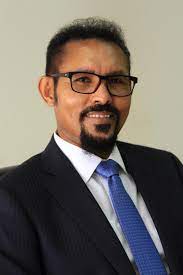
Arkebe Oqubay Metiku
British Academy Global Professor, SOAS University of London
 Arkebe Oqubay (PhD) is a distinguished scholar-practitioner. He is a British AcademyGlobal Professor at SOAS University of London. He is a former Senior Minister and hasserved as a Special Advisor to three successive prime ministers of Ethiopia. He has been atthe centre of policymaking in Ethiopia for over 30 years, successfully leading bold reformsand playing a pivotal role in Ethiopia’s economic transformation. He is the former Mayorof Addis Ababa, recognized for transforming the city. He has led the boards of key publicenterprises, including Ethiopian Airlines. Dr Arkebe’s research focuses on structural transformation,catch-up, green transformation, and industrial policy with a focus on Africa. DrArkebe currently gives policy advice to, and consults for, African gover ...

RELATED CONTENT

  • July 3, 2026
    This Policy Paper has also been published in French and Spanish by Le Grand Continent Morocco offers a compelling example of how a middle-income economy can navigate a more fragmented global environment, characterized by weak growth and slower convergence. Since 2022, economic activity has remained relatively strong, with growth exceeding that of many comparable economies. Non-agricultural growth has averaged 4.4% since 2022, around 1.3 percentage points above its historical av ...
  • Authors
    July 2, 2026
    Africa is facing a massive electricity deficit that is impacting its economic and social development, and its ability to catch up with the rest of the world. It is imperative that the continent increase its electricity production to connect the 600 million people who are currently without access and to improve the quality of service for the millions who are suffering from frequent blackouts and load-shedding. Economic development in the 21st century will crucially depend on the digi ...
  • June 26, 2026
    Au Maroc, la problématique des jeunes NEETs (Ni en emploi, ni en études, ni en formation) constitue une urgence nationale, alimentée par 300 000 abandons scolaires annuels. Face à ce défi, le modèle de l'École de la Deuxième chance nouvelle génération (E2C-NG) a démontré sa pertinence en affichant un taux d'insertion exceptionnel de 81 %.Cependant, ce succès institutionnel repose intégralement sur un tissu associatif local aujourd'hui fragilisé. L'analyse inédite des donné ...
  • June 24, 2026
    Africa, Latin America, and the Caribbean have both the potential and the desire to transform their people's lives through Green Industrial Policy. Yet they have long been constrained by structural obstacles embedded in the international system. The current rupture in that system, which ...
  • Authors
    June 8, 2026
    The energy shock caused by the war between the United States and Israel and Iran has highlighted the need for Africa to refine more of its own crude oil. Africa is a net hydrocarbon exporter, but remains stuck in the old colonial economic model: it mostly exports raw materials and imports refined products. Africa exports about 2.6 billion barrels of crude oil every year, and imports about 1.4 billion barrels of refined products. This is a problem for two reasons. First, Africa ...
  • Authors
    Karim El Mokri
    Idriss El Abbassi
    June 8, 2026
    Le monde du travail est engagé dans un processus de mutation sans précédent. La quatrième révolution industrielle, portée par l’intelligence artificielle (IA) et la robotisation, a été le point de commencement d’une ère nouvelle où les repères économiques et sociaux se redéfinissent à une vitesse inédite. Ces technologies suscitent un engouement légitime et offrent des perspectives prometteuses, mais requièrent une vigilance accrue face aux incertitudes qui les entourent.Bien que, à ...
  • June 1, 2026
    Cette interview met en lumière le rôle central du secteur textile et de l’habillement dans l’économie marocaine, tant en matière d’emploi que d’exportations. Notre économiste, Mr. Fahd Azeroual revient sur son évolution historique, ses principaux défis, notamment la dépendance aux impor...
  • May 29, 2026
    This Paper was originally published on tandfonline.com This paper examines how reductions in transportation costs reshape regional economic and environmental outcomes in Morocco. We simulate a reduction in delivered (purchasers’) costs via a transport-margin efficiency improvement – implemented as a margin-saving technical change in the transport sector – within a province-level Spatial Computable General Equilibrium (SCGE) framework. Simulating a 1% decline in transport costs, ...
  • Authors
    May 22, 2026
    This paper, the fourth in a research series on services-led growth in the Global South, examines Egypt’s potential for growth and economic transformation through the integration of services into Global Value Chains (GVCs). It employs a new taxonomy that classifies services into Knowledge Services (KS), Enabling Services (ES), and Local Services (LS) and applies OECD 2025 Trade in Value-Added (TiVA), Trade in Employment (TiM), and input-output databases to benchmark Egypt against Mor ...