AD 2021: Covid-19 and Debt for All

December 17, 2021

The last decade has been marked by a long period of debt accumulation, particularly in emerging and developing economies. Loose financing conditions and low interest rates encouraged these countries to borrow to meet their financing needs. Today, in the context of the global crisis caused by the Covid-19 pandemic, the situation is becoming more worrying.  The increase in public spending on health and social protection, combined with the decrease in tax revenues, has led to a widening of deficits and an acceleration of the pace of indebtedness, which has added to the upward trend already underway since 2010. The world is thus faced with a dilemma: ensuring a sustainable economic recovery without exacerbating the risks of a global debt crisis. Should we be more concerned about the economic recovery or the debt situation? Are we facing a trade-off? Have the initiatives taken by the international community so far, in support of certain countries, to mitigate their risks of over-indebtedness and default, been sufficient and effective? How to maintain the development momentum for countries facing a liquidity shortage? How to reform the international architecture to reduce the risk of future debt crises?


Speakers
John Yearwood
President and CEO, Yearwood Media Group
An award-winning multimedia journalist, John Yearwood is President and CEO of Yearwood Media Group, a global consulting and content creation firm. In his role as President/CEO of Yearwood Media, he advises companies seeking to do business in emerging markets, with a particular focus on Africa and Asia. In 2019, he was appointed honorary chair of the the National Association of Black Journalists annual convention, which convened 4,100 black journalists in Miami. He sits on several boards, including the Austria-based International Press Institute, where he is the former chairman. Former world editor of the Miami Herald. The World Desk won numerous awards under his leadership, including two McClatchy Company President’s Awards and the Arthur Ross Award for best coverage of Latin ...
Rym Ayadi
Founder and Scientific Director, Euro-Mediterranean Economists Association
Rym Ayadi is the Founder and President of the Euro – Mediterranean Economists Association (EMEA). She is Founder and Director of the Euro-Mediterranean and African Network for Economic Studies (EMANES). She is Senior Advisor at the Centre for European Policy Studies (CEPS); Professor at the Bayes Business School, City University of London and Member of the Centre for Banking Research (CBR); Chair of the European Banking Authority – Banking Stakeholders Group (EBA- BSG). She is also Associated Scholar at the Centre for Relationship Banking and Economics (CERBE) at LUMSA University in Rome. ...

RELATED CONTENT

  • October 15, 2026
    The Policy Center for the New South, in partnership with The Asian Network, is organizing a webinar titled “Emerging Powers and the Remaking of Global Order” to examine the growing role of emerging powers and the Global South at a time of profound transformation in the international sys...
  • Authors
    October 13, 2026
    “Every gun that is made, every warship launched, every rocket fired signifies in the final sense, a theft from those who hunger and are not fed, those who are cold and are not clothed.”President Dwight Eisenhower, April 16, 1953 This paper examines the economic and human impacts of the first six months of the Iran war—from February to the end of August 2026—on Iran’s Arab neighbors and compares these impacts with those on the three countries directly involved—Iran, Israel and t ...
  • Authors
    September 17, 2026
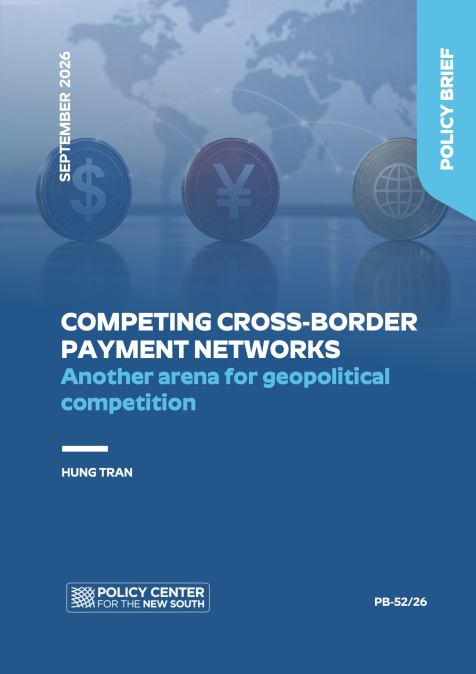
    Various competing cross-border payment networks have become vehicles for geopolitical competition. As tensions have risen, many countries want to secure access to cross-border payment systems by joining with like-minded countries to form interoperable networks, either via tokenization or Instant Payment Systems (IPSs). Three major projects are under development, serving the strategic interests of the US, China and the Rest of the World—corresponding to the three trading spheres taki ...
  • Authors
    September 9, 2026
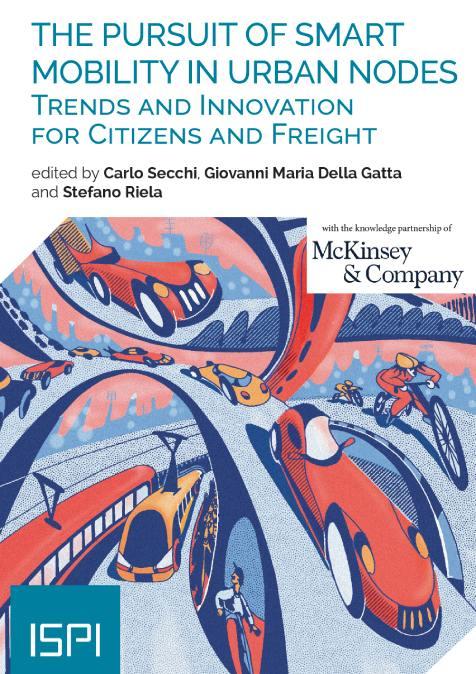
    This paper was originally published as a chapter in the ISPI report The Pursuit of Smart Mobility in Urban Nodes: Trends and Innovation for Citizens and Freight. Agglomeration economies have historically supported industrialisation and global integration by concentrating firms, labour and infrastructure in dynamic urban cores. However, these same forces have also generated persistent patterns of territorial polarisation. Drawing on New Economic Geography, this chapter interpret ...
  • Authors
    September 3, 2026
    “A band-aid on a bullet hole!” That’s how Charlie McElligott, a cross-asset strategist at Nomura, described the maneuver carried out by United States Treasury Secretary Scott Bessent on August 19. The U.S. Treasury Department announced that from September 9 to November 4, it would double the volume of long-term bond buybacks, going from $2 billion to at least $4 billion per operation, with a focus on maturities of between 10 and 30 years. ...
  • August 31, 2026
    Selon la dernière enquête nationale disponible, 57 % des femmes marocaines âgées de 15 à 74 ans, soit environ 7,6 millions de personnes, ont déclaré avoir subi au moins un acte de violence au cours des douze mois précédant l'enquête (HCP, 2019). Cette prévalence s'accompagne d'un coût économique direct et indirect estimé, pour la même période, à 2,85 milliards de dirhams (HCP, 2019). Ces deux ordres de grandeur — humain et économique — trouvent un écho dans les indicateurs du marché ...
  • August 25, 2026
    Predictions of American decline have become increasingly prevalent. The United States has run persistent trade deficits for decades, but its public debt now exceeds its annual economic output. Meanwhile, and new centers of industrial and technological power continue to emerge across Asia. Yet despite these developments, no country has so far replaced the United States as the main organizing power of the international economy. Conventional explanations explain this in terms of U.S. m ...
  • Authors
    August 5, 2026
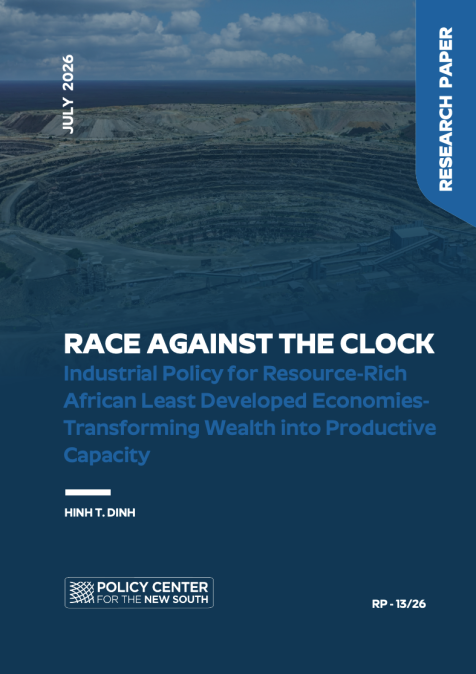
    This paper addresses the persistent challenge of resource dependence in the world's poorest countries, focusing on the ten poorest African nations where natural- resource rents average 14% of income. It argues that four decades of conventional policy advice, which treated resource dependence primarily as a revenue management problem, have failed to help these countries. While stabilization funds and permanent-income frameworks aim to smooth consumption, they do not answer the fundam ...
  • August 3, 2026
    This policy paper explores how China’s economic development model—rooted in pragmatism, long-term planning, and civilizational renewal—has become its most compelling soft power asset, particularly in the eyes of the Global South. While critically engaging with Joseph Nye’s original conception of soft power as a primarily cultural and normative force, the paper argues that China’s ability to transform itself from an impoverished postimperial state into the world’s largest trading nat ...