Publications /
Opinion
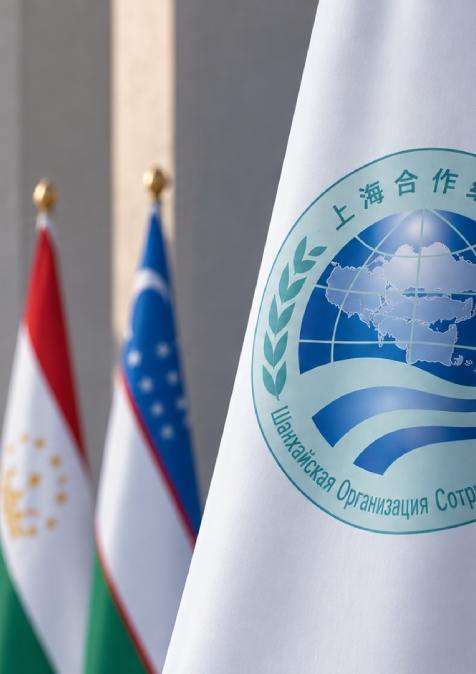
Much of Western debate was revealingly silent on the Shanghai Cooperation Organization (SCO) summit, which took place on August 31 and September 1 in Bishkek, Kyrgyzstan. That relative silence reflects how poorly the organization’s growing significance is still understood.
The meeting has not gone unreported. Any gathering of Xi Jinping, Narendra Modi, and Vladimir Putin inevitably attracts headlines. Yet much of the coverage still treats SCO as a regional organization, a diplomatic curiosity of Eurasia, or, more simplistically, an anti-Western gathering. That reading misses the point.
SCO’s significance lies not in whether it can replace the institutions created after the Second World War—it cannot and does not need to. Its importance is that it demonstrates that the West no longer has a monopoly over the institutions and conversations through which the international order is organized.
The SCO has ten member states, collectively accounting for 43% of the world’s population and 23% of the global economy[1]. More importantly, China and India sit at the same table—the two countries that will do more than almost any others to shape the economic trajectory of the twenty-first century.
Beijing and New Delhi do not see the world the same way. China is already a global power, while India still has far to go. Their differences are real, and their interests do not always coincide. Their relationship combines cooperation, competition, and strategic caution. But that is precisely why their presence matters within SCO.
Multilateralism is not meaningful when countries that already agree meet only to restate that they agree. The real test is whether countries with different interests, political systems, and strategic objectives can remain within the same institutional architecture and continue to talk, negotiate, and cooperate.
SCO increasingly provides that space. At the August 31-September 1 summit, its members adopted the Bishkek Declaration and 27 other documents covering security, economic cooperation, institutional development, and people-to-people exchanges[2]. They also reaffirmed their commitment to implementing the SCO Development Strategy through 2035[3].
Their discussions focus increasingly on trade, investment, energy, connectivity, technology, finance, and global governance. SCO is no longer only a security organization concerned with Central Asia. The evolution is already visible in practical initiatives. The SCO has developed mechanisms for trade facilitation and cooperation in transport, energy, digitalization, and science and technology.
The Joint Communiqué on Simplifying Trade Procedures and the organisation’s specialised ministerial platforms illustrate an agenda extending well beyond its original security concerns. [4] Although these mechanisms remain less institutionally integrated and binding than those of established global economic organisations, they clearly show the direction in which the SCO is evolving.
A similar shift is evident in BRICS. The two institutions are distinct and should not be artificially conflated: their memberships, histories, and purposes differ. Yet both reflect a growing determination among countries outside the traditional Western core to shape the rules, institutions, and priorities of the international order.
This is not necessarily a revolt against the current system. This should be noted because discussions in the West about multipolarity are often framed as if greater influence for the Global South must mean diminished influence for the West. International politics then becomes a zero-sum game: if China gains, the United States loses; if BRICS expands, the G7 retreats; if SCO grows stronger, Western institutions weaken.
The reality is considerably more complex. The comparison should not be overstated: the SCO and the G20 differ substantially in mandate, membership and institutional purpose. Yet their nearly simultaneous meetings illustrate the increasingly overlapping arenas in which global governance is being negotiated. While SCO leaders gathered in Bishkek, G20 finance ministers and central bank governors met in Asheville, North Carolina.
The G20 remains relevant. It brings together developed and emerging economies in a forum of unparalleled economic weight. It seeks to address serious questions, including sovereign debt, productivity, financial regulation, digital assets, cross-border payments, and global economic imbalances. Yet the Asheville meeting—especially compared to Bishkek—also showed how difficult G20 consensus has become.
The meeting concluded with a Chair’s Statement rather than a consensual communiqué, after China objected to several sections, including language on global imbalances and so-called non-market policies. Disagreement within the G20 is not inherently alarming; indeed, it is inevitable among major powers[5].
But placed side by side, the contrast is clear. At the G20, China was discussed primarily as a source of economic imbalance, and other major economies called on it to change its policies. At SCO, China participated alongside India, Russia, and Central Asian countries in discussions about how a different institutional platform might evolve. Same country, same week, but two very different conversations about the future of the international order.
Thus, the same countries are shaping multiple institutional conversations simultaneously and no single forum defines the whole order. The question is not whether SCO will replace the G20, the International Monetary Fund, the World Bank, or the United Nations. Institutions rarely disappear overnight. What changes first is how their memberships are organized.
For much of the post-war era, the institutions of global economic governance have reflected the overwhelming concentration of economic and political power in the transatlantic world. That architecture delivered extraordinary achievements, but the distribution of global power on which it was built no longer exists. Asia’s economic rise has changed the arithmetic. The comparison, however, should not be overstated. The SCO and the G20 differ substantially in mandate, membership and institutional purpose. Yet their simultaneous meetings illustrate the increasingly overlapping arenas in which global governance is being negotiated.
China is already the world’s largest economy in purchasing power parity. India is becoming increasingly significant economically. Together, their populations account for roughly one-third of humanity. Around them, economies across Asia, the Middle East, Africa, and the wider Global South, want greater strategic autonomy and a stronger voice in international decision-making.
Rather than asking whether these organizations are ‘anti-Western’, a more useful question is why there is such demand for them. That is a better test of what is changing in the world order. Countries do not invest political capital in alternative institutions only because someone in Beijing, Moscow, New Delhi, or Brasília tells them to. They participate because those institutions, however imperfect, respond to the perception that representation and influence within the post-war architecture have not kept pace with economic and demographic change.
That said, none of this means SCO is free of contradictions. Its members have diverging security concerns, relationships with the U.S. and Europe, economic structures, and sometimes competing geopolitical ambitions. Iran’s strategic circumstances differ profoundly from those of Kazakhstan or Uzbekistan, for example. Yet diversity is not evidence that an organization does not matter. The European Union has spent decades reconciling competing national interests. The G20 includes strategic rivals. The UN was never designed as a gathering of like-minded states.
Institutions matter because differences exist. The deeper significance of Bishkek may not lie in any individual declaration or initiative. Instead, it lies in the normalization of another political geography that is already influencing the international order.
A generation ago, a meeting of the leaders of China, India, Russia, and much of Central Asia could have been read as significant regional diplomacy. Today, it is increasingly difficult to dismiss as peripheral a grouping of states that collectively represents an enormous share of humanity, energy resources, industrial capacity, technological ambition, and future economic growth.
The West should pay closer attention, not out of fear of SCO but because understanding the organization is becoming necessary to understand the world. The emerging international order will not replace Washington with Beijing, the dollar with another currency, or one institutional hierarchy with another. It is likely to be messier at first, yet more plural and more contested than the previous order.
Countries will participate simultaneously in organizations once considered as belonging to competing geopolitical spheres. India is the clearest example: a member of SCO and BRICS, a participant in the Quad (along with Australia, Japan, and the U.S.), and a major partner of both the U.S. and Europe. That is not inconsistency; rather it illustrates a world with several centers of influence and overlapping coalitions.
The new order is being built gradually, summit by summit, institution by institution, agreement by agreement. Meanwhile, much of the debate in the old centers of power remains focused on whether it should exist at all. But history doesn’t wait for everyone to notice that it has begun.
[1] Shanghai Cooperation Organization, Worlddata.info, accessed September 13, 2026, https://www.worlddata.info/alliances/shanghai-cooperation.php.
[2] Following the SCO Council of Heads of States (CHS) Meeting, 28 documents were approved, including the Bishkek Declaration, the Protocol on Amendments and Additions to the SCO Charter, the Statement of the Council of Heads of State of the SCO Member States on Assistance to States Affected by Emergencies, as well as a number of other statements on key areas of the Organisation's activities. Decisions were made to sign a Memorandum of Understanding between the SCO Secretariat and the African Union Commission, and to approve the provisions on the Universal Centre for Countering Challenges and Threats to the Security of SCO Member States and on the Executive Committee of the SCO Anti-Drug Centre.
[3] Shanghai Cooperation Organisation, “The 26th Meeting of the Council of Heads of State of the SCO Member States and the ‘SCO Plus’ Meeting Held in Kyrgyzstan,” September 1, 2026, https://eng.sectsco.org/.
[4] Shanghai Cooperation Organisation, "Joint Communique of the Heads of State of the Shanghai Cooperation Organization on Simplifying Trade Procedures," June 10, 2018, https://eng.sectsco.org/files/443690/443690
[5] U.S. Department of the Treasury, “G20 Chair’s Statement,” September 1, 2026, https://home.treasury.gov/news/press-releases/sb0620; Philip Blenkinsop and David Lawder, “G20 Finance Chiefs Except China Back Action on Distorted Trade,” Reuters, September 1, 2026, updated September 2, 2026,https://www.reuters.com/world/china/us-pushes-g20-cut-trade-imbalances-focus-china-2026-09-01/.