Publications /
Policy Brief
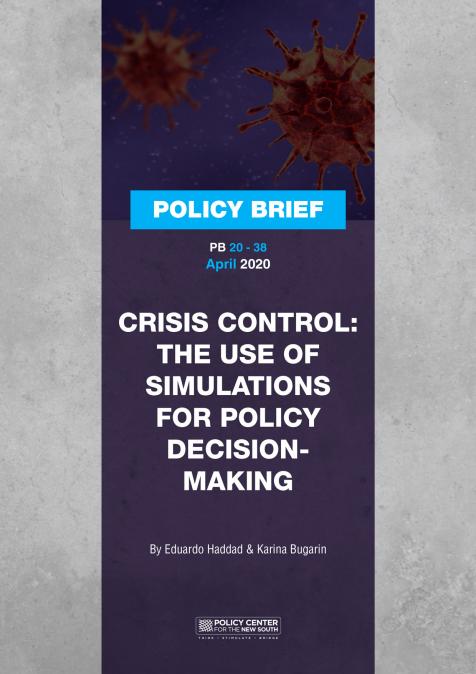
In face of the worldwide COVID-19 pandemic, use of evidence may be key to timely and precise decision-making. This policy brief explores the use of simulations in policy decisionmaking in the Brazilian State of São Paulo in fighting the COVID-19 pandemic. We draw briefly on the literature on evidence-based public policy to highlight the exacerbated need for timely decision-making and the role evidence plays in guiding high-level decisionmakers amidst a crisis. We present examples of simulations that can substantiate toplevel decision making, such as the assessment of the potential daily sectoral and regional economic costs of control strategies for mitigating the effects of COVID-19. Finally, the essential contextual elements of governance for informational use are provided as a set of recommended tools for policymakers.
Since December 31, 2019, the world has seen the rise of an unforeseen crisis: COVID-19. From the first official notification by the Chinese authorities on the disease up to now, there have been 2.3 million reported cases and over 163,000 deaths4. However, it gets worse. The degree of uncertainty about the virus (for instance, mutations and re-incidence) is unmeasurable. The World Health Organization (WHO) and governments worldwide are adhering to lockdowns or reduced circulation measures that hinder economic activity.