Publications /
Opinion
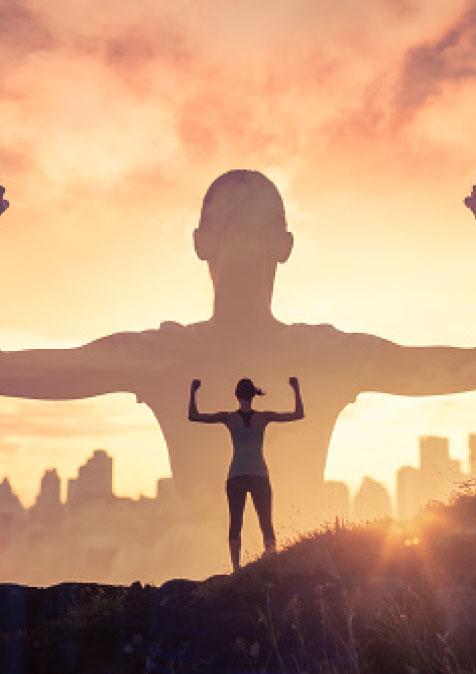
Mary-Jean Nleya is an alumna of the 2016 Atlantic Dialogues Emerging Leaders Program.
This opinion was previously published on CNBCAfrica on March 7th 2022.
International Women’s Day (IWD) is just around the corner, a day in which to pause and recognize the accomplishments of women all around the world and gain inspiration from such trailblazing women. IWD is of course not the only day, out of 365 days in a year, in which to celebrate women’s achievements – this should be done every day. IWD is, however, a symbolic day to draw attention to the importance of women’s rights and women’s empowerment as well as to observe all of women’s great feats throughout history.
IWD was first celebrated in 1911. And in 2022, over a century after its first celebration, there have been great strides made in the quest for gender equality, yet a lot still needs to be done.
According to a 2021 report, it will take the world 135.6 years to attain global gender equality in all spheres. Particularly at a time when progress towards gender equality was regressed by the pandemic.
Women’s representation and gender diversity in leadership positions in various sectors is one of the levers to drive gender equality. Yet women are significantly underrepresented in leadership positions in the political, social, corporate and academic spheres.
Women’s underrepresentation in leadership
Managerial and leadership positions continue to be male dominated with women holding approximately 27% of managerial roles. Oftentimes women speak of obstinate ‘glass ceilings’ that hinder women’s upward mobility to senior roles in the workplace. From politics to sports, media to leadership roles in business – one thing is clear women remain underrepresented.
For example, in the business world, on average, women hold 19.7% of corporate board seats, of that number 6.7% chair the boards and 5% are CEOs.
Women in leadership positions open up more opportunities for other women. In a recently released research study, it found that there is a relationship between having a female CEO and the gender diversity of their boards.
Breaking the bias
In addition to working hard, talented women in the workplace also have to shake off biases. Some of the additional challenges women face in the workplace are not explicit discriminatory acts, but subtle unconscious bias.
As with the theme of the IWD campaign for 2022, #BreakTheBias, it is time to break the bias that hold adept women back from advancing in their careers – and doing away with biases for example that say “leadership” always has a male face. These kinds of stereotypes do not serve society. Leadership roles are supposed to represent the diversity of the humanity they are designed to serve. To succeed in breaking the bias requires a concerted effort from both women and men in the workplace – in recognizing the subtlety of unconscious bias and creating an enabling work environment for talented women to thrive in their careers.
It is important for ambitious, hardworking and well deserving women in the workplace to be rewarded for their efforts in equitable ways without biases hindering their career moves. The antidote to unconscious bias and stereotyping against women in the workplace is normalizing highly skilled women occupying leadership and decision-making positions simultaneously and equitably with their male counterparts.
Leading women
While women’s underrepresentation in leadership roles is a reality, there are trailblazing women climbing up the career ladder and, in the process, shattering glass ceilings and breaking the bias.
Women such as Dr. Ngozi Okonjo-Iweala, the World Trade Organization (WTO) Director-General, who became the first female and first African to serve in the top-most role of the WTO in March 2021.
Another leading woman is Deloitte Africa’s first female CEO, Ruwayda Redfearn – who will occupy the position of CEO effective 1 June 2022. In an interview with her on 25 February 2022, she said: “The business environment is still predominantly male … the more female leaders you have, gives us the opportunity to make those big shifts.”
In addition to Ruwayda Redfearn’s recent appointment, Deloitte East Africa also announced its first female CEO, Anne Muraya, who will assume her position as CEO also effective on 1 June 2022.
In sports, Salima Mukansanga became the Africa Cup of Nations’ first female officiating referee in the group stages of the soccer competition in 2022.
In Egypt, Radwa Helmi on 5 March 2022 became the first woman judge to chair over a hearing in the country’s State Council.
Women all over the African continent, and beyond, are normalizing female leadership by advancing in their respective careers and in so doing paving the way for other women.
While women in recent times are making inspiring moves; history also speaks to the notable feats of female warriors and leaders. One such example, of a leading woman from history, is Yaa Asantewaa of the Ashanti Empire, which is today modern-day Ghana. She was a queen warrior who in 1886 led an army to protect her kingdom’s golden stool.
Gender-equal countries
There are countries that have made visible steps in support of women’s representation and leadership as part of their commitments towards gender equality.
According to the 2021 Global Gender Gap Index, the country with the most gender parity is Iceland with 89.2% of the gender divide closed. The two African countries in the top 10 list of countries with the most gender gaps closed are: Namibia at 80.9% – ranking 6 – and just behind it, ranked at 7, is Rwanda sitting at 80.5% of the gender gap closed as of 2021.
Rwanda also has a female majority parliament at 61.3% – which bucks the global trend when it comes to gender diversity in parliament.
International Women’s Day 2022
It is important to uplift the status of women’s leadership on the African continent and indeed globally. Hence the significance of days such as IWD that draws the world’s attention to the important topic, women’s empowerment.
Women’s empowerment is not only for the benefit of one gender over the other, it is about ultimately elevating society as a whole. It means making society make adequate and equal use of the skillset and expertise of a previously unrealized half of the population.
While this article focuses mainly on women’s empowerment from the angle of women’s career advancement and particularly women in leadership; however, one thing is sure, women’s empowerment is not only to celebrate or advocate for career women. Women’s empowerment celebrates the fullness of ‘womanity’. That is, the opportunity for a woman, no matter where she is in the world, to be at liberty to choose who she wants to be and thrive: as a homemaker, a career woman or both – free from bias and stereotypes.
Happy International Women’s Day. Celebrating the fullness of womanity every day.
*Mary-Jean Nleya is a writer for The Global Communiqué. She is an Emerging Leader alumnus of the Policy Center for the New South and a One Young World ambassador.