Publications /
Opinion
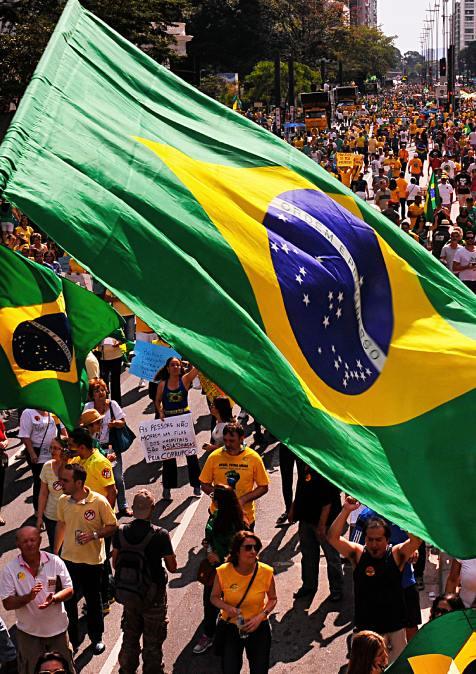
Brazil's election poses a question that extends well beyond Latin America: how much freedom does a country retain to define its international role when external pressure collides with domestic political exhaustion? For the Global South, the answer matters more than any foreign government's preference regarding the next occupant of the presidential palace. Strategic autonomy remains fragile if every change of government puts a country's freedom of action back up for negotiation.
Senator Flavio Bolsonaro's first-round lead over President Luiz Inacio Lula da Silva makes a change of direction possible, although the runoff on 25 October 2026 remains an open contest. Lula faces an electorate concerned about living costs, insecurity and the performance of public institutions. His political camp has governed for roughly sixteen years since 2003, albeit with an interruption. He must explain why a further mandate would produce results that this accumulated experience has so far failed to deliver. Sovereignty cannot settle the political debts of an administration.
Yet domestic disappointment does not give foreign powers a mandate to shape Brazil's choices. Washington's use of economic pressure, including tariffs publicly linked to former President Jair Bolsonaro's treatment, has made that distinction harder to ignore. An election can be driven primarily by domestic grievances while also serving as an arena for outside intervention. Recognizing one does not require denying the other.
Trump's explicit revival of the Monroe Doctrine gives this pressure broader strategic significance. The ambition to restore American primacy in the hemisphere includes curbing the influence of competing powers. Brazil's relationship with China therefore becomes more than a bilateral commercial matter: it tests whether a major developing country can sustain partnerships that Washington regards with suspicion. Latin American independence did not confer on any external power the authority to decide which relationships its neighbors may pursue.
Countries elsewhere in the Global South should recognize the implications without assuming their circumstances are identical. Outside powers exert influence through access to markets, finance, technology and security cooperation. These relationships become instruments of constraint when continued access depends on strategic obedience. For a government seeking investment or managing an economic crisis, the formal right to refuse may coexist with costs that make refusal prohibitively difficult in practice.
Brazil matters because its scale provides protections that many developing countries lack. Its agricultural output, energy resources, domestic market and diplomatic networks confer considerable bargaining power. Even so, political polarization can weaken its ability to use those advantages coherently. If a country with Brazil's resources struggles to maintain continuity in its international strategy, smaller economies have reason to examine the institutions that safeguard their own choices.
Autonomy therefore requires domestic foundations. A political system preoccupied with personal rivalries and inherited grievances struggles to set priorities beyond the next election. Brazil needs to renew its capacity to discuss productivity, education, industrial development and technological competence. Without such a program, foreign policy risks becoming another instrument of partisan identification, with each government treating its predecessor's partnerships as liabilities.
This does not mean placing diplomacy beyond democratic debate. An incoming administration has every right to change priorities. It should, however, explain the costs and benefits of doing so. A Bolsonaro government might favor closer relations with Washington, but affinity cannot erase competition: Brazilian and American soybean producers compete for access to the same Chinese market. An American agreement that secures additional sales to China could disadvantage Brazilian exporters. Political friendship offers no exemption from commercial rivalry. Likewise, an agreement granting the United States preferential access to Brazil’s rare earth minerals could have long-term consequences if strategic assets are treated merely as commodities rather than as instruments of industrial and technological development. It could also constrain Brazil’s ability to build stronger partnerships and capture greater value from its wider international relationships.
Brazil must also assess its options against the shifting geography of economic opportunity. The United States and Europe remain important partners, but the additional benefits of closer political alignment could be modest compared with the opportunities lost by limiting engagement with Asia. In 2025, Asia accounted for 43.1 per cent of Brazilian exports. The strategic question is how Brazil can translate that relationship into broader access to investment, technology and productive partnerships, thereby extending its ambitions beyond commodity sales.
A change of government should therefore not prompt Brazil to relinquish its leadership role in the Global South or downplay its participation in BRICS as a gesture of alignment with Western partners. Such a retreat would forfeit important platforms through which Brazil can influence negotiations on development finance, trade and institutional reform. It could also weaken Brazil's bargaining position with the very partners a new administration might seek to court. A country with fewer credible alternatives has less negotiating power.
Leadership is neither automatic nor the property of any political party. It must be earned through sustained engagement with African, Asian and Latin American partners, attention to their priorities, and initiatives that deliver shared benefits. Brazil can deepen relations with Washington and European capitals while remaining an active participant in BRICS and a consequential voice in the Global South. Abandoning those roles for uncertain diplomatic favor would trade accumulated influence for benefits whose value and durability remain unproven.
Nor should China assume that its economic importance guarantees enduring Brazilian support. A partnership focused on commodities in one direction and manufactured goods in the other leaves legitimate concerns about industrial development unaddressed. Cooperation becomes more resilient when it expands local production, skills and technological capabilities. Autonomy is strengthened by having more viable options, not by replacing dependence on one partner with dependence on another.
For the Global South, these realities point to a practical agenda. Governments should identify vulnerabilities before a diplomatic dispute exposes them: dependence on concentrated export markets, limited financing channels, and reliance on essential technologies from a single supplier. Diversification carries costs, but these should be weighed against the cost of losing bargaining freedom. Regional infrastructure, trade facilitation, and shared technical capacity can make alternatives commercially viable rather than merely diplomatically attractive.
Institutions also matter. Brazil and China adopted a strategic plan covering 2022 to 2031 during Jair Bolsonaro's presidency, demonstrating that cooperation can transcend ideological boundaries. Such arrangements deserve regular review, transparent implementation, and, where appropriate, parliamentary scrutiny. Their value lies in preserving knowledge and commitments while allowing elected governments to revise policy. Continuity should make democratic choice better informed, not less consequential.
Collective institutions must likewise justify themselves by their results. The New Development Bank's approved program for sustainable infrastructure in Brazil's North, Northeast and Central-West links cooperation among developing countries to specific investment needs. Its significance depends on delivery, financing conditions and public accountability. BRICS membership alone cannot establish that a project serves national development; equally, partisan hostility should not prevent governments from assessing its benefits fairly.
There is also a consistency test. The Global South cannot credibly oppose interference only when it targets sympathetic governments. Its members have divergent interests, political systems and external relationships. A workable common position therefore requires a limited but firm principle: no partner should use economic coercion or promises of preferential treatment to secure a particular electoral outcome. The standard must apply equally to Washington, Beijing, Brussels and regional powers.
Ordinary diplomacy and investment inevitably create influence. The key distinction is whether cooperation proceeds through legitimate institutions on transparent terms, or whether benefits and penalties are tied to voters’ support for a foreign power’s preferred candidate. Respect for sovereignty requires accepting political outcomes that disappoint foreign partners. It also requires rejecting the claim that scrutiny of domestic failures somehow serves an external enemy.
Brazil's runoff will decide who governs the country. It will also test whether political change can coexist with a coherent understanding of enduring national interests. Lula must answer for his record; Bolsonaro, whose undistinguished political career has also been marked by controversy, must account for the implications of his proposed alignments. Neither should inherit a license to confuse personal loyalties with the country's future. Brazil's international position has been built across governments and generations. Its value should be assessed over a longer horizon than any presidential term.
For the Global South, the task is broader than defending Brazil against pressure. It is about building the economic capacity, domestic legitimacy and institutional continuity that make refusal possible without making it ruinous. Independence established the right to self-govern. Strategic autonomy is the ongoing work of ensuring that this right can be exercised.
Alea jacta est!
Marta Watanabe e Álvaro Fagundes, "Asia Gains Ground in Brazil's Trade Amid Trump Policy Shift," Valor International, 2 February 2026, https://valorinternational.globo.com/economy/news/2026/02/02/asia-gains-ground-in-brazils-trade-amid-trump-policy-shift.ghtml.