Podcasts

Back

The New Security Dynamics of the Atlantic Basin and the Way Forward for a Pan-Atlantic Approach

20
January 2023
Imane Lahrich & Youssef Tobi

Within the realm of military conflicts, the Atlantic Basin can be considered a relatively peaceful area, especially in the northern part. However, the region has faced unprecedented challenges in terms of policy planning and strategizing with the emergence of the global pandemic, the stagnating economic growth, and the population’s growing discontent toward public institutions. The conjunction of sanitary, economic, and political crisis has questioned the historical stability of western countries and gave traction to the preexisting populist and far-right agendas in many parts of northern Atlantic. In the southern Atlantic preexisting conditions of socio-economic precarity and political instability have been exacerbated by recent events and African Atlantic states face an unprecedented challenge of finding new approach to economic and political development amid a global uncertainty both in the markets and in the international scene. In this context, a pan-Atlantic approach of the Atlantic basin can help foster new dialogue for peace and new ways to look at global security.

This podcast episode was produced as part of the Jean Monnet Atlantic Network 2.0, with the support of the European Union's Erasmus+ Program. The opinions expressed in the recorded content are solely those of the authors, as such,  neither the Agency nor the Commission can be held accountable for any use of the information it presents.

 

RELATED CONTENT

  • Authors
    Giovanna Rinaldo
    November 4, 2026
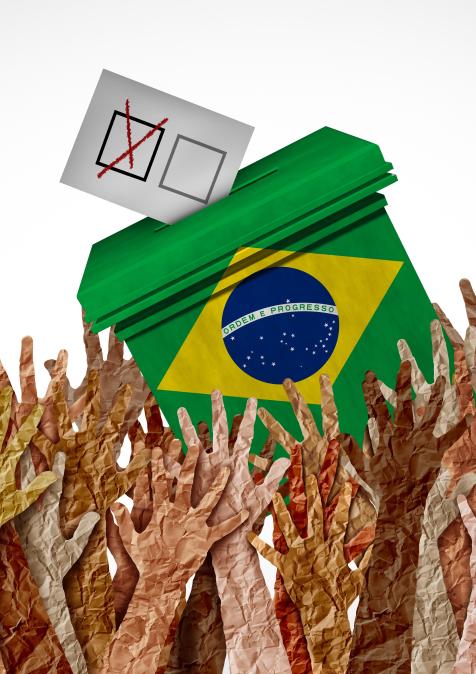
    Brazil’s presidential election, which concluded on October 25, 2026, was above all a digital battle. This is nothing new; the impact of social media on elections has been widely analyzed since Barack Obama's 2008 win marked a turning point for digital campaigning worldwide. Almost two decades later, social media is an entirely different breed, with a life of its own – and still very little regulation within electoral politics. The danger, however, is that digital players now also in ...
  • Authors
    October 29, 2026
    Wars are decided by those who hold military power, but their costs are increasingly borne by those who have little or no voice in the decisions that start them. The US–Iran war shows this imbalance very clearly. Its economic consequences have gone far beyond the battlefield and have disrupted energy markets, trade routes, food supplies, public finances and investment in the Gulf, Europe, Africa and Asia. The most striking feature of the conflict, however, is not only the size of the ...
  • October 22, 2026
    Strategic hedging is rational when it preserves a worthwhile choice at a tolerable cost while respecting existing commitments. Drawing on the literature on hedging and Latin American autonomy, this Policy Brief examines contrasting illustrations of that proposition. It distinguishes ambiguity about future alignment from uncertainty about existing obligations and explains how clearly bounded commitments can reconcile autonomy with credibility. The cases reveal different vulnerabiliti ...
  • Authors
    October 13, 2026
    “Every gun that is made, every warship launched, every rocket fired signifies in the final sense, a theft from those who hunger and are not fed, those who are cold and are not clothed.”President Dwight Eisenhower, April 16, 1953 This paper examines the economic and human impacts of the first six months of the Iran war—from February to the end of August 2026—on Iran’s Arab neighbors and compares these impacts with those on the three countries directly involved—Iran, Israel and t ...
  • Authors
    Paul Isbell
    October 9, 2026
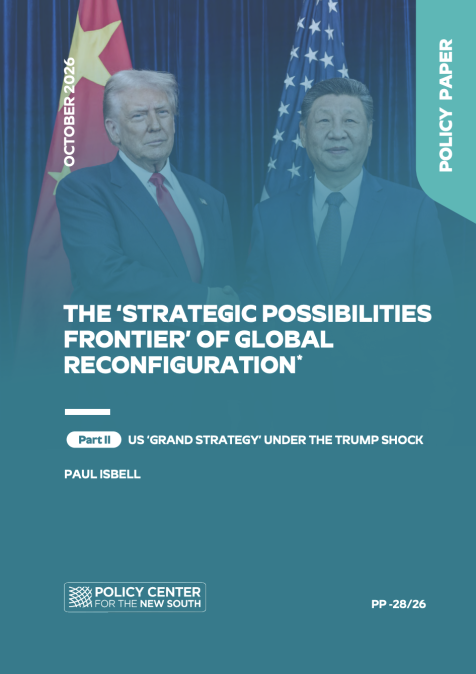
    In the first seven Policy Briefs of this ongoing series of analysis on Pan-Atlanticism: The Atlantic Basin in a Multipolar-Transnational World, we developed the argument that the strategic significance of the Atlantic Basin is on the rise for a range of international actors (states, regions and non-state agents) and from distinct political or ideological perspectives. In addition, in the most recently published Policy Brief -- “The U.S. and the Current International Reconfiguration: ...
  • October 02, 2026
    Building on his Policy Brief "Latin America, World Politics and the Great Powers", Nizar Messari examines how recent developments are reshaping U.S. influence in the region and affecting ...
  • Authors
    September 30, 2026
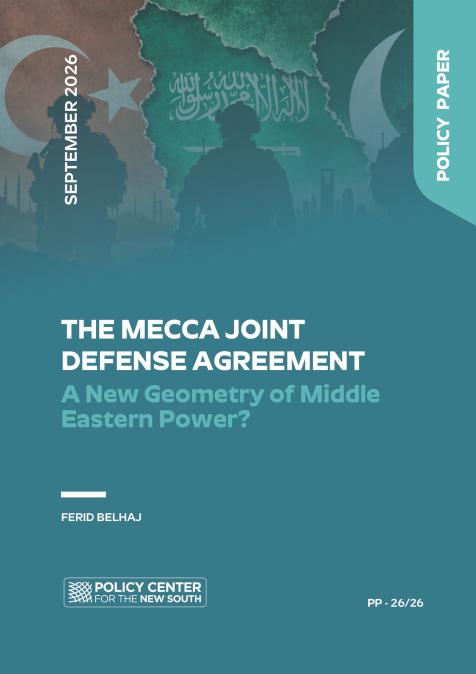
    On August 7, 2026, Saudi Arabia, Turkey, and Pakistan signed the Mecca Joint Défense Agreement, a collective-defense pact widely compared to NATO’s Article 5. This essay argues that the comparison is misleading. Mecca borrows NATO’s language of solidarity without yet possessing NATO’s institutional machinery, and the Houthi offensive against Saudi Arabia in September 2026 provided an early and revealing test of what the agreement actually means in practice. Neither Pakistan nor Turk ...
  • September 25, 2026
    In this episode, Senior Fellow Ian Lesser examines the United States’ longstanding ties with the Mediterranean as the country marks its 250th anniversary. He discusses how a possible shif ...