Podcasts

Back

Identifier les classes moyennes africaines

06
June 2017
Clélie Nallet

Ce podcast est présenté par Mme. Clélie Nallet, chercheur au Programme Afrique subsaharienne de l’Ifri. La catégorie « classes moyennes africaines » est désormais largement mobilisée dans les sphères économique et politique. Popularisées par le rapport de 2011 de la Banque Africaine de Développement, les classes moyennes sont devenues un symbole des bonnes performances économiques du continent africain ainsi que son dynamisme démographique. Le terme de « classe moyenne » est néanmoins particulièrement polysémique et englobant, et peut désigner des réalités sociales très variées. Son utilisation et les interprétations qui y sont liées sont à considérer avec prudence. Cette présentation revient sur la question de la définition de ces classes moyennes. Elle retrace la manière dont elles ont été définies dans la littérature des institutions internationales de développement puis propose une approche plus qualitative par leurs pratiques, permettant ainsi de mieux saisir les transformations socio-économiques en cours sur le continent.
RELATED CONTENT

  • Authors
    Prakash Loungani
    November 9, 2016
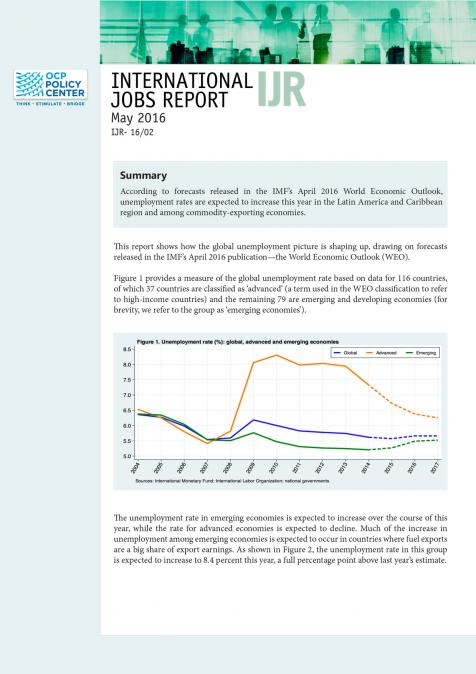
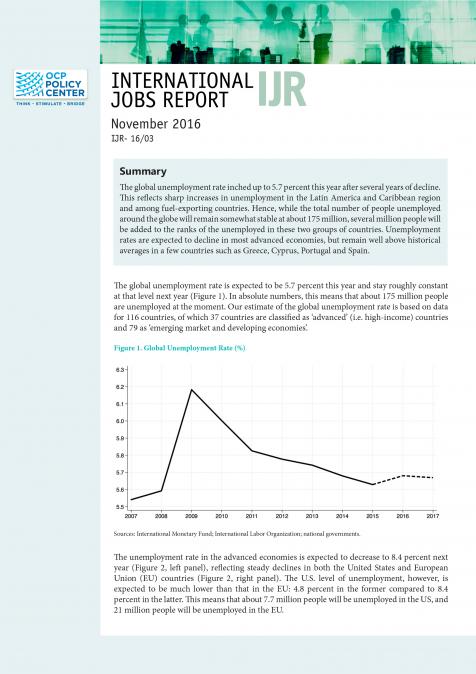
    The global unemployment rate inched up to 5.7 percent this year after several years of decline. This reflects sharp increases in unemployment in the Latin America and Caribbean region and among fuel-exporting countries. Hence, while the total number of people unemployed around the globe will remain somewhat stable at about 175 million, several million people will be added to the ranks of the unemployed in these two groups of countries. Unemployment rates are expected to decline in m ...
  • July 13, 2016
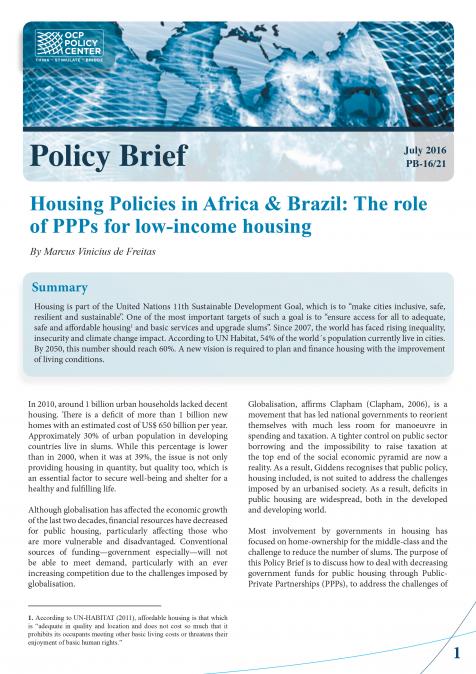
    Housing is part of the United Nations 11th Sustainable Development Goal, which is to “make cities inclusive, safe, resilient and sustainable”. One of the most important targets of such a goal is to “ensure access for all to adequate, safe and affordable housing1 and basic services and upgrade slums”. Since 2007, the world has faced rising inequality, insecurity and climate change impact. According to UN Habitat, 54% of the world´s population currently live in cities. By 2050, this n ...
  • Authors
    Russel Dinh
    January 27, 2016
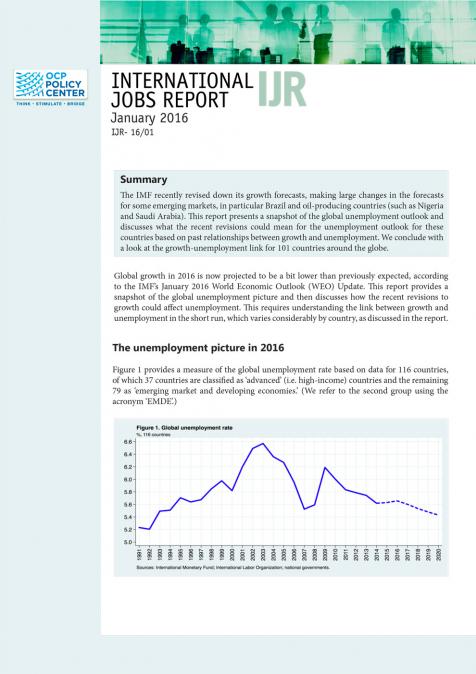
    The IMF recently revised down its growth forecasts, making large changes in the forecasts for some emerging markets, in particular Brazil and oil-producing countries (such as Nigeria and Saudi Arabia). This report presents a snapshot of the global unemployment outlook and discusses what the recent revisions could mean for the unemployment outlook for these countries based on past relationships between growth and unemployment. We conclude with a look at the growth-unemployment link f ...