Publications /
Opinion

A feeling of collective insanity has overtaken the world since the Coronavirus Disease 2019 (COVID-2019) emerged in Wuhan, China. The virus—more lethal than influenza—was initially treated lightly by the West. This approach showed the lack of preparedness of many countries in dealing with the epidemics we are currently facing. Instead of implementing immediate measures to deal with the challenges imposed, some political and business leaders started labeling COVID-19 as the Chinese virus or Kung-Flu. Asian people around the world have been attacked or ostracized, enhancing racial discrimination and unfairness.
The truth is that while coronavirus was a problem initially affecting mostly China and Asia, the West waited while doing little to address the challenge. As the spread of COVID-19 intensified, the virus found a fertile breeding ground because of enormous inefficiencies in public healthcare systems. From Italy, COVID-19 spread rapidly throughout the world, particularly in the Northern Hemisphere.
To hide the lack of capacity for dealing with such an extreme situation, conspiracy theories started popping up exponentially. History shows that conspiracy theories demonize certain groups. For instance, Jews were blamed by anti-for the Black Death in Europe and the economic chaos in Germany before World War II. Conspiracy theories are used to justify xenophobic, racist and discriminatory behavior. The scapegoat now is Asia. Daily, new conspiracy theories come to light in the West—from Chinese eating habits to a supposed financial orchestration enabling global companies to be bought at reduced prices. But there have also been conspiracy theories in China regarding the first cases of COVID-19. These affirm, for instance, that the 7th CISM Military World Games, held on October 18-27, 2019, in Wuhan, were the cause of the transmission of the disease by the Americans to the Chinese. Only time will tell whether there is any empirical evidence to justify any assumptions behind these theories.
It is essential to highlight four critical aspects in an age of so much information but such superficial understanding. The first relates to the Chinese government's alleged delay in releasing data on COVID-19. Governments generally opt to be slow to disclose epidemics. In a country with 1.4 billion people, this becomes even more complicated since collective panic could have generated a very stressful impact in the country. It generally takes time to solidify knowledge about a disease outbreak and its reach. The Chinese government addressed the issue once it realised the seriousness of the situation. Additionally, one should stress that the country that identifies the outbreak of the virus might not be necessarily the country where the virus came into being. In the West, for instance, there have also been delays in communicating epidemics. For example, during the Ronald Reagan Administration, recognition in the U.S. of the devastating impact of HIV took a long time to happen, with a devastating mortality impact.
Secondly, COVID-19 is a disease that has emerged in the Global North. When a particular disease occurs in the Global North, its repercussions are wider. The North still controls the global narrative. Ebola in West Africa was much more worrying and lethal. Since it was a disease of the Global South, African countries received limited support in dealing with the illness. However, they managed to solve the situation.
Third, with the political divide in the West increasing, because of financial crises and decreasing productivity, COVID-19 has also become a political tool with which to address grievances against governments including Trump’s, Johnson’s and even Bolsonaro’s in Brazil. Added into this equation is the electoral cycle of the United States and President Donald Trump's antagonistic relationship with the media, which fuels the feeling that whatever he does, will be wrong or not enough, or for those who support him, a sense of constant persecution.
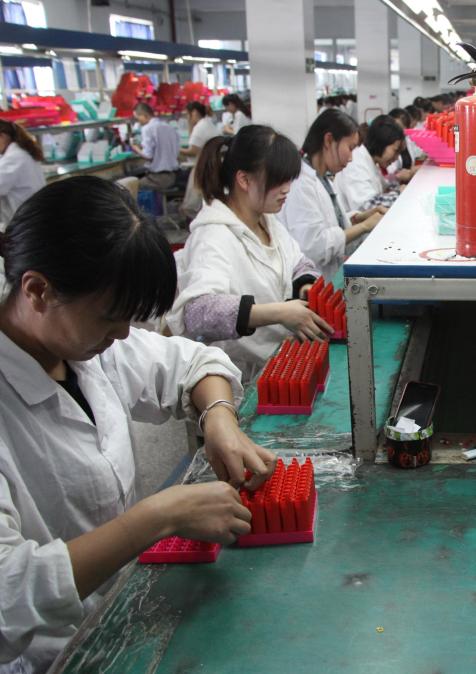
Fourth, the world has realized how dependent it is on China as the global factory and that it cannot meet the demands of a growing, wealthier China. China has started to assume great-power status, generating a new normal of China-bashing. The truth is that China has presented a different model to liberalism for economic development. To those who believed 1989 was the end of history, this alternative has created great cognitive dissonance. In a world full of diversity, the possibility of accepting alternative ways to achieve development seems to be entirely comprehensible. The stigmatization of China at this moment only serves the political purpose of creating an imaginary adversary at the cost of the wellbeing of the people affected by COVID-19. The reality is that, despite all conspiracy theories, China is likely to emerge stronger from this crisis, with a particularly positive impact on its social fabric. In terms of governance, the gap will be even greater, when comparing with the inefficient and clumsy way in which the West has dealt with COVID-19 thus far.
In China, the words crisis (Wéijī, 危机) and opportunity (jīhuì, 机会), carry one common ideogram. In every crisis, there is opportunity. The Chinese will find opportunities in COVID-19 despite the crisis. Hopefully, the West will have the wisdom to also find new opportunities deriving from the crisis. This is a moment for cooperation, not great power competition.