
Technology, Military Power, and the New Geopolitics of Security

February 27, 2026

Technological and industrial capabilities have become core instruments of state power, reshaping military strategies, economic competition, and global influence. The rapid rise of AI, cyber warfare, autonomous systems, and advanced manufacturing is redefining how states project power and deter adversaries. While technological leadership offers opportunities for innovation and strategic advantage, it also generates new risks related to escalation, dependency, and asymmetric vulnerabilities. In this evolving geopolitical landscape, the ability to integrate technology, industry, and strategy is increasingly decisive for long-term sovereignty and influence.

Speakers
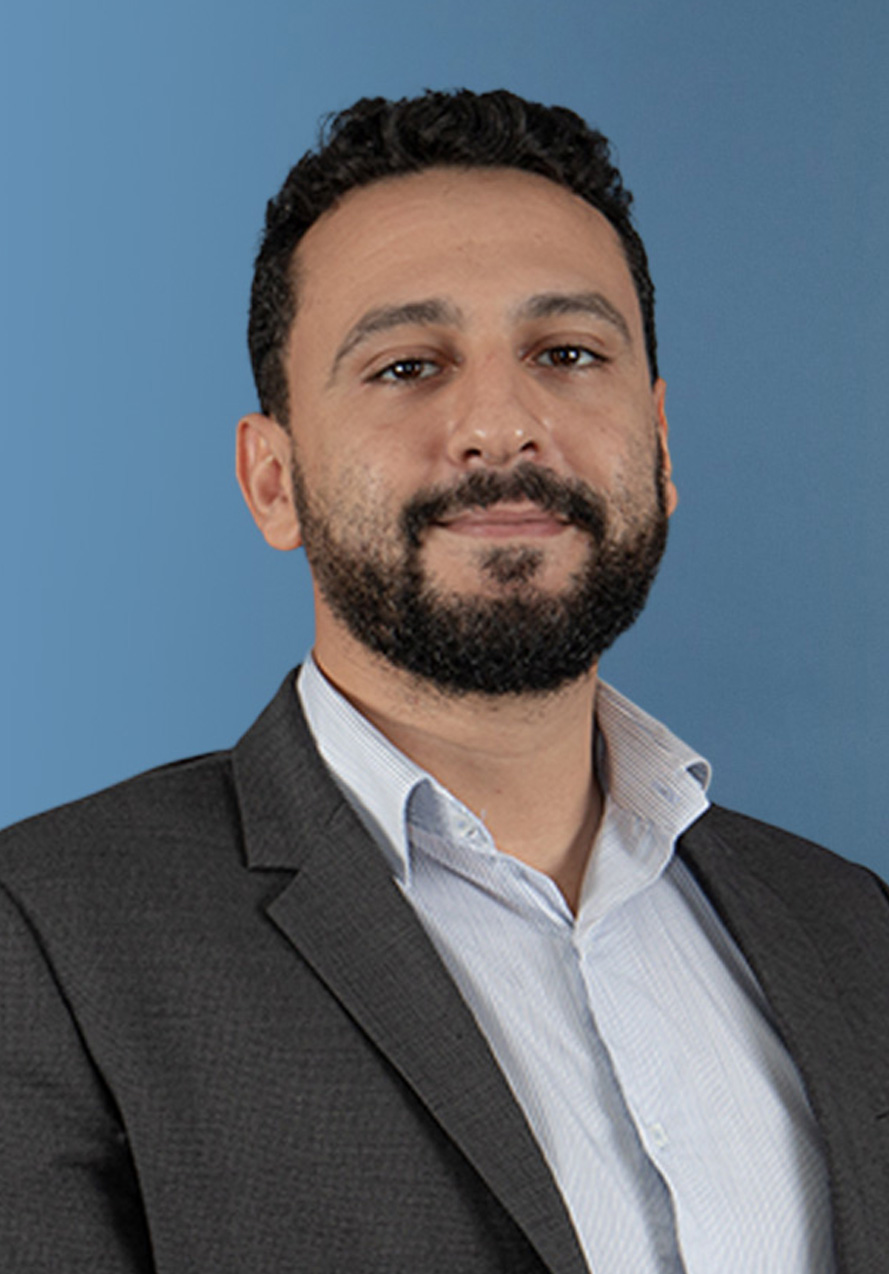
Akram Zaoui
Chargé de Mission to the Executive President
Akram Zaoui is a Senior International Relations Specialist and Chargé de Mission to the Executive President at the Policy Center for the New South (PCNS). Prior to this, he was Manager of Research Support and the Public Policy Lab at the PCNS. His main area of interest is the geopolitical economy of the Extended Middle East and North Africa (MENA) region. From 2018 to 2020, Zaoui was the coordinator of a network of 70+ civil society organizations (CSOs) across France, working with foundations, government, local communities, and the private sector. Zaoui holds a dual degree in corporate and public management from HEC Paris and Sciences Po, as well as a bachelor's degree (licence) in history from Université Paris 1 Panthéon-Sorbonne. He audited courses in Iranian and Shia Stud ...

RELATED CONTENT

  • April 07, 2016
    This podcast is performed by Daniel Twining. U.S. Security Policy in the East Asian Context For the United States, some of the main challenges facing the U.S. security policies in East As ...
  • Authors
    Youssef Amrani
    Guillaume Lasconjarias
    Jean-Loup Samaan
    April 6, 2016
    Lors du Sommet de Lisbonne des 19 et 20 novembre 2010, l’Alliance atlantique a adopté son troisième concept stratégique post-bipolaire qui consacre le processus de transformation structurelle et fonctionnelle. La projection de puissance et la stabilisation des théâtres extérieurs sont les nouvelles missions qui viennent s’ajouter à la mission classique de la défense mutuelle. Dès lors, l’OTAN passe du rôle d’alliance défensive régionale à celui d’acteur international de sécurité et ...
  • Authors
    February 23, 2016
    Deux des plus grands producteurs d'hydrocarbures en Afrique, le Nigeria sur l'Atlantique et la Libye sur la Méditerranée font face aux deux groupes terroristes les plus violents sur le continent. Daech version libyenne et Boko Haram semblent avancer pour se rejoindre dans un espace constitué par trois Etats qui présentent des vulnérabilités favorables à l'extension du terrorisme. Au Cameroun, le chao est à craindre dans l'après Biya. La battle fatigue peut atteindre l'Etat tchadien ...
  • Authors
    December 7, 2015
    The Euro-Mediterranean Partnership was initiated with the aim to build a space of shared prosperity and security among all the countries in the region. The achievement of this objective, however, continues to be challenged by several geopolitical, economic and social factors. In such a context, there is now a greater urgency to adapt the approach and the instruments, thus allowing Euro-Mediterranean partners to seize opportunities towards an effective area of shared stability and pr ...
  • May 22, 2015
    Le Maroc dispose d’un espace maritime stratégique grâce auquel il peut renforcer ses attributs de puissance. Cet atout géopolitique et économique doit être porté par une véritable ambition nationale maritime. Quels sont les défis sécuritaires à surmonter et quelles sont les opportunités qui s’offrent aux Maroc sur le plan géopolitique? Autant de questions qui interpellent pouvoirs publics et think thanks nationaux. A ce titre, OCP Policy Center organise un Colloque sur la ...
  • Authors
    Alexis Arieff
    July 1, 2011
    This paper explores the recent evolution of security cooperation between the United States and Algeria, which have forged a strong partnership on counterterrorism despite lingering mutual distrust. The United States has strengthened its defense outreach to Algeria over the past decade, largely based on concerns over transnational terrorism, and Algeria has sought to benefit from this outreach as it positions itself as a vital player on regional issues following years of civil confli ...
  • From

    16
    5:30 pm February 2022
    Rida Lyammouri, Senior Fellow at Policy Center for the New South, will be speaking at the webinar “security and governence in africa: sahel and libya” organized by frica Study Group in partnership with The Middle East Institute. The security dynamics of the Maghreb and the Sahel are intertwined and the consequences of the Libyan conflict on the Sahel have been serious. Since its beginning in 2011, this conflict has triggered global concern about the economic, security, and geostrategic impacts on the Sahel. Current threats are posed by the illicit transfer, destabilizing accumulation, and misuse of arms, as well as the flow of armed groups and mercenaries. Despite considerable international efforts, especially by African countries, the Sahel is still experiencing one of the ...
