Présentation du rapport « Diagnostic du secteur privé »

May 7, 2026

Le rapport de diagnostic du secteur privé au Maroc met en lumière les principaux défis qui freinent encore l’investissement privé et la création d’emplois, malgré les avancées réalisées en matière de stabilité macroéconomique, d’infrastructures et de réformes. Il identifie notamment la complexité réglementaire, le déficit de compétences et le manque de dynamisme des marchés comme des obstacles majeurs à une croissance plus inclusive. Le rapport se concentre sur quatre secteurs à fort potentiel, le solaire décentralisé, le textile bas carbone, l’huile d’argan et les cosmétiques naturels, ainsi que l’aquaculture marine considérés comme des leviers stratégiques pour soutenir la transition verte, renforcer la compétitivité et stimuler l’emploi, notamment pour les jeunes et les femmes.
Speakers
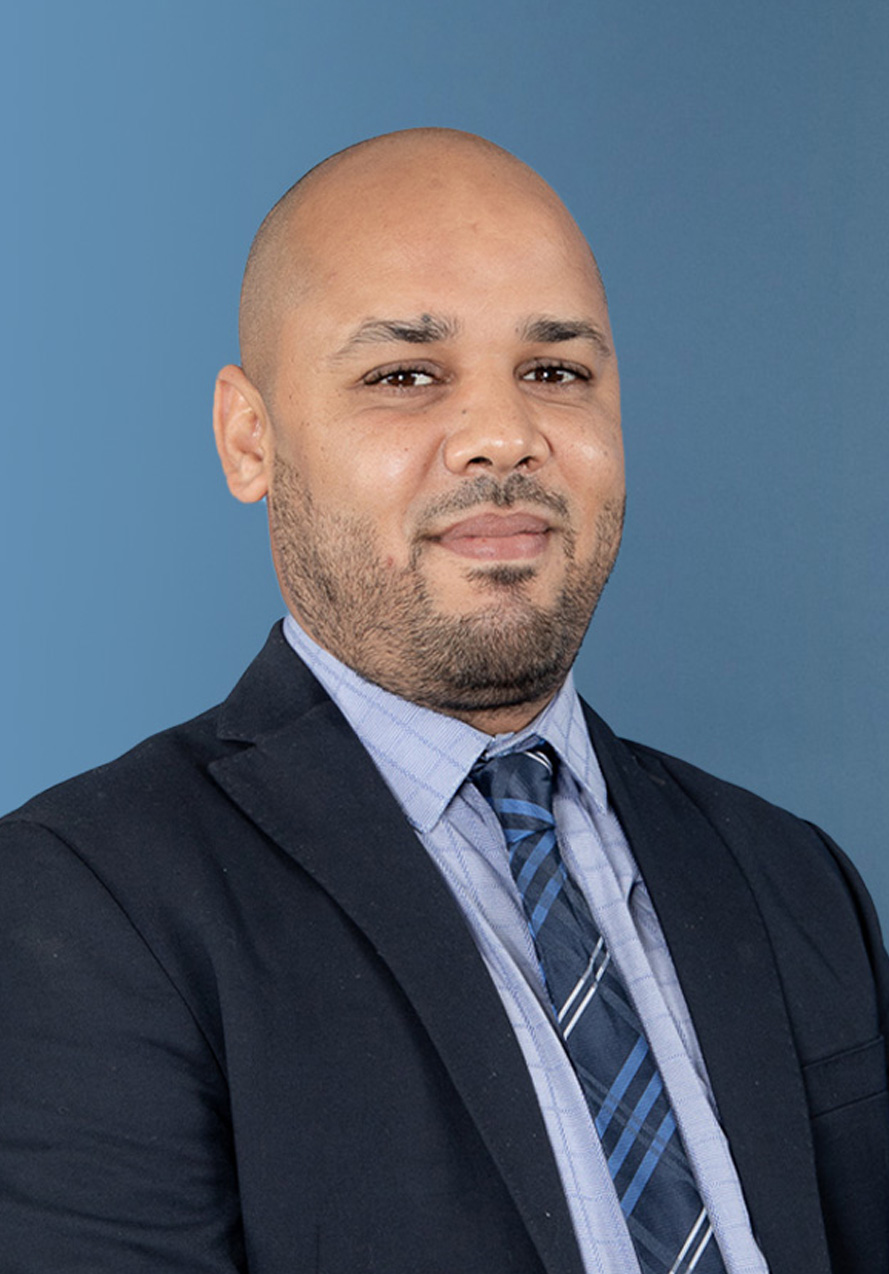
Tayeb Ghazi
Senior Economist
Tayeb Ghazi is Senior Economist at the Policy Center for the New South (PCNS). He is also a member of the Social and Solidarity Economy Research Group at Cadi Ayyad University and holds a master's degree in applied finance from the same university. He is currently working on topics related to labour market, education, migration and some aspects of international trade in developing countries. ...

RELATED CONTENT

  • Authors
    Samuel George
    September 27, 2016
    On July 15, Turkey’s tumultuous 2016 took a shocking twist as elements within the country’s military attempted a coup against the government of President Recep Tayyip Erdogan. The putsch rapidly snapped at the seams, and a night that began with soldiers blocking bridges yielded a morning with those same soldiers flogged by civilians in the street. In the days following the attempt, Erdogan declared a three-month state of emergency and began purges of depth and breadth that extended ...
  • September 07, 2016
    Ce podcast est délivré par Moubarack Lo. Cette présentation a pour objet de définir une théorie de l’émergence économique, qui constitue une étape vers la convergence avec les pays dévelo ...
  • Authors
    Aleksandr V. Gevorkyan
    August 15, 2016
    Emerging market economies (EM) as a special class of financial assets have recently been subject to two competing tales. On the one hand, there is evidence of continued financial deepening and further integration within the global financial system, while the offer of higher yields remains hard to find elsewhere. On the other hand, there are frequent bouts of fear of systemic unwinding of positions triggered by investors “exiting” EM that exhibit signs of weak or unclear macroeconomi ...
  • Authors
    July 21, 2016
    The pace of global growth has tapered off since the crisis and the ensuing rebound. The concept of ‘secular stagnation’ was first used in 1938 by Alvin Hanson in reference to the American economy during the Great Depression. It refers to a situation where growth is slow over a protracted period, underemployment prevails and inflation is low. In such situations, the propensity to save tends to increase as a result of uncertainty and pessimism, and liquidity – which depends on interba ...
  • Authors
    Volume 69, Issue 3
    Introduction by Rabah Arezki
    Yaw Nyarko
    July 14, 2016
    OCP Policy Center and its partners, the International Monetary Fund (IMF), and the Center for Technology and Economic Development (CTED) at the New York University are pleased to announce the publication of a Special Issue on "Food Price Volatility and its Consequences" in Oxford Economic Papers. The papers selected in this special issue were first presented in February 2014 at an international conference organized in Rabat in collaboration with the IMF's Research Department and &n ...
  • July 13, 2016
    Housing is part of the United Nations 11th Sustainable Development Goal, which is to “make cities inclusive, safe, resilient and sustainable”. One of the most important targets of such a goal is to “ensure access for all to adequate, safe and affordable housing1 and basic services and upgrade slums”. Since 2007, the world has faced rising inequality, insecurity and climate change impact. According to UN Habitat, 54% of the world´s population currently live in cities. By 2050, this n ...
  • Authors
    July 11, 2016
    The Chinese economy is rebalancing while softening its growth pace. China’s spillovers on the global economy have operated through trade, commodity prices, and financial channels. The global reach of the effects from China’s transition have recently been illustrated in risk scenarios simulated for Latin American and the Caribbean economies.  The Chinese economy is rebalancing while softening its growth pace… The weight of the Chinese economy in the global economy rose on its ...
  • June 30, 2016
    Latin American economies are facing two historically defining challenges. First, how to cope with the end of the commodities “super-cycle” and the prospect of a long period of low prices for basic natural resources. After all, raw materials production and semi-industrialized goods encompass most of their comparative advantages. Second, and even more exacting, how to adjust to the present disruptive transition from an old to a new global economic and social model. The 20th century in ...