Post Covid-19 Commodity Finance with Helyette Geman (4/5)

May 14, 2020

Retrouvez les analyses de nos expert-e-s au sujet de l'impact de la crise Covid 19 en une série de 5 entretiens

Speakers
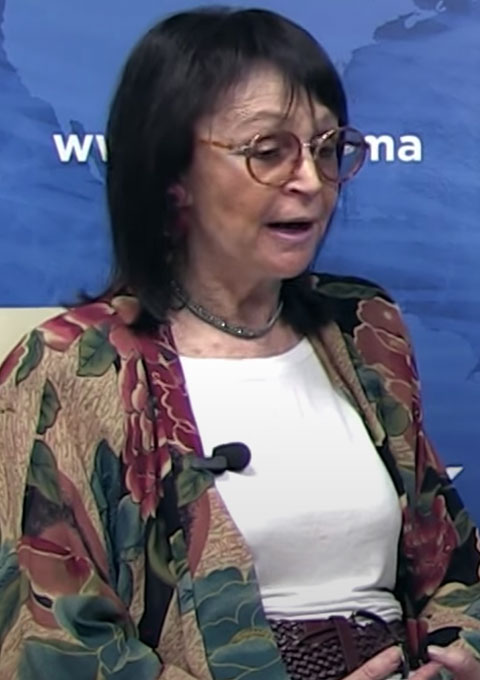
Helyette Geman
Senior Fellow
Helyette Geman is Senior Fellow at the Policy Center for the New South, Director of the Commodity Finance Center at Birkbeck, University of London, and a Research Professor at the Johns Hopkins University, who focuses on Probability, Commodities and Finance. She was Chairman of the Finance Department at ESSEC Business School from 1988 to 1995, and the Director of Dauphine Master 203 at the University of Paris Dauphine from 1995 to 2005. Helyette Geman is a Graduate from Ecole Normale Supérieure in Mathematics and holds a PhD in Probability and a PhD in Finance. She worked as a scientific expert for EDF Trading, Louis Dreyfus, BMP Billiton, Bunge Invivo and financial institutions. Her book “Commodities and Commodity Derivatives” published in 2005 by Wiley Finance has become th ...


RELATED CONTENT

  • Authors
    Moubarack Lo
    Amaye SY
    August 1, 2022
    Avant la pandémie Covid-19, le continent abritait les économies à la croissance la plus rapide du monde et plusieurs pays africains montraient les premiers signes de transformation structurelle et de progrès vers l’émergence économique. Plus de deux ans après la pandémie et les ondes de choc qui en ont résulté, deux questions cruciales se posent : dans quelle mesure le choc sanitaire Covid-19, exacerbé par la crise ukrainienne, a-t-il constitué un tournant dans le processus général ...
  • Authors
    Joseph Hammond
    July 18, 2022
    The world is facing its worst food crisis in 70 years as a perfect storm of geopolitical events contributes to a spike in prices. Wheat alone has jumped 53% since the start of the year. Alarmingly, a number of governments have responded to the crisis with export bans. Governments and organizations worldwide must act decisively to avoid knee-jerk neo-mercantilism, which would add to the volatility in the global economy. Globalization is at a fragile moment, and mercantilism still lur ...
  • July 6, 2022
    Le Policy Center for the New South et Enel Green Power Maroc co-organisent un webinaire sur "la tarification du carbone et le développement économique". Cette rencontre permettra de débattre des défis, des avantages et des limites des mécanismes de tarification du carbone et de leur imp...
  • Authors
    June 21, 2022
    Oil dominates Nigeria’s economy- “Africa’s Giant”. Oil revenues are both a blessing and a curse: a blessing because they are the single most important contributor to government revenues; a curse because, through the Dutch Disease, they undermine the productivity and competitiveness of other non-oil sectors, primarily agriculture and agri-processing; and manufacturing, two major sources of non-oil employment and incomes. Since Nigerian governments did not try to counter the Dutch Dis ...
  • June 16, 2022
    Africafé est une émission du Policy Center for the New South qui décrypte l’actualité des organisations africaines et de l’Afrique. A travers de courtes interviews, l’émission tente de proposer d’aborder de manière pédagogique les enjeux des organisations africaines et l’actualité du co...
  • June 10, 2022
    Avec 38 % des réserves gazières mondiales, la Russie est un acteur majeur du marché mondial du gaz. Aussi, son invasion de l’Ukraine et les sanctions qui l'accompagnent vont désorganiser ce marché. L'objet de cette étude est d'analyser les conséquences de cette désorganisation pour l'Afrique, en distinguant le marché mondial du gaz naturel (I) de celui du marché du gaz africain (II), et ce avant la crise ukrainienne. Ce qui nous conduira à tirer les conséquences et les enseignements ...
  • Authors
    May 18, 2022
    The world food price index collected for the last 60 years by the United Nations Food and Agriculture Organization (FAO) hit its highest record in March, declining gently in April. Pandemic, war and death in Ukraine, and droughts in the last 2 years… Such a combination looks apocalyptical. Now it is adding global hunger risks, because of the food price crisis. The rise in global food prices started in mid-2020 because supply chain disruptions triggered food stockpiling. Mobility r ...