MA Rechercher Image d'avatar Paul Isbell, CAF Energy Fellow at the Center for Transatlantic Relations at Johns Hopkins

March 28, 2014

Paul Isbell, CAF Energy Fellow at the Center for Transatlantic Relations at Johns Hopkins University-SAIS in Washington, D.C.

Speakers
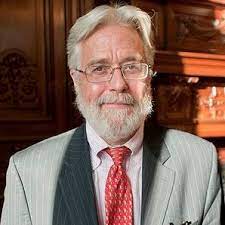
Paul Isbell
CAF Energy Fellow at the Center for Transatlantic Relations at Johns Hopkins
Paul Isbell is the CAF Energy Fellow at the Center for Transatlantic Relations (CTR) at Johns Hopkins University SAIS and the lead energy specialist of CTR’s flagship projects, the Atlantic Basin Initiative (ABI) and the Atlantic Energy Forum (AEF). He is also a Senior Associate Fellow at the Elcano Royal Institute for International and Strategic Studies in Madrid. Previously he was Senior Visiting Fellow at the Inter-American Dialogue in Washington, D.C.; Director of the Energy and Climate Change Program at the Elcano Royal Institute in Madrid; emerging market economist at Banco Santander; and professor of international economics and geopolitics at diverse universities across the Atlantic Basin (including the University of Alcala de Henares; ICADE-Pontificia Comillas; S ...

RELATED CONTENT

  • Authors
    Mehran Haghirian
    June 15, 2026
    This article draws in part on perspectives shared by members of the Rihla Initiative for Green Economic Growth, whose regional insights helped inform the sections on how the costs of the war are being felt across the Global South. The war on Iran and in the Gulf has made it impossible to treat the Strait of Hormuz as a regional issue. The disruption around the Strait has moved through the world economy in concrete ways, from higher fuel bills and pressure on food and fertilizer ...
  • June 11, 2026
    The global energy system has entered a period of acute structural stress following the strikes by the United States and Israel on Iran in late February 2026, and the subsequent disruption of flows through the Strait of Hormuz. According to the International Energy Agency, the resulting shock marks the most severe disruption to global energy markets since the 1970s oil crises, with systemic characteristics comparable to the combined effects of those crises and the 2022 Russia-Ukraine ...
  • Authors
    June 8, 2026
    The energy shock caused by the war between the United States and Israel and Iran has highlighted the need for Africa to refine more of its own crude oil. Africa is a net hydrocarbon exporter, but remains stuck in the old colonial economic model: it mostly exports raw materials and imports refined products. Africa exports about 2.6 billion barrels of crude oil every year, and imports about 1.4 billion barrels of refined products. This is a problem for two reasons. First, Africa ...
  • June 5, 2026
    Driven by its mission to reflect on and analyze the major geopolitical, economic, and societal transformations shaping the contemporary world, and with a view to contributing to knowledge-sharing and disseminating the main outcomes of its research program, the Policy Center for the New South regularly publishes collective volumes addressing issues of particular importance to Morocco, Africa, and the broader Global/New South. In this spirit, the Center has recently released two volum ...
  • March 30, 2026
    L’épisode explore les mutations profondes du secteur énergétique mondial, marqué par une transition complexe entre crise des prix et crise des systèmes. Après une période de tensions extrêmes sur les coûts de l’énergie (pétrole, charbon, gaz), 2025-2026 marque un tournant : les prix se ...
  • Authors
    January 20, 2026
    This policy brief examines what the 2025–2026 period reveals about the future of global energy risk and the energy transition. After the shocks of 2021–2023, 2025 brought broad price easing: oil and coal prices declined as supply growth outpaced demand, and the World Bank projects further declines in the global energy price index in 2026, offering short-term relief for energy-importing economies. The brief argues, however, that the macroeconomic relevance of energy entering 202 ...