Les Mardis du PCNS 08/06/2021: حلقة خاصة : قراءة في النموذج التنموي الجديد

June 8, 2021

تقديم: إيمان لهريش، مسؤولة عن البرامج بمركز السياسات من أجل الجنوب الجديد تسيير: نزهة الشقروني، باحثة بارزة بمركز السياسات من أجل الجنوب الجديد المتدخلون: ادريس كسيكس، عضو باللجنة الخاصة بالنموذج التنموي عبد الله ساعف، باحث بارز بمركز السياسات من أجل الجنوب الجديد

Speakers
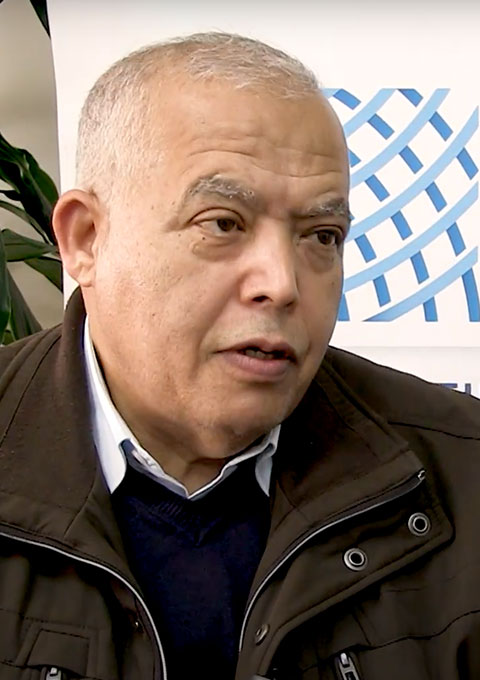
Abdallah Saaf
Senior Fellow
Professor Abdallah Saaf is Senior Fellow at the Policy Center for the New South, Affiliate Professor at the Faculty of Governance, Economic and Social Sciences (FGSES) of the Mohammed VI Polytechnic University (UM6P), Professor Emeritus of Political Science at Mohammed V University in Rabat, and Director of the Center for Studies in Social Sciences Research (CERSS), as well as founder of the Moroccan Association of Political Science. His research focuses on political science, international relations, policies and development strategies as well as public policies. Professor Saaf was a member of the commission in charge of revising the Constitution in July 2011, and member of the Scientific Committee at the Global Forum for Humans rights. Professor Saaf was formerly Minister of ...
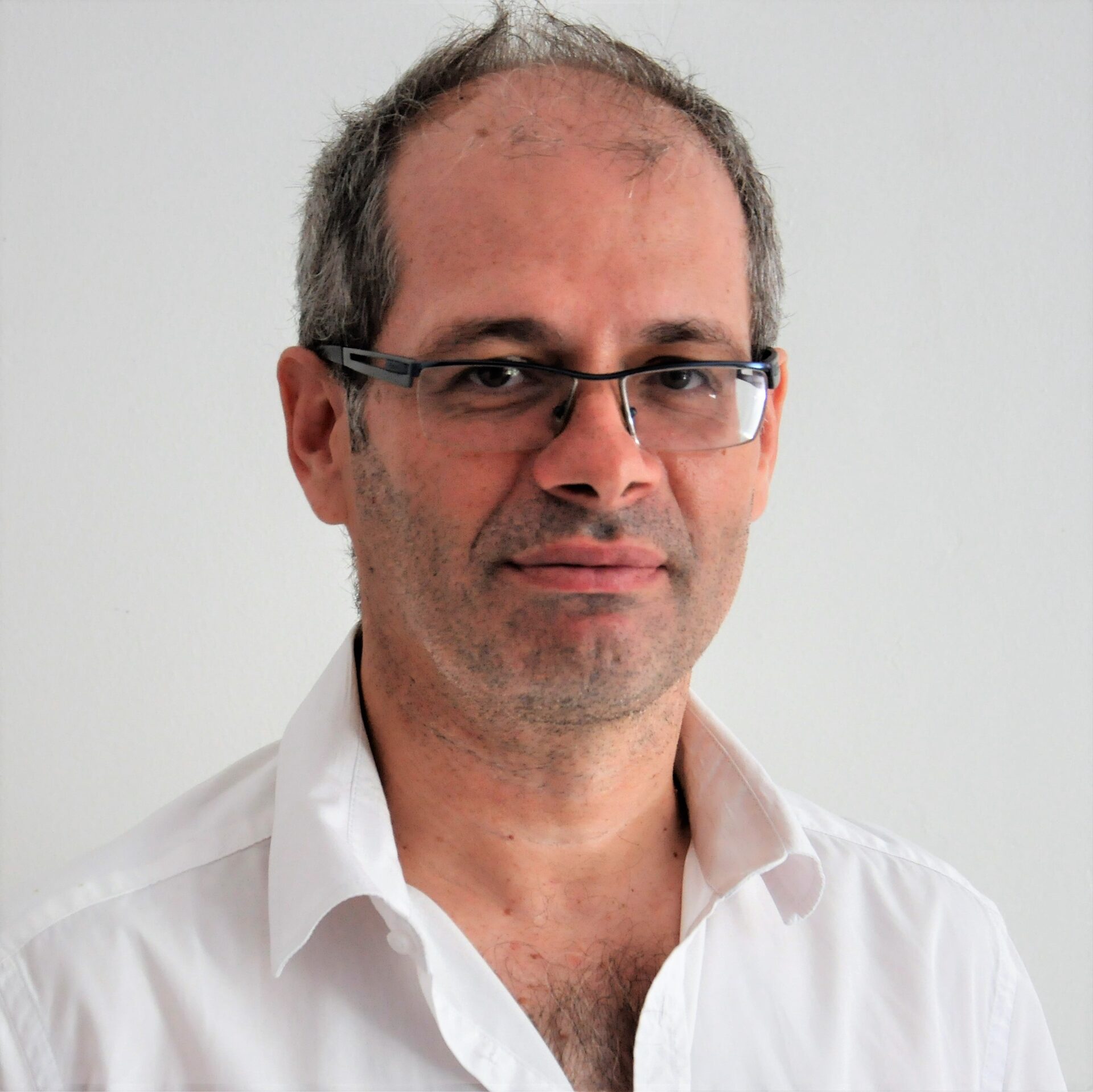
Nouzha Chekrouni
Senior Fellow
Dr. Nouzha Chekrouni is a Senior Fellow at the Policy Center for the New South. She has extensive experience in academia, diplomacy and political leadership.  She has served as His Majesty’s Ambassador to Canada (2009-2016), and Dean of the Council of Arab League Ambassadors to Canada (2015-2016). Dr. Chekrouni was Minister for the Moroccan Community Living Abroad (2002-2007), a Member of Parliament (2002-2007), and the Minister for Women and Social Issues (1998-2002). She holds a Bachelor Degree from the Philological Faculty at the University of Fez, a Post-Graduate Diploma and a PhD in Linguistics from the Université Sorbonne Nouvelle in Paris. Dr. Chekrouni has also completed a Certificate in Ethics and International Relations at Harvard University. She is a 2016 Sen ...

Imane Lahrich
Head – Research Valorization
Imane Lahrich is the Head of Research Valorization Department, having previously served as a Partnerships & Research Support Officer at the Policy Center for the New South since 2019. She mainly worked on security-development related projects. She has experience as a Project Manager in a Strategic Intelligence firm (2017-2019) and as a research consultant in the MENA region, focusing on international development and the Rule of Law. Imane Lahrich holds a Master's in Political Studies and a Bachelor's in Political Science from Mohammed V University of Rabat. She also participated in a one-year exchange program at Masaryk University in the Czech Republic under the EMMAG MUNDUS Excellence scholarship.     ...

RELATED CONTENT

  • Authors
    February 24, 2026
    Mois sacré, quatrième pilier de l’islam, le Ramadan commémore la révélation du Coran au Prophète. Ce mois est marqué par des pratiques complémentaires : une intensification de la prière (notamment les tarawih), la récitation  complète du Coran, le renforcement de la charité envers les plus démunis et une dimension communautaire forte. Le jeûne n’est pas uniquement en termes de nourriture, un renoncement obligatoire du lever au coucher du soleil, mais une période propice à la pu ...
  • Authors
    Fatima Ezzahra Mengoub
    February 20, 2026
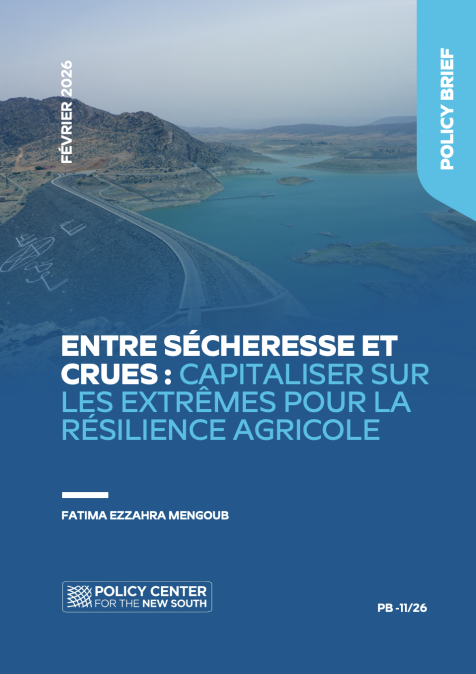
    Après plus de sept années de sécheresse, le Maroc a connu durant l’hiver 2025–2026 des précipitations exceptionnellement abondantes, témoignant d’une variabilité hydrique de plus en plus marquée. Cette alternance rapide entre déficit chronique et excès ponctuels révèle le paradoxe hydrique national : un système historiquement centré sur la rareté doit désormais gérer des épisodes extrêmes concentrés et intenses.Les infrastructures hydrauliques ont limité les impacts humains et écono ...
  • Authors
    Fatima Ezzahra Mengoub
    February 20, 2026
    After more than seven years of drought, Morocco experienced exceptionally abundant rainfall during the winter of 2025-2026, reflecting increasingly marked water variability. This rapid alternation between chronic deficits and occasional excesses reveals the country's water paradox: a system historically centered on scarcity must now manage concentrated and intense extreme episodes.Hydraulic infrastructures helped limit human and economic impacts and ensured significant replenishment ...
  • February 17, 2026
    في هذه الحلقة، نناقش كيف ينسجم مسار إزالة الكربون من الصناعة المغربية مع التزامات المملكة المناخية، ومدى واقعية الأهداف المعلنة في ظل البنية الصناعية الحالية، كما نتناول آليات التمويل والحوافز الاقتصادية الممكنة لتسريع التحول دون التأثير على تنافسية المقاولات، خاصة في سياق تطبيق آلية تع...
  • Authors
    February 17, 2026
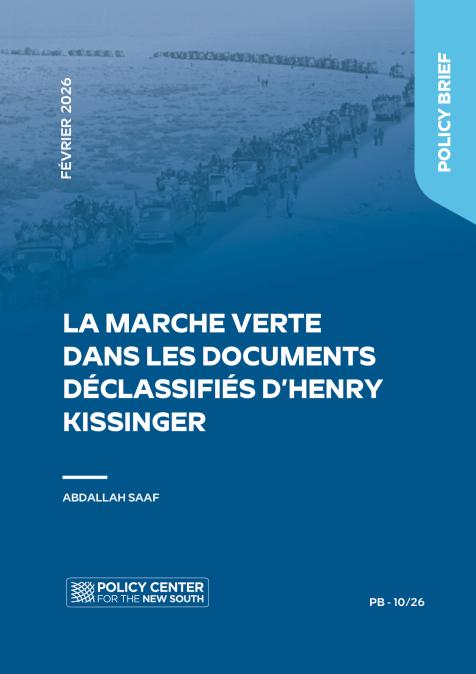
    La Marche Verte fait partie de ces moments féconds qui n’ont pas cessé d’influer sur le cours des événements politiques du Maroc, par la place qu’elle a prise, dès le départ, dans la longue durée, le contexte dans lequel elle s’est déployée, la logique des interactions dans laquelle elle s’est inscrite par ses causes et ses effets, et comme une des figures éclatantes du récit national. ...
  • February 3, 2026
    يتناول هذا اللقاء كيفية تعريف فئة الشباب في السياق المغربي، ليس فقط من خلال السن، بل أيضًا عبر معايير اجتماعية واقتصادية وثقافية أوسع. كما يناقش الدور المتنامي لشبكات التواصل الاجتماعي في تشكيل وعي الشباب وبروز جيل ز  ، وهل يعكس ذلك أشكالًا جديدة من الاحتجاج والمشاركة السياسية. ويت...
  • Authors
    January 13, 2026
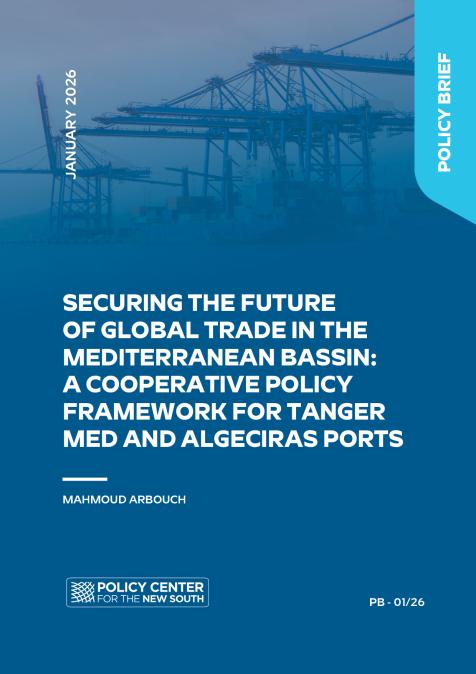
    This policy brief was originally published on : euromesco.net This paper examines the nexus between governance structures, digital transformation, sustainability, and port service efficiency through an international comparative lens, with a specific focus on the Tanger Med–Algeciras corridor in the strait of Gibraltar. Using global best practices—from Singapore to Busan and Kaohsiung—it explores how public-private coordination, digital innovation, and green transition policies ...
  • January 5, 2026
    This Paper was originally published on sciencedirect.com This study provides an original and significant contribution to evaluating educational service quality in Morocco by leveraging, for the first time, microdata from the Service Delivery Indicators (SDI) survey. The survey covers a nationally representative sample of 300 public and private primary schools across rural and urban areas. The use of SDI data represents a major methodological advancement, shifting away from perc ...