
RELATED CONTENT
-
 June 5, 2026Driven by its mission to reflect on and analyze the major geopolitical, economic, and societal transformations shaping the contemporary world, and with a view to contributing to knowledge-sharing and disseminating the main outcomes of its research program, the Policy Center for the New South regularly publishes collective volumes addressing issues of particular importance to Morocco, Africa, and the broader Global/New South. In this spirit, the Center has recently released two volum ...
 -
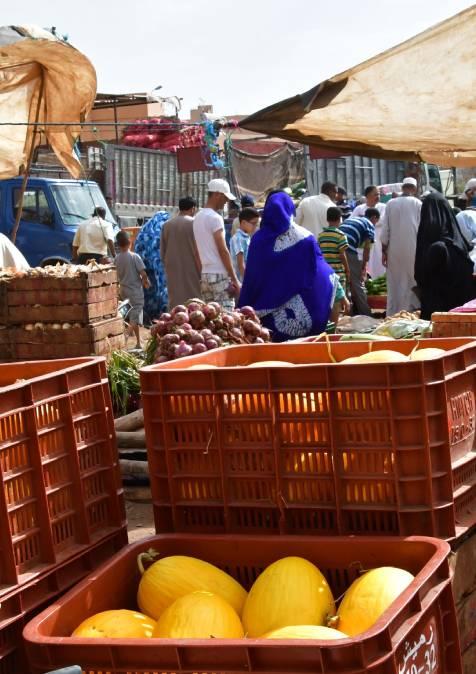 March 2, 2026This Opinion was originally published on ispionline.it Morocco’s food strategy, once centered on self-sufficiency, now faces climate stress, water scarcity, and global volatility, demanding a resilient and sustainable food system fit for new realities. ...
 -
 December 1, 2025This Paper was originally published on transatlantic.org The contemporary maritime domain is increasingly recognized as a geopolitical and economic space, but also as an environment intertwined with human, social, ecological, and governance systems ashore. The United Nations Institute for Disarmament Research (UNIDIR 2024) report argues that maritime security has evolved from a narrow naval and state-centered concern into a multidimensional issue embedded in global human s ...
 -
 August 29, 2025After 1994, everything was a priority, and our people were completely broken. But we made three fundamental choices that guide us to this day. One—we chose to stay together. Two—we chose to be accountable to ourselves. Three—we chose to think big. — His Excellency President Paul Kagame, 20th Commemoration of the Genocide against the Tutsi (April 7, 2014) Rwanda’s socio-economic progress since 1994 has been remarkable. Rwanda is rightly considered a showcase of the enduring ...
 -
 July 25, 2025A generation after the end of Apartheid in 1994, the Republic of South Africa is once again at a critical juncture in its long march to realize Mandela’s vision of a society that enjoys six freedoms: freedom from want, hunger, deprivation, ignorance, suppression and fear. While much has been achieved in advancing these freedoms, much remains to be done. South Africa today continues to grapple with substantial poverty and hunger, high unemployment especially among youth and deep ...
 -
 May 27, 2025Ethiopia presents a unique case among developing countries, having combined major social welfare programs with an East Asian-style development-state approach to investment. However, it differs from its East Asian counterparts in two key areas: it has not maintained decades of uninterrupted political stability, nor has it implemented a comprehensive land reform. Even so, its experience illustrates both the strengths and weaknesses of the East Asian development model. Despite a d ...
 -
 April 29, 2025Tunisia’s stagnant growth since the Jasmine Revolution (2011) illustrates that political democracy, when not anchored in economic democracy, is fragile at best. Economic democracy remains absent in Tunisia, as markets are concentrated and continue to be burdened by high barriers to entry and rules that favor a privileged few. These conditions stifle dynamism, competition, and ultimately, inclusive growth. The government’s decision to paper over these structural weaknesses through s ...
 -
 April 21, 2025Fluctuating precipitation and extreme weather are long-standing features of life in West Africa, the Sahel, and the Lake Chad Basin. Communities across the region have historically adapted to these unique climatic conditions in diverse ways. However, the growing impact of climate change, coupled with challenges to food security and ecological resilience, has elevated these issues on the agendas of regional and international policy platforms. Despite this recognition, the regio ...
 -
 April 2, 2025Africa has strong prospects for achieving food security within a generation— provided its leadership effectively mobilizes domestic and foreign funds, drives strategic investments, and strengthens institutions that incentivize smallholders and other stakeholders to invest in resilient, high-productivity agriculture amid accelerating climate change. This is undoubtedly a tall order. However, the time is now to seize the golden opportunity of regional market integration through the A ...
 -
 July 31, 2024Millions are severely malnourished in a world where there is enough for all. Hunger and malnutrition stalk more than 3.1 billion people. Yet, widespread hunger in all its forms is a problem which has been largely solved at the macro level in today’s high-income, industrialized countries. Their “escape from hunger and premature death” is a fairly recent phenomenon. It began around 300 years ago, continued for most of the 20th century and is still ongoing today. The problems faced by ...

