حديث الثلاثاء: تحديات وآفاق تقنين القنب الهندي في المغرب

September 27, 2022

تتناول هذه ا الحلقة الجديدة من برنامج حديث الثلاثاء قضية تقنين القنب الهندي في المغرب. ما هي آخر التطورات القانونية في هذا المجال؟ ما هي الفرص التي يمكن للمغرب أن يغتنمها لإنجاح هذه الاصلاحات كي تشكل أداة جديدة لتحقيق تنمية شاملة ومستدامة يستفيد منها العباد والبلاد؟ وما هي أهم التحديات والعوائق والدروس التي يمكن نستخلصهما من تجارب ونماذج اخرى في العالم؟

Speakers

Ahmed Ouhnini
Economist, Policy Center for the New South
Ahmed Ouhnini is an Economist at the Policy Center for the New South. His research area covers agricultural economics, human and social development. Previously, he has worked as a researcher at the Paris School of Economics (PSE) and has also a record of working in consulting services in Morocco. Ahmed holds an engineering Diploma in Agriculture and Rural Development from the National School of Agriculture of Meknes and a Master’s Degree in Law, Economics and Management from the Paris 1 Pantheon Sorbonne Institute of Development. ...
Akram Zaoui
Chargé de Mission to the Executive President
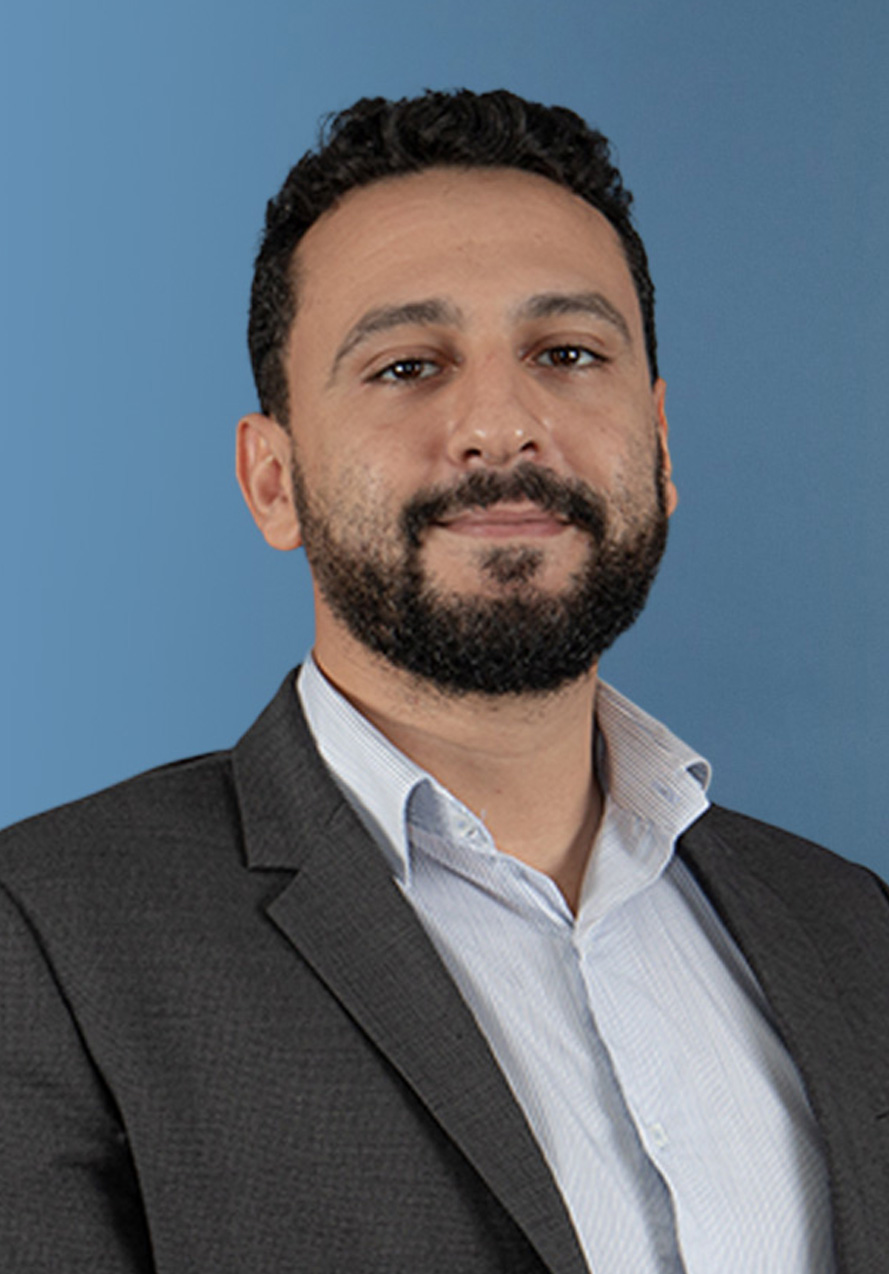
Akram Zaoui is a Senior International Relations Specialist and Chargé de Mission to the Executive President at the Policy Center for the New South (PCNS). Prior to this, he was Manager of Research Support and the Public Policy Lab at the PCNS. His main area of interest is the geopolitical economy of the Extended Middle East and North Africa (MENA) region. From 2018 to 2020, Zaoui was the coordinator of a network of 70+ civil society organizations (CSOs) across France, working with foundations, government, local communities, and the private sector. Zaoui holds a dual degree in corporate and public management from HEC Paris and Sciences Po, as well as a bachelor's degree (licence) in history from Université Paris 1 Panthéon-Sorbonne. He audited courses in Iranian and Shia Stud ...
RELATED CONTENT

  • Authors
    Oussama Zennati
    August 4, 2026
    This paper was originaly published on Middle East Development Journal This article examines the impact of remittances on human capital formation, living conditions, and economic participation of women in North African countries. While prior research has explored remittances’ effects on women’s access to fundamental rights, it has not fully captured the social and economic transformations induced by these funds. Our findings indicate that remittances significantly enhance w ...
  • June 30, 2026
    Globally, public policies for youth face a twofold challenge: addressing structural socioeconomic challenges—such as unemployment, precariousness, and regional disparities—while accommodating a growing demand for effective civic participation. (ILO, 2023; United Nations, 2020) In Africa, this challenge takes on a unique dimension given the demographic weight of the youth population and the persistent fragility of local democracies. (AfDB, 2020; Mo Ibrahim Foundation, 2023)Elections ...
  • June 30, 2026
    À l'échelle mondiale, les politiques publiques de jeunesse sont confrontées à un double enjeu : répondre à des défis socio-économiques structurels; chômage, précarité, fractures territoriales, tout en intégrant une demande croissante de participation citoyenne effective. (OIT, 2023 ; Nations Unies, 2020) En Afrique, ce défi revêt une dimension singulière compte tenu du poids démographique de la jeunesse et des fragilités persistantes des démocraties locales. (BAD, 2020 ; Mo Ibrahim ...
  • June 26, 2026
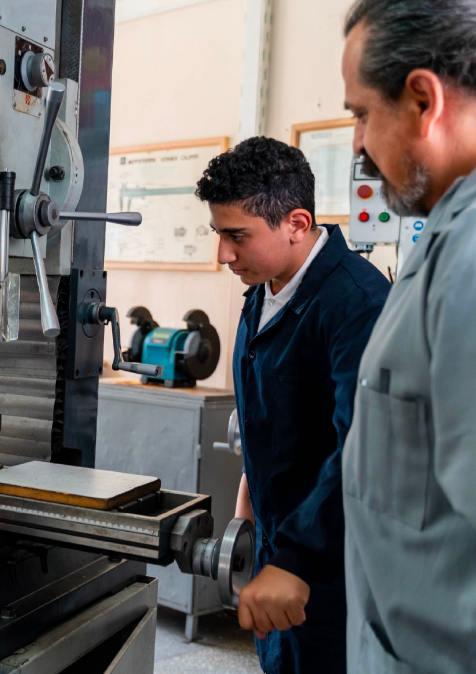
    In Morocco, the issue of young NEETs (Not in Employment, Education, or Training) is a national emergency, fueled by 300,000 students dropping out of school each year. In response to this challenge, the “New Generation Second Chance School” (E2C-NG) model has proven its effectiveness by achieving an exceptional employment rate of 81%.However, this institutional success rests entirely on a local network of organizations that is now under strain. A previously unpublished analysis of da ...
  • June 26, 2026
    Three years after the adoption of the first National Action Plan (NAP) on the Women, Peace and Security (WPS) Agenda, Morocco has made real institutional progress, but implementation is still inadequate. The extension of the NAP opens a window of opportunity to prepare a second, more ambitious and operational cycle.This Policy Brief identifies four persistent obstacles: a virtually stagnant female employment rate of 19.1%, less than 3% female representation in peacekeeping contingen ...
  • June 26, 2026
    Au Maroc, la problématique des jeunes NEETs (Ni en emploi, ni en études, ni en formation) constitue une urgence nationale, alimentée par 300 000 abandons scolaires annuels. Face à ce défi, le modèle de l'École de la Deuxième chance nouvelle génération (E2C-NG) a démontré sa pertinence en affichant un taux d'insertion exceptionnel de 81 %.Cependant, ce succès institutionnel repose intégralement sur un tissu associatif local aujourd'hui fragilisé. L'analyse inédite des donné ...
  • June 15, 2026
    Ce papier a été initialement publié dans la revue Carrefours de l'éducation n°61 L’écart entre les sexes en matière de réussite éducative demeure une préoccupation majeure au Maroc. Cette étude analyse les disparités de genre en lecture et en mathématiques aux niveaux national, urbain et rural, en exploitant des données individuelles issues de l’évaluation PIRLS 2021 (7 017 élèves) et de TIMSS 2019 (13 536 élèves), toutes deux menées auprès d’élèves de 4e année du primaire. En ...
  • Authors
    Karim El Mokri
    Idriss El Abbassi
    June 8, 2026
    Le monde du travail est engagé dans un processus de mutation sans précédent. La quatrième révolution industrielle, portée par l’intelligence artificielle (IA) et la robotisation, a été le point de commencement d’une ère nouvelle où les repères économiques et sociaux se redéfinissent à une vitesse inédite. Ces technologies suscitent un engouement légitime et offrent des perspectives prometteuses, mais requièrent une vigilance accrue face aux incertitudes qui les entourent.Bien que, à ...
  • May 20, 2026
    La participation des femmes au marché du travail au Maroc demeure l'un des défis les plus structurels du développement économique et social du pays. Avec un taux d'activité féminin de seulement 19 % en 2023, contre 69 % pour les hommes (HCP, 2024), le Maroc présente l'un des écarts de genre les plus prononcés parmi les économies en développement (Banque mondiale, 2024). Ce Research Paper propose une analyse économétrique rigoureuse et multiniveaux des déterminants de cette participa ...
  • Authors
    Hajar Kabbach
    May 11, 2026
    Closing Morocco's gender employment gap could increase GDP per capita by 40-50 percent; yet female labor force participation stands at just 19 percent—among the lowest in the world and still declining. This policy paper argues that investing in the care economy is not merely a social expenditure, but a productive economic strategy with measurable returns. Drawing on international evidence from Uruguay, Mexico, Colombia, and India, the brief demonstrates that well-designed care syste ...