AES 2023 - Opening Remarks / Session 1: Challenges of Monetary Policy

September 22, 2023

 Opening Remarks Karim El Aynaoui, Executive President, Policy Center for the New South

Session 1: Challenges of Monetary Policy: Navigating Inflation Dynamics in the Face of Supply Shocks

The confluence of COVID-19 pandemic and the ongoing Russia-Ukraine conflict has resulted in a surge of inflation not seen for decades. Developing countries, especially in Africa, are bearing the brunt of this complex economic landscape, characterized by a sluggish recovery, rising unemployment and poverty rates, tight international financing conditions, soaring public debt, and persistent inflationary pressures. Central banks in Africa are facing the challenge of balancing the need to support economic growth with the need to prevent inflation from spiraling out of control. This session will explore the complex and interrelated issues surrounding monetary policy in Africa and the strategies that central banks can employ to navigate inflation dynamics in the face of supply shocks. As such, this session will address the following questions: - How can African central banks adapt their monetary policy frameworks and tools to effectively address supply shocks? - How can African central banks effectively manage the tradeoff between inflation and growth in the current environment? - What are the potential long-term effects of the current wave of monetary policy tightening in Africa? - What policy mix frameworks could be used to address macroeconomic imbalances in African economies, and how can they be tailored to the unique characteristics of these countries?

Chair: Mehdi Bartal, Professor, Mohammed VI Polytechnic University (Morocco)

Speakers: - Abla Abdel Latif, Executive Director & Director of Research, The Egyptian Center for Economic Studies (Egypt) - Ibrahim Elbadawi, Managing Director, Economic Research Forum (Sudan) - Abebe Aemro Selassie, Director of the African Department, International Monetary Fund (Ethiopia). Online

RELATED CONTENT

  • September 11, 2026
    Le marché du travail marocain connaît, depuis les années 2000, une expansion continue de la scolarisation qui ne s'est pas accompagnée d'une transformation équivalente de la structure productive de l'économie, ouvrant la voie à des situations d'inadéquation verticale entre le niveau de formation des actifs occupés et les exigences des emplois qu'ils occupent. La présente étude analyse les déterminants du déclassement (sur-éducation) et du surclassement (sous- éducation) à partir des ...
  • Authors
    September 9, 2026
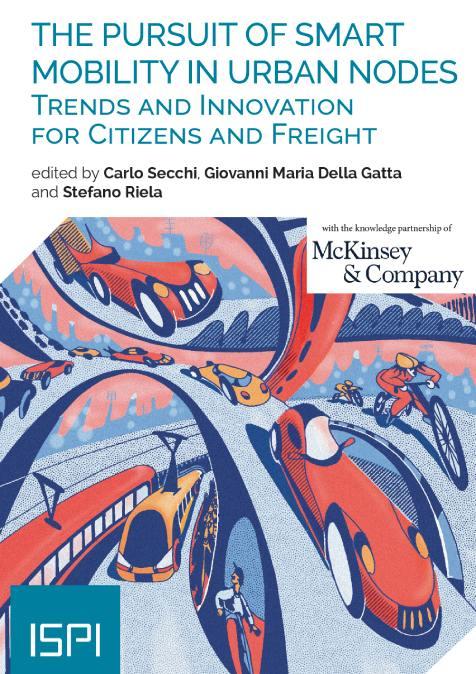
    This paper was originally published as a chapter in the ISPI report The Pursuit of Smart Mobility in Urban Nodes: Trends and Innovation for Citizens and Freight. Agglomeration economies have historically supported industrialisation and global integration by concentrating firms, labour and infrastructure in dynamic urban cores. However, these same forces have also generated persistent patterns of territorial polarisation. Drawing on New Economic Geography, this chapter interpret ...
  • Authors
    Stephan Klingebiel
    Andy Sumner
    September 4, 2026
    This Paper was originally published on cgdev.org. Escalatory attacks on multilateral rules and institutions in this era of raw power politics have plunged international politics into uncharted territory. Traditional alliances have been fractured and new partnerships between unlikely bedfellows are emerging. No longer in transition, the post-World War II world order is in rupture. This paper examines international cooperation under these conditions and argues that a new "flexi-l ...
  • Authors
    September 3, 2026
    “A band-aid on a bullet hole!” That’s how Charlie McElligott, a cross-asset strategist at Nomura, described the maneuver carried out by United States Treasury Secretary Scott Bessent on August 19. The U.S. Treasury Department announced that from September 9 to November 4, it would double the volume of long-term bond buybacks, going from $2 billion to at least $4 billion per operation, with a focus on maturities of between 10 and 30 years. ...
  • August 28, 2026
    يستضيف بودكاست مركز سياسات من أجل الجنوب الجديد الباحث البارز حافظ غانم للحديث عن العلاقة الدائرية بين عدم المساواة وضعف الإنتاجية في بلدان الجنوب الجديد، حيث يغذي كل منهما الآخر في نوع م ...
  • August 26, 2026
    The Africa Center, in partnership with the Policy Center for the New South, hosts a discussion on how air transport in Africa could be a powerful catalyst of economic growth, underpin regional trade, and fuel skilled job creation. ...
  • Authors
    August 25, 2026
    The next Secretary-General should begin with an act of institutional rebellion: refuse to become the Secretary-General ofeverything. Over three decades the office's political and administrative reach has spread across sustainable development, climate, health, migration, digital governance, financing, gender, food systems, and a still-growing list of global priorities. These issues are not unimportant; the trouble is that institutional ambition has simply outrun institutional capabil ...
  • Authors
    Meryam Amarir
    August 13, 2026
    Recent crises in the Middle East, particularly attacks targeting commercial vessels in the Red Sea and tensions surrounding the Strait of Hormuz, have highlighted the vulnerability of the main strategic corridors of global trade. Rather than fundamentally disrupting the organization of trade flows, these crises are accelerating an ongoing transformation driven by the search for more resilient connectivity chains, the diversification of trade routes, and the development of logistics ...
  • Authors
    Meryam Amarir
    August 13, 2026
    Les crises récentes au Moyen-Orient, notamment les attaques ciblant les navires commerciaux en mer Rouge et les tensions autour du détroit d'Ormuz, ont mis en évidence la vulnérabilité des principaux corridors stratégiques du commerce mondial. Plus qu'un bouleversement de l'organisation des échanges, elles accélèrent une transformation déjà engagée, fondée sur la recherche de chaînes de connectivité plus résilientes, la diversification des itinéraires commerciaux et le développement ...