AD Talks 2020: The Age of (Dis)Information

December 10, 2020

The purposeful dissemination of misleading or outright false information by news media and foreign state actors constitutes an increasingly important factor in both the growing erosion of trust in national institutions and political polarization in many countries around the world. The danger that disinformation represents has been clearly demonstrated in the context of the COVID-19 pandemic. The proliferation of conspiracies, misleading narratives and false information about miracle cures have compounded mistrust, uncertainty and even discrimination against nationals of certain countries during the first months of this unprecedented public health crisis. In addition to that, disinformation campaigns and false claims related to the disease and its cures have sparked tangible effects on health of individuals in targeted countries. While the motivations for disinformation campaigns are wide-ranging and include in some cases both the deception of public opinions and promotion of geopolitical goals, the recent events have shown the pressing need for urgent measures and enhanced international cooperation to tackle this issue. Indeed, the far-reaching consequences of the phenomenon have recently pushed states, continental bodies, regional organisations and military alliances to develop strategies to counteract these targeted influence operations. This session will examine these strategies and disinformation’s long term implications on health, security, electoral processes and politics. Definition of disinformation and its present day manifestations: How can we define disinformation? What are the motives behind disinformation campaigns? In what ways does it impact public’s access to information? Strategies to counter disinformation: How can states, multilateral institutions and other stakeholders (journalists) effectively limit public exposure to falsehoods and fabricated information? What strategies can the relevant stakeholders deploy to address structural vulnerabilities in relation to disinformation? Disinformation long term repercussions: To what extent did disinformation contribute to the erosion of trust between citizens and institutions? What are the long term implications of disinformation on human security, electoral processes and politics? Moderator : Blair Glencorse, Executive Director, Accountability Lab; Atlantic Dialogues Emerging Leader (ADEL) Speakers : Pascal Boniface, Director, French Institute for International and Strategic Affairs (IRIS) Bushra Ebadi Youth Ambassador for the Global Alliance for Partnerships on Media and Information Literacy (GAPMIL); Atlantic Dialogues Emerging Leader (ADEL) Andres Schipani, East and Central Africa Correspondent, Financial Times Richard Werly, European Affairs Correspondent, Le Temps

Speakers
Blair Glencorse
Executive Director, Accountability Lab; Atlantic Dialogues Emerging Leader (ADEL)
...
Pascal Boniface
Director, French Institute for International and Strategic Affairs (IRIS)
...
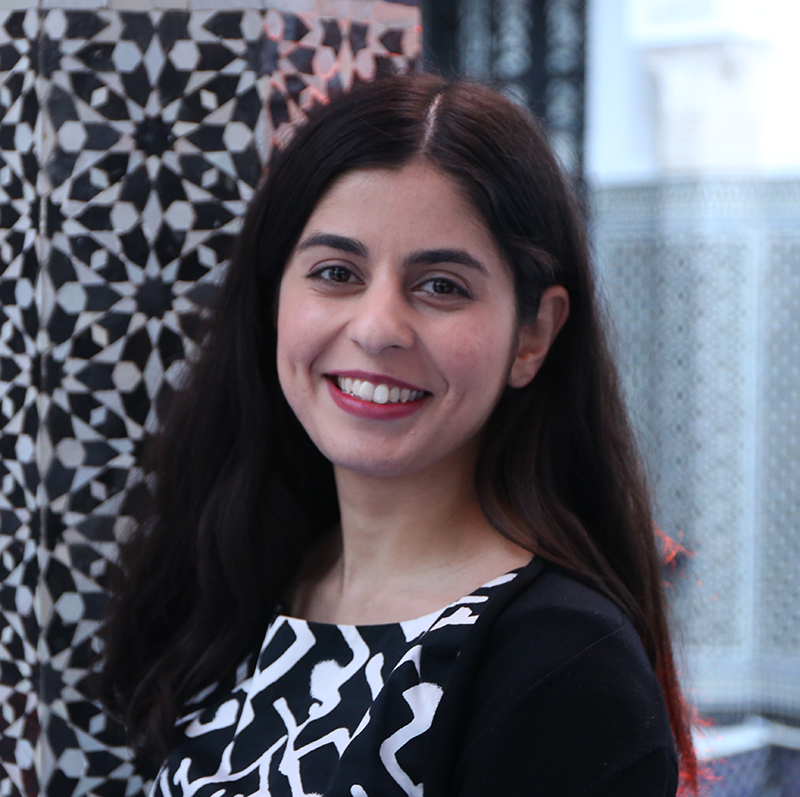
Bushra Ebadi
Youth Ambassador for the Global Alliance for Partnerships on Media and Information Literacy (GAPMIL); Atlantic Dialogues Emerging Leader (ADEL)
She recently worked as a Global Security and Politics Research Associate with the Centre for International Governance Innovation (CIGI), where she provided research and project support to the World Refugee Council in developing solutions to transform the global refugee and internal displacement systems; advanced research on the ethical and social implications of emerging technologies on marginalized populations; and co-developed the Women in Global Governance project, focusing on women in decision-making and leadership in security and politics. Her previous professional experiences include developing refugee housing and integration strategies for arrival cities around the world, supporting humanitarian coordination through her work with the UN Interagency Standing Committee i ...

RELATED CONTENT

  • Authors
    Ahmed Ouhnini
    December 5, 2025
    L’« uberisation », terme né du nom de l’entreprise américaine Uber au début des années 2010, désigne initialement un modèle économique fondé sur la mise en relation directe entre offre et demande via des plateformes numériques. Rapidement popularisé, le concept s’est élargi, avec Airbnb dans l’hébergement, puis à une multitude d’autres secteurs : livraison de repas, services à domicile, commerce en ligne, voire des métiers traditionnellement régulés ou corporatistes. Ce néologisme t ...
  • Authors
    December 3, 2025
     Global GDP growth has proven resilient in 2025, despite the shocks caused by the trade policies implemented by United States President Donald Trump in the first year after his return to office. The gloomy projections offered by multilateral and private institutions in the first quarter of 2025 have given way to revised levels mostly in the 2.5% to 3% range for the year. ...
  • Authors
    December 2, 2025
    This paper assesses the economic and environmental implications of Morocco’s strategic transition from internal combustion engine vehicle (ICEV) manufacturing to electric vehicle (EV) production, with a particular focus on the regional impacts of localizing high-value battery manufacturing. Using an interregional input-output model, extended with environmental satellite accounts, the study simulates a structural shock related to the wholesale substitution of ICEV-specific inputs wit ...
  • November 25, 2025
    This Policy Paper analyses the Fourth Industrial Revolution (4IR) through the critical lens of technological colonialism. It argues that the fusion of physical, digital, and biological technologies is not merely a technical phenomenon but a civilizational shift reshaping the foundations of global power. The article traces a historical continuum from previous industrial revolutions, demonstrating how patterns of inequality and extraction persist, now transposed into the digital realm ...
  • Authors
    Jean Louis-Sarbib
    October 18, 2023
    Addressing inequalities in all their forms has emerged as one of the major global challenges faced by numerous countries across the globe, particularly in Africa. In a context where Africa faces many pressing challenges that are the subject of much analysis (Sarbib et al. 2022), there is a clear gap in conducting comprehensive reviews focused on inequalities, partly due to the lack of available data. Inequalities, which are both consequences and partial causes of poor development o ...
  • August 29, 2023
    In this conversation, Ms. Lina Khatib, the Director of SOAS University's Middle East Institute, delves deep into pressing regional issues. She highlights what policymakers can do to ensure the equitable distribution of economic development benefits and prevent any regression. Khatib als...
  • August 28, 2023
    Le secteur informel joue un rôle crucial dans le développement économique et social du Maroc en tant que filet de sécurité pour de nombreux travailleurs. Cependant, sa concentration dans de petites entreprises qui manquent de moyens de production sophistiqués peut entraver la croissance...
  • July 18, 2023
    Le secteur informel est une composante essentielle de l'économie marocaine, employant une large partie de la population, mais nuisant à la productivité, aux recettes fiscales de l’État et à la croissance économique à long terme. Sur la base de la définition adoptée dans cette étude et qui définit les travailleurs informels comme étant ceux qui ne sont pas couverts par les régimes contributifs de sécurité sociale de la Caisse nationale de sécurité sociale (CNSS) et d ...
  • Authors
    Gladys Lopez-Acevedo
    Marco Ranzani
    Nistha Sinha
    Adam Elsheikh
    June 23, 2023
    This report was originally published on openknowledge.worldbank.org The long-standing informality debate in the Middle East and North Africa (MENA) Region has taken on a new urgency as it looks for a pathway to more socially inclusive growth that is less reliant on fossil fuels. This is occurring against a backdrop of subpar labor market outcomes, further growth setbacks, and deteriorating fiscal and current account de ficits in the aftermath of the COVID-19 pandemic—and in the wak ...