Publications /
Policy Paper

Back
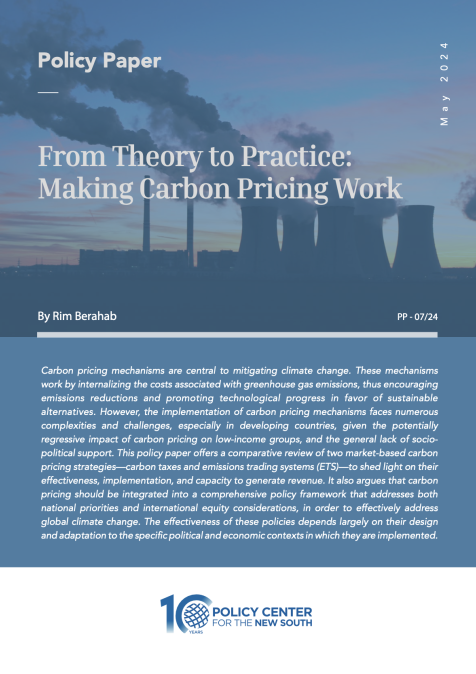
From Theory to Practice: Making Carbon Pricing Work
Authors
May 20, 2024

Carbon pricing mechanisms are central to mitigating climate change. These mechanisms work by internalizing the costs associated with greenhouse gas emissions, thus encouraging emissions reductions and promoting technological progress in favor of sustainable alternatives. However, the implementation of carbon pricing mechanisms faces numerous complexities and challenges, especially in developing countries, given the potentially regressive impact of carbon pricing on low-income groups, and the general lack of socio- political support. This policy paper offers a comparative review of two market-based carbon pricing strategies—carbon taxes and emissions trading systems (ETS)—to shed light on their effectiveness, implementation, and capacity to generate revenue. It also argues that carbon pricing should be integrated into a comprehensive policy framework that addresses both national priorities and international equity considerations, in order to effectively address global climate change. The effectiveness of these policies depends largely on their design and adaptation to the specific political and economic contexts in which they are implemented.

RELATED CONTENT

  • Authors
    Vinicius A. Vale
    April 26, 2018
    This paper reports the results of an application using an interregional input-output matrix for Morocco together with regional information on water consumption by sectors. We develop a trade-based index that reveals the relative water use intensities associated with specific interregional and international trade flows. We estimate, for each flow associated with each origin-destination pair, measures of trade in value added and trade in water that are further used to calculate our in ...
  • Authors
    April 10, 2018
    Le lancement d’un contrat à terme pétrolier sur le Shanghai International Energy Exchange (INE) ne saurait être vu comme un évènement « technique » ou secondaire tant il préfigure ce que seront dans quelques années les marchés mondiaux de matières premières. Le Shanghai Futures Exchange (SHFE) et le Dalian Commodity Exchange (DCE) ont certes vu leurs volumes de trading augmenter considérablement sur la dernière décennie grâce à l’acier et au minerai de fer, ce qui pourrait laisser à ...
  • Authors
    March 15, 2018
    President Trump’s proclamation that, because of national security concerns, he will apply a 25% tariff on all steel and a 10% tariff on all aluminium imports into the United States – except provisionally and dependent on NAFTA negotiations those from Canada and Mexico – affects, respectively 5.1 billion Euros and 1.1 billion Euros of EU exports. These are not trivial sums. However, the invocation of the national security exception in this case has implications that go far beyond nar ...
  • Authors
    June 9, 2017
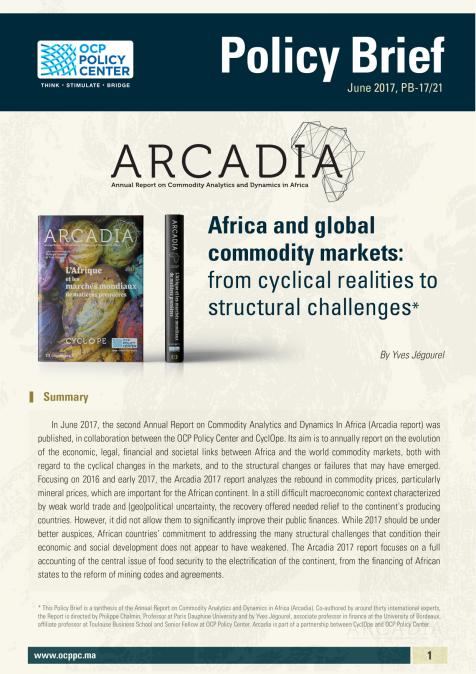
    In June 2017, the second Annual Report on Commodity Analytics and Dynamics In Africa (Arcadia report) was published, in collaboration between the OCP Policy Center and CyclOpe. Its aim is to annually report on the evolution of the economic, legal, financial and societal links between Africa and the world commodity markets, both with regard to the cyclical changes in the markets, and to the structural changes or failures that may have emerged. Focusing on 2016 and early 2017, the Arc ...
  • Authors
    Under the Supervision of
    Philippe Chalmin
    July 4, 2016
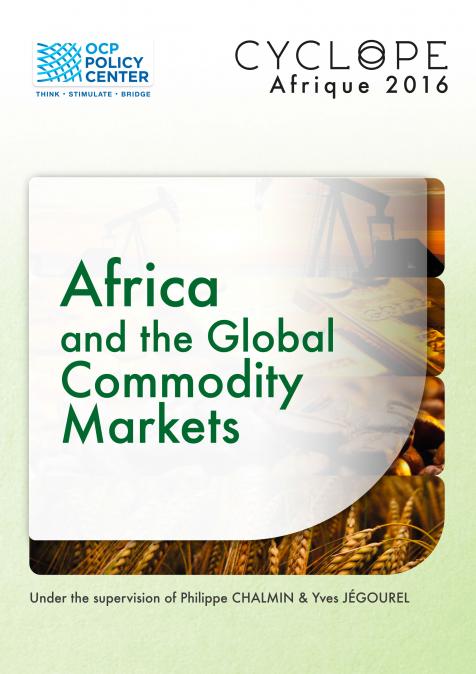
    Guinea’s bauxite, Moroccan phosphates, Nigerian Bonny Light, Zambian copper, Côte d'Ivoire’s cocoa, Ethiopian coffee or Madagascar’s vanilla: all are examples demonstrating that raw materials have a dimension that is as global as it is local. Global by the markets on which they are traded, local by their quality, a key element of their price, and their macroeconomic impact, particularly for Africa. In line with the 2016 CyclOpe report, which celebrates three decades of existence thi ...
  • Authors
    Silvia Colombo
    Mohamed El Harrak
    Nicolò Sartori
    May 27, 2016
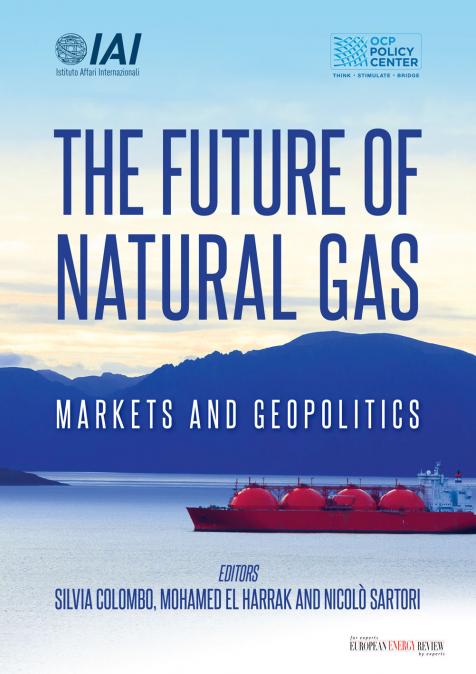
    Energy is at the core of the remarkable current transitions in the global economy and geopolitics, and natural gas plays a crucial role in these processes. In this context of rapidly evolving trends at the market level and developing dynamics between regional and global actors, The Future of Natural Gas aims at analysing the role of natural gas in the future energy mix by considering several key factors: the ambitious climate policies agreed by the international community, cost issu ...