Publications /
Policy Brief
The outbreak of the war in Iran and the closure of the Strait of Hormuz have had major consequences for a large number of global commodity markets. While media attention has understandably focused on oil and natural gas, as well as on aluminum – owing to the strong dependence of that metal’s supply on energy prices – sulfur, like helium, ethylene, propylene, or urea, has also been caught up in the fallout of this conflict. Far from being a marginal commodity, it is essential to the production of nickel and copper, as well as of fertilizers.
Qatar, Iran, and Saudi Arabia are among the world’s leading sulfur exporters. Against this difficult backdrop, China has banned exports of sulfuric acid in order to safeguard domestic supply – even though it is the world’s leading supplier – while Russia has sharply restricted its sales to countries outside the Eurasian Economic Union since November 1, 2025. Combined with the closure of the Strait of Hormuz, these measures have led to a near-doubling of sulfur and acid prices. If the conflict continues, a shortage could have serious consequences worldwide, particularly for food security. As the world’s largest exporter of phosphate fertilizers and, consequently, heavily dependent on this input, Morocco appears directly exposed, despite a diversification of its sulfur imports toward Kazakhstan and a firm strategy of securing/producing the resource domestically across the various stages of the value chain.
INTRODUCTION
After a year of rising tensions in 2025, the launch, in February 2026, of the Israeli-American offensive against Iran inevitably led to the closure of the Strait of Hormuz, a transit point for a large number of strategic commodities. This major supply shock naturally triggered a surge in their prices. As a result, Brent crude rose above the USD 110/bbl threshold in March, while the Title Transfer Facility – the benchmark gas price for continental Europe – traded above EUR 60/MWh over the same period. Aluminum prices are particularly sensitive to electricity costs because production is energy-intensive. They also rose sharply, exceeding USD 3,500/t on the London market from mid-March 2026 before reaching around USD 3,850/t, close to the record high of March 2022. Prices then fell by several hundred dollars following the fragile memorandum of understanding on peace signed by the United States and Iran on June 17. Another commodity, far less visible but no less strategic, has suffered the indirect consequences of this conflict: sulfur and its derivative, sulfuric acid. The closure of the Strait of Hormuz by Iran on March 1, 2026, compounded by the American blockade that took effect on the following April 13, created the conditions for a sulfur shortage that, quite logically, spilled over into the sulfuric acid market.
A SUBSTANTIAL SUPPLY FROM THE MIDDLE EAST
According to provisional data from the United States Geological Survey (USGS), global sulfur production (in all its forms) can be estimated at 84 million tonnes (Mt) in 2025, of which 19 Mt came from China – the leading producing country – followed by the United States and Russia, which round out the top of the ranking with 8.5 Mt and 7.5 Mt respectively. Middle Eastern nations also carry significant weight in the market, with Saudi Arabia, the United Arab Emirates (UAE), Qatar, Iran, and Kuwait [1] together supplying 20 Mt in 2025, or nearly a quarter of global supply. Unsurprisingly, they are among the world’s leading sulfur-exporting countries.
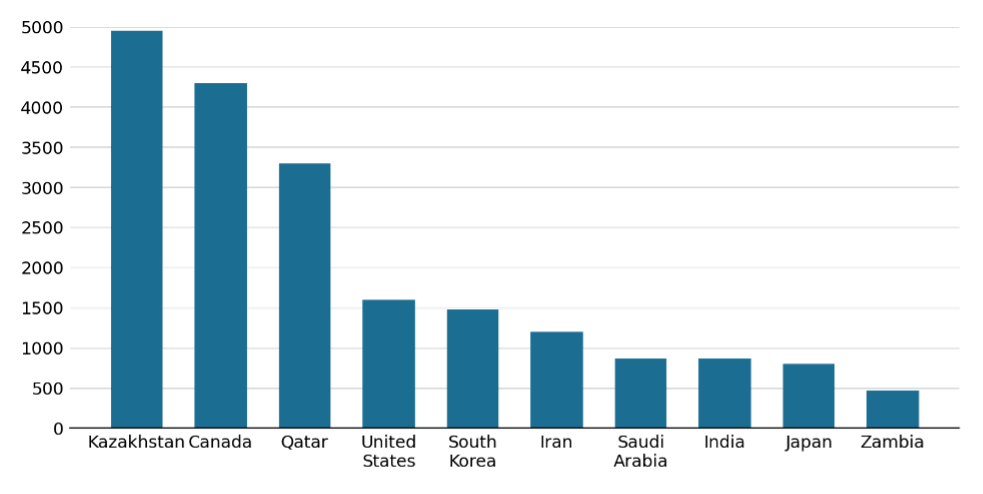
Chart 1: Main sulfur-exporting countries in 2025
(HS Code: 2503, in thousand tonnes)
Source: Trade Data Monitor
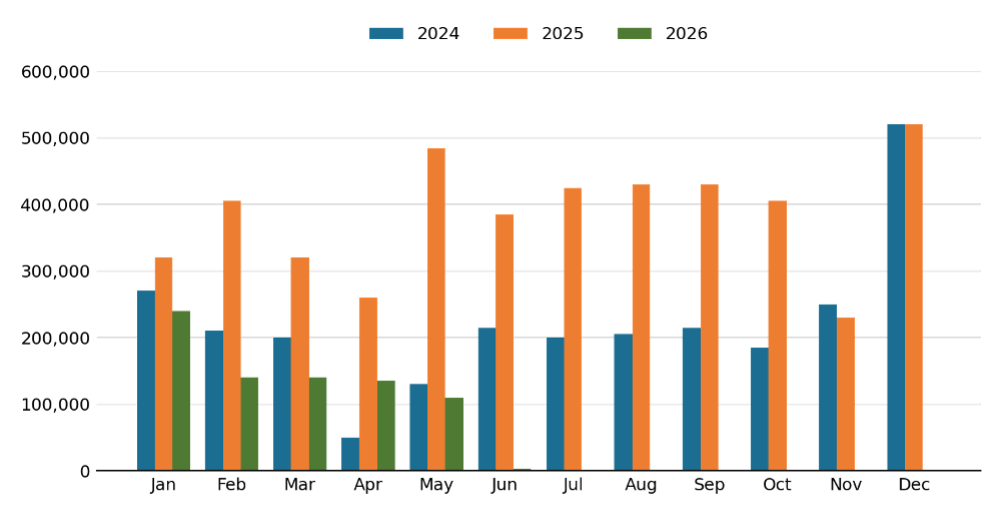
On international markets, Qatar, Iran, and Saudi Arabia rank, respectively, third, sixth, and seventh among the world’s largest exporting countries (Chart 1). Including Bahrain’s much smaller contribution, their combined supply stood at 5.43 million tonnes (Mt) in 2025, or 23.5% of international volumes. With Switzerland and Singapore as its main outlets, Qatar appears to deal mainly with trading houses as counterparties, which makes it difficult to identify the ultimate destination countries. A large share of Iranian sulfur, meanwhile, is destined for the Chinese market. China is, in fact, the world’s leading sulfur importer and the leading exporter of sulfuric acid, with a sharp rise in its volumes between 2024 and 2025 (Chart 2), when they reached a historic high of 4.65 Mt (+73%).
Chart 2: Chinese sulfuric acid exports
(HS Code: 2807, in thousand tonnes)
Source: China Customs Statistics & Trade Data Monitor
The reduced quantities of sulfur available naturally had knock-on effects on demand for sulfuric acid, its main outlet. This market, however, also experienced a supply shock, limiting consuming countries’ ability to choose between importing sulfur for domestic acid production and importing sulfuric acid directly [2]. In a pattern familiar from the history of commodity markets, concerns over sulfur availability prompted China to announce a ban on sulfuric acid exports from May 2026. In 2025, the world’s second-largest economy exported 4.65 Mt of sulfuric acid, ahead of Japan (3.06 Mt) and South Korea (2.39 Mt). Even ahead of this ban, it is worth noting that a curbing of export volumes was already apparent, with first-half 2026 volumes down 64% and 28% on the same period in 2025 and 2024, respectively. In July 2026, these exports even fell to their lowest level, at just 976 tonnes, compared with more than 242,500 tonnes the previous January. Yet the main destination countries for Chinese sulfuric acid are each emblematic of other commodities of which they are the world’s largest exporters. Chile, the world’s leading exporter of copper concentrate, is the largest destination for Chinese sulfuric acid. In 2025, Chile imported 3.97 Mt of sulfuric acid in total, including 1.47 Mt from China. Indonesia, a major global nickel producer, and Morocco, the world’s largest exporter of phosphate fertilizers, are the second- and third-largest destinations for Chinese sulfuric acid. In 2025, China exported 683,369 tonnes to Indonesia and 564,000 tonnes to Morocco.
China is not the only country now restricting its acid exports. Since November 1, 2025, Russia has in fact banned the sale on international markets of certain types of sulfur – liquid, granulated, and lump – in order to meet domestic needs (exports to the other member states of the Eurasian Economic Union, namely Belarus and Kazakhstan, as well as to Abkhazia and South Ossetia, remain authorized). Before the outbreak of the war in Ukraine, Russia’s sulfuric acid exports often stood above the 200,000-tonne threshold, mostly destined for Kazakhstan, with a record reached in 2020 of 406,000 tonnes. As for sulfur exports, they stood above 3 Mt before 2022. While Morocco was, on this segment, Russia’s leading trading partner in 2021, the outbreak of the war in Ukraine triggered a massive reorientation of its exports toward China.
This strong pressure on supply naturally translated into higher sulfur and acid prices in the first quarter of 2026, following an already buoyant and volatile 2025. According to S&P Global [3], prices gained more than USD 200/t between the start of the American offensive and mid-March, reaching around USD 700/t for sulfur on a Free on Board (FOB) Middle East basis. They have risen considerably further since then. According to Argus Media, official FOB prices out of Kuwait stood at USD 950/t for July, compared with USD 805/t the previous month, while QatarEnergy set its price at USD 890/t for the same period, on an FOB Laffan/Mesaieed basis, compared with USD 805/t in June [4]. On the Chinese market, finally, sulfur reached close to CNY 11,000/t in mid-June, or nearly USD 1,600/t. These market conditions are likely to persist. As Kpler points out, sulfur supply cannot increase in the short term in response to higher prices [5]. While mined sulfur does exist, most production comes from the processing of oil and gas, which explains its low price elasticity. The lack of substitutes for sulfur further explains the significant risk of a near-term shortage.
THE IMPORTANCE OF SULFURIC ACID IN THE PRODUCTION OF NICKEL, COPPER, AND PHOSPHATE FERTILIZERS
Sulfuric acid is an indispensable input for the production of a number of commodities, and the blockage of the Strait of Hormuz thus poses serious risks to their supply. The conversion into metal of nickel concentrates (nickeliferous laterites of the “saprolite” or “limonite” type, such as those found notably in Indonesia’s subsoil) relies on a high-pressure acid leaching (HPAL) process, in which sulfuric acid plays a central role. The pulp, made up of water and crushed ore, is fed into autoclaves together with the acid, enabling the dissolution of nickel and cobalt ahead of the purification and recovery stage in metallic or salt form. Acid consumption depends on the composition of the ore and the efficiency of the process, but it remains considerable: roughly 22 to 30 tonnes of acid, or 7 to 10 tonnes of sulfur, are needed to produce one tonne of nickel. The effect of a rise in sulfur prices is therefore considerable. According to a note from Macquarie Bank cited by Reuters, this is estimated to have already increased nickel production costs by around USD 4,000/t, pushing the break-even threshold for HPAL plants to USD 18,500/t [6], above current prices for the metal on the London Metal Exchange. In 2025, Saudi Arabia, the UAE, and Qatar were Indonesia’s three largest suppliers, together accounting for 69% of the archipelago’s supplies in 2025, or 3.58 Mt.
Copper production is likewise dependent on sulfur and acid price levels. According to data from the International Copper Study Group (ICSG), 21% of global mined copper supply (or 4.774 Mt out of a total of 22.958 Mt) comes from SX-EW (solvent extraction and electro-winning) technology. As with nickel, sulfuric acid is used here for leaching – i.e., dissolving the copper contained in oxidized ores or even in mine tailings – as well as in electro-refining, where it is present in the electrolyte. Major mining producers are therefore inherently dependent on their sulfur supplies. While Chile is thus a major importer, the Democratic Republic of Congo is certainly one of the most exposed countries. Still according to ICSG estimates, the country’s SX-EW copper production stood at around 2.76 Mt in 2025 [7], or 83% of the country’s mined output and 56% of global copper production using this process. However, just as sulfur is a by-product of oil and gas processing, sulfuric acid is also a by-product of copper smelting, because sulfide copper ores contain sulfur. Its role as both an input and a by-product gives it a dual strategic significance and provides a degree of economic protection for the Congolese copper industry.
MOROCCO EXPOSED
The Kingdom of Morocco imported 6.68 Mt of sulfur in 2025, following the historic record set in 2024 at 8.29 Mt, which places it second among the world’s largest importers, behind China (9.6 Mt in 2025) and ahead of Indonesia (5.34 Mt). Although below 2024 import levels, this figure reflects the scale of Moroccan demand and the country’s exposure to the consequences of the Strait of Hormuz blockage. In 2025, nearly a third of its sulfur supplies came from the UAE, or 2.34 Mt, and 12% from Saudi Arabia (around 800,000 tonnes). A gradual diversification of Moroccan imports toward Kazakhstan is nonetheless observed, which has been the Kingdom’s leading sulfur supplier since 2024. The latest customs statistics from the Foreign Exchange Office (Office des Changes) confirm flows from Turkmenistan since March 2026 (accounting for around 5% of total imports) and, in June 2026 [8], from Canada (20% of total imports for that month).
Chart 3: Main sulfur-importing countries in 2025
(HS Code: 2503, in thousand tonnes)
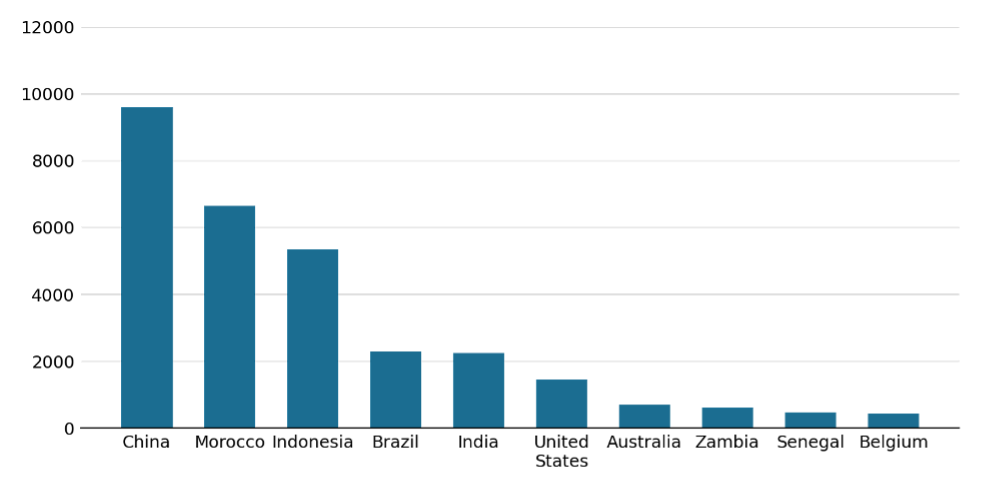
Sources: China Customs Statistics & Trade Data Monitor
Morocco also imported 1.37 Mt of sulfuric acid, also in 2025, compared with around 2 Mt the previous year. With more than 537,000 tonnes imported from China, its dependence on supplies from the Middle Kingdom is pronounced. On a monthly basis, however, the latest customs statistics show no flows from that country since November 2025 [9], in favor of Poland, which became the Kingdom’s leading supplier as of that date. The very sharp decline in Moroccan import demand is also evident, reaching 186,000 tonnes in the first half of 2026, compared with more than 567,000 tonnes and 800,000 tonnes in the first and second halves of 2025, respectively.
Chart 4: Unit values of sulfur imported into Morocco
(in USD/t)
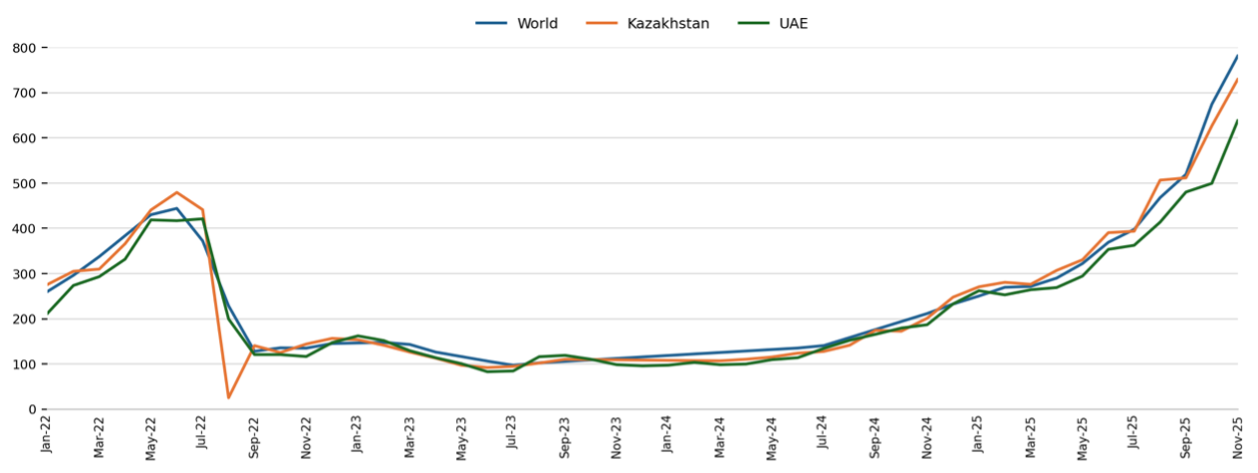
Sources: China Customs Statistics & Trade Data Monitor
While sulfur price data for Morocco is difficult to obtain, the trend in unit values [10] clearly points to a rise in the prices paid for this essential input. In June 2026, the country paid an average of more than USD 750 per tonne imported, compared with around USD 360/t in January 2026 and less than USD 150/t in the same month of the previous year. In the second quarter of 2026, Morocco’s bill thus rose to more than USD 830 million, compared with around USD 760 million the previous quarter and USD 440 million in spring 2025 – for significantly lower import volumes, as noted above. Diversifying supply sources naturally comes at a cost, with, for example, a unit value for imports from Canada reaching nearly USD 1,000/t in June 2026. Owing to a less-than-proportional rise in phosphate fertilizer prices – and thus a “scissors effect” – this rise in costs has understandably weighed on fertilizer producers’ margins and led to a curtailment of production of sulfur-intensive fertilizers. However, substantial stocks built up before the closure of the Strait of Hormuz most likely delayed the impact of these higher costs. When presenting its first-quarter 2026 results, the OCP Group indicated that it had secured its supplies through July 2026. The reduction in exposure of the world’s leading phosphate producer is also under way through the commissioning of two new sulfur burners at the Jorf Lasfar site in 2024 and 2025, which also explains the decline in acid imports in 2025. Further upstream in the value chain, the Group, together with its fellow Moroccan company Managem, aims to expand local processing capacity for pyrite and pyrrhotite from 2027 onward. These iron sulphide ores are widely present in Moroccan subsoil, notably at the Kettara mine (closed in 1982) and at Guemassa, and are expected to provide secure sulfur supplies for the fertilizer producer. Lastly, a shift in production toward triple superphosphate (TSP), which is less sulfur-intensive, has been undertaken. In the first half of 2026, Moroccan TSP exports reached 1.76 Mt of P2O5 – a historic record.
CONCLUSION
As the COVID-19 pandemic did in 2020, the blockage of the Strait of Hormuz has served as a reminder of how closely intertwined global commodity value chains are. Copper, nickel, and phosphate fertilizers are thus inherently dependent on supplies of sulfur and/or sulfuric acid. These inputs should, accordingly, be regarded more explicitly as strategic resources, which implies the need to pursue various supply-security strategies for the countries and industries that depend on them. At a time when the outcome of the Iran-United States conflict still appears highly uncertain, close monitoring of stocks, diversification of logistics corridors, and increased domestic production capacity for dependent countries are, in this respect, essential.
[1]. Ranked in descending order of 2025 production volumes. Saudi Arabia is thus the fourth-largest sulfur-producing country, while the UAE, Qatar, and Iran rank fourth, fifth, and ninth, respectively, in this global ranking.
[2]. Namely, importing sulfur and processing it locally into acid, or importing acid directly.
[3]. McDonald J. (2026), “Sulfur, nitrogen markets under pressure as Middle East war persists”, S&P Global, March 19, https://www.spglobal.com/energy/en/news-research/latest-news/agriculture/031926-sulfur-nitrogen-markets-under-pressure-as-middle-east-war-persists-analysts
[4]. https://www.argusmedia.com/en/news-and-insights/latest-market-news/2845833-qatarenergy-raises-july-sulfur-price
[5]. Benanouz, G. (2026), Sulfur & sulfuric acid in 2026: The feedstock crisis cascading through copper, nickel & fertilisers, https://www.kpler.com/blog/sulfur-sulfuric-acid-in-2026-the-feedstock-crisis-cascading-through-copper-nickel-fertilisers, June 4.
[6]. Reuters, “Iran war’s sulfurous fallout spreads to copper and nickel”, April 19.
[7]. By way of comparison, it stands at “only” 1.14 Mt for Chile in the same year.
[8]. The most recent customs statistics available at the time this Policy Brief was written.
[9]. Through June 2026, the date of the latest statistics available at the time of writing.
[10]. In international trade, “unit value” is defined as the value of exports or imports of a given product divided by the quantities exported or imported of that same product.