Publications /
Book / Report

Back
Africa Economic Symposium (AES) 3nd edition - SUMMARY REPORT
Authors
General rapporteur Mahmoud Arbouch
September 2, 2025

The Africa Economic Symposium (AES) has firmly established itself as one of the flagship annual events of the Policy Center for the New South, alongside the Atlantic Dialogues and the African Peace and Security Annual Conference (APSACO). Now in its third edition, AES continues to provide a unique platform for economists, policymakers, and academics from across the continent and beyond to exchange perspectives on the pressing macroeconomic and structural challenges facing Africa. Its mission remains to foster rigorous, evidence-based debates that inform policymaking and support long-term strategies for Africa’s development in an era of uncertainty. 

The 2025 edition, convened under the theme “Bold Moves amid Global Shifts,” explored the difficult policy trade-offs confronting African governments as they navigate a volatile global environment. The continent’s recovery from COVID-19 has been uneven, while debt pressures, supply chain disruptions, and geopolitical tensions weigh heavily on fiscal and economic resilience. Structural challenges such as persistent unemployment, low productivity, and the exclusion of Africa’s youth continue to hinder inclusive growth, even as policymakers are called upon to adapt to deep systemic uncertainty. 

The symposium underscored that many African states are increasingly resorting to short-term stabilization measures—such as accumulating reserves and postponing reforms—that may provide immediate security but risk delaying the structural transformation urgently needed. Against this backdrop, AES 2025 called for a careful balance between fiscal prudence, social investment, and the pursuit of sustainable growth, placing emphasis on reforming governance, improving macroeconomic management, and accelerating structural change. 

The discussions highlighted the urgent need to rethink Africa’s economic strategies in a shifting global order. From debt sustainability and the role of central banks to the promise of financial innovation, digital inclusion, and new instruments such as central bank digital currencies, the symposium emphasized that policy choices must align with long-term transformation goals. The debates also explored the opportunities and challenges of regional integration, trade connectivity, and development finance, all of which are essential levers for Africa’s resilience and prosperity. 

As in previous editions, the Annual Report on African Economies was launched alongside the symposium, offering an in-depth analysis of the continent’s macroeconomic dynamics and structural transformation pathways. More than just a publication, the report reflects the collective intellectual effort of leading scholars and practitioners, providing evidence-based insights to guide decision- makers. Together, the symposium and the report reinforced the Policy Center for the New South’s commitment to fostering forward-looking economic thinking that moves beyond short-term headlines to tackle Africa’s enduring challenges.

RELATED CONTENT

  • April 10, 2025
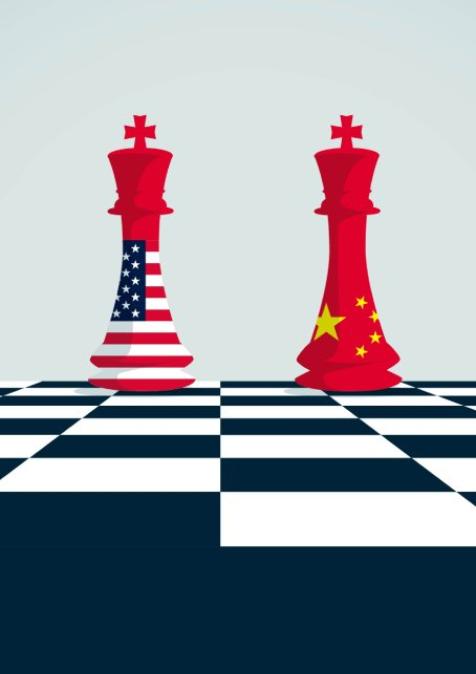
      Marcus Vinicius De Freitas Professor, China Foreign Affairs University Senior Fellow, Policy Center for the New South The Chinese government’s white paper, ‘China’s Position on Some Issues Concerning China-US Economic and Trade Relations,[1]’ issued on April 9, 2025, in response to the escalating tariffs imposed by President Donald Trump, is not just a diplomatic response to the escalating tensions with the United States. It is a meticulously crafted strategic document th ...
  • April 8, 2025
    رغم التحسن النسبي في بعض المؤشرات الاقتصادية الكبرى في المغرب، إلا أن التشغيل ما يزال الحلقة الأضعف في معادلة التنمية. في هذا السياق، أعلنت الحكومة المغربية عن خارطة طريق وطنية للتشغيل تهدف إلى خفض البطالة إلى تسعة في المئة وخلق مليون منصب شغل، بالإضافة إلى أربعمئة وخمسين ألف منصب شغل ف...
  • April 04, 2025
    In this episode, we discuss with an economist how digital technologies like AI, blockchain, and autonomous ships are reshaping global trade and logistics. These innovations improve effici ...
  • March 28, 2025
    In recent years, India has strengthened its ties with Africa, focusing on economic development and trade exchanges. With initiatives aimed at promoting commerce, investments, and technolo ...
  • Authors
    Oussama Zennati
    March 26, 2025
    This paper was originaly published on journals.aserspublishing.eu   This article aims to explore the impact of migrants’ remittances on life expectancy and mortality rate of adult women left behind in north African countries. The study contributes to the literature by highlighting how remittances can support the achievement of sustainable development goals. At the same time, it investigates the extent to which remittances may challenge social policies in these countries. ...
  • March 26, 2025
    Ce commentaire a été publié initialement sur commentaire.fr   La question du protectionnisme ne date pas du retour triomphal de Donald Trump, ni même de sa première élection : elle hante la mondialisation depuis le début du xxie siècle. Le nouveau programme du Président américain oblige toutefois à y réfléchir plus attentivement qu’on ne l’a fait jusqu’à présent. C’est l’objet de cet article.   ...
  • Authors
    March 25, 2025
    When President Donald Trump gave his State of the Union address to a joint session of the United States Congress on March 4, 2025, many of his announced tariffs went into effect. These included a 25% levy on most goods imports from Canada (10% on oil and gas) and Mexico (though Trump subsequently exempted Canadian and Mexican imports that satisfy USMCA rules of origin requirements); and 20% (doubling the 10% implemented in February) on all imports from China. A 25% tariff has been i ...
  • Authors
    Sampawende J. Tapsoba
    March 24, 2025
    The return of President Donald Trump could significantly impact macroeconomic policy in Africa. The effects may vary across the continent. Nations that remain neutral towards U.S. influence are likely to benefit, while those aligned with the U.S.'s rivals or lacking immediate economic advantages may be deprioritized in U.S. foreign policy. In this article, we examine the channels through which U.S. policies and the change in political discourse could affect macroeconomic policies in ...
  • Authors
    Peter Drysdale
    Alicia Garcia-Herrero
    Nagesh Kumar
    B. V. R. Subrahmanyam
    March 21, 2025
    This Chapter was originally published on springer.comSo, this session really is about what's happened to global trade in the last couple of decades, of course, really since the global financial crisis, trade dependency has levelled off, peaking at around 60% in 2008, 2009.  ...
  • Authors
    March 21, 2025
    MENA faces a severe water crisis, with 12 of the world’s 17 most water-stressed countries. Climate change, population growth, inefficient water management, and weak governance drive this challenge. Water production, treatment, and distribution require high energy inputs, while energy generation depends on water for cooling and refining. The region must integrate renewable energy, especially solar power, into water solutions like desalination. Inaction could shrink GDP by up to 14% ...