Podcasts

Back

TTIP and its Effect on Southern Atlantic Countries

22
September 2016
Peter Chase 
Related topics: 

This podcast is performed by Peter Chase. On June 17, 2013, the United States and the European Union formally announced the start of negotiations on a Transatlantic Trade and Investment Partnership (TTIP). The ambitious and comprehensive deal seeks to eliminate remaining existing tariffs between the EU and the United States, but also to eliminate non-tariff barriers, and work towards common or mutually recognized standards and regulations. The very prospect of TTIP is therefore raising a number of interrogations outside the United States and Europe; it resonates far beyond the transatlantic economic relationship. Countries in the South Atlantic, in particular, are left wondering what the deal would mean for them, and what the direct implications of a greater integration of the North Atlantic economy could be on their own prospect for economic prosperity.
The TTIP negotiations have lasted longer than was originally envisioned, in part due to signs of strong public concerns in Europe (especially in Germany), but also concerns about trade that have surfaced in the U.S. elections. That said, President Obama and Trade Representative Michael Froman, as well as their European counterparts, insist that they will try to conclude the talks in 2016. Questions therefore arise about whether TTIP will survive the British decision to leave the EU or, if it succeeds, how TTIP might affect the political economy of trade relations in the Atlantic? What will be its impact on existing and future economic relations with other global partners, especially in the South Atlantic? How have non-party states reacted to the TTIP negotiations? What is the political and economic impact of TTIP on ongoing bilateral and multilateral trade negotiations such as the Economic Partnership Agreements with African, Caribbean, and Pacific regions; the EU-Mercosur negotiations; and in the framework of the WTO? Join us for a briefing with Peter Chase, Senior Fellow at GMF as he discusses more broadly what the implications of TTIP and other mega-regional trade deals are for the Wider Atlantic relationship and the multilateral trading system.


 

RELATED CONTENT

  • Authors
    Florent Parmentier
    October 12, 2026
    Cet article soutient que le Chief Geopolitical Officer (CGO) doit être repensé à partir de l’expérience des entreprises africaines. Dans un environnement multipolaire et fragmenté, leur principal défi n’est pas seulement la gestion des risques, mais la préservation de plusieurs options stratégiques simultanément selon une logique de hedging. Trois modèles de CGO sont à distinguer : l’intermédiation (Office chérifien des Phosphates (OCP), Tanger Med), l’intégration régionale (Ethiopi ...
  • Authors
    Paul Isbell
    October 9, 2026
    In the first seven Policy Briefs of this ongoing series of analysis on Pan-Atlanticism: The Atlantic Basin in a Multipolar-Transnational World, we developed the argument that the strategic significance of the Atlantic Basin is on the rise for a range of international actors (states, regions and non-state agents) and from distinct political or ideological perspectives. In addition, in the most recently published Policy Brief -- “The U.S. and the Current International Reconfiguration: ...
  • October 09, 2026
    Can Nigeria’s Dangote refinery help strengthen Africa’s energy security amid disruptions to global supply routes? This discussion considers how expanding local refining capacity can reduc ...
  • Authors
    Marie-Noelle Nwokolo
    October 6, 2026
    The author of this opinion, Marie-Noelle Nwokolo, is a 2024 alumna of the Atlantic Dialogues Emerging Leaders Program.In September 1978, delegations from 138 countries gathered in Buenos Aires, Argentina, around a powerful idea: developing countries had knowledge, experience and capabilities worth sharing with one another. The Buenos Aires Plan of Action gave institutional form to what we now call South-South Cooperation, part of a wider post-colonial effort by developing ...
  • October 02, 2026
    Building on his Policy Brief "Latin America, World Politics and the Great Powers", Nizar Messari examines how recent developments are reshaping U.S. influence in the region and affecting ...
  • September 25, 2026
    Dans cet épisode d’Africafé, Amadou Diop analyse les défis de sécurité maritime auxquels font face les pays de l’Afrique atlantique, de la piraterie aux trafics transfrontaliers. Il souligne la nécessité de mutualiser les moyens et de partager l’information entre États. L’échange aborde...
  • Authors
    September 23, 2026
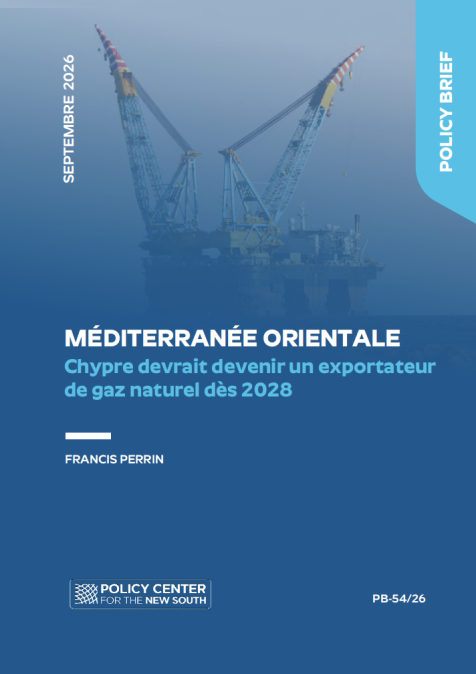
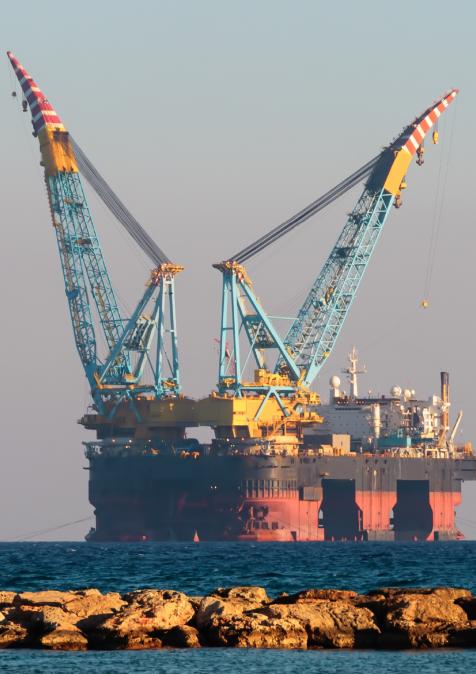
    Depuis 2010, environ, on sait que la Méditerranée orientale est une nouvelle province gazière. Des ressources gazières ont en effet été découvertes au large de quatre pays ou territoires, l’Égypte, Israël, Chypre et Gaza. Deux d’entre eux sont devenus producteurs et exportateurs de gaz naturel, l’Égypte et Israël. Au large de Gaza, le champ gazier de Gaza Marine n’a jamais été développé et il est très peu probable qu’il le soit prochainement en raison des très fortes tensions entre ...
  • Authors
    September 23, 2026
    Since around 2010, it has been known that the Eastern Mediterranean is a new gas province. Gas resources have indeed been discovered offshore four countries or territories: Egypt, Israel, Cyprus and Gaza. Two of them have become producers and exporters of natural gas, Egypt and Israel. Off the coast of Gaza, the Gaza Marine gas field has never been developed, and it is highly unlikely to be developed anytime soon given the very high tensions between the State of Israel and Hamas. By ...
  • Authors
    Luladay Berhanu Mengistie
    Guillaume Gérout Suominen
    September 21, 2026
    The African Union Summit of February 2026 instructed the African Continental Free Trade Area (AfCFTA) Council of Ministers to negotiate a Protocol on Industrial Policy and Development. This work, handled without adequate preparation, is likely to reproduce the weaknesses it is meant to remedy. This paper is a conceptual mapping exercise, written to raise the preparatory questions before drafting begins, rather than to prescribe outcomes.It proceeds in five sections:1. It works towar ...
  • Authors
    September 17, 2026
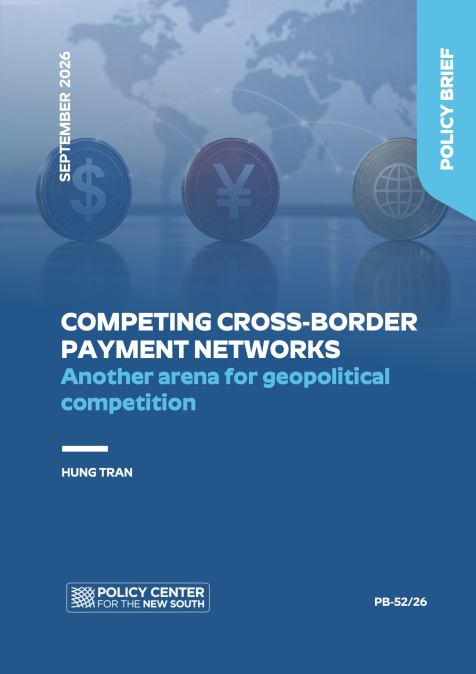
    Various competing cross-border payment networks have become vehicles for geopolitical competition. As tensions have risen, many countries want to secure access to cross-border payment systems by joining with like-minded countries to form interoperable networks, either via tokenization or Instant Payment Systems (IPSs). Three major projects are under development, serving the strategic interests of the US, China and the Rest of the World—corresponding to the three trading spheres taki ...