Podcasts

Back

The Responsibility to Protect: To Act or Not to Act?

24
June 2022
Hala Boumaiz, Noamane Cherkaoui
Related topics: 

At the 2005 World Summit, the Responsibility to Protect (R2P) doctrine emerged as a formalized and multilateral way for states to protect populations under the threat of war crimes, crimes against humanity, or genocide. While it should be regarded as a preventative doctrine, it has been weaponized and usurped from its founding principles. In this regard, R2P's main faults lay in the implementation phase, and this podcast will discuss these dynamics and to what extent the R2P doctrine should be rethought.
RELATED CONTENT

  • Authors
    Chaimae Bourjij
    October 16, 2026
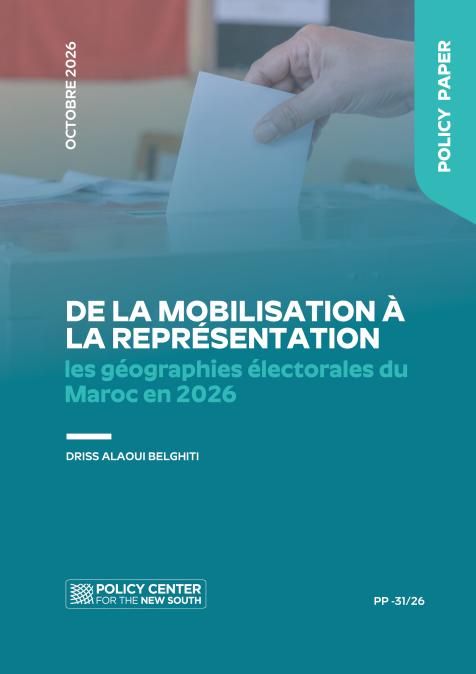
    The author of this opinion, Chaimae Bourjij, is a 2019 alumna of the Atlantic Dialogues Emerging Leaders Program. An election result tells only part of a country’s political story. The rules that turn votes into seats also shape which voices reach Parliament, how local interests are represented, and whether any party can claim a clear mandate. Morocco’s 2026 vote invites this wider reading: not only who came first, but how the electoral framework distributes political ...
  • October 15, 2026
    Le rapport du Secrétaire général des Nations Unies du 1er octobre 2026 marque une étape importante dans l’évolution du processus politique relatif au Sahara marocain. Le premier présenté depuis l’adoption de la résolution 2797 (2025), le rapport met en évidence une dynamique diplomatique nouvelle, caractérisée par la reprise de négociations substantielles à quatre sous l’impulsion des États-Unis et avec l’accompagnement des Nations Unies. Cette évolution traduit un déplacement ...
  • October 15, 2026
    The UN Secretary-General’s report of October 1, 2026 marks an important stage in the evolution of the political process concerning the Moroccan Sahara. As the first report issued since the adoption of Resolution 2797 (2025), it highlights renewed diplomatic momentum, marked by the resumption of substantive four-party negotiations led by the United States with United Nations support.This development reflects a gradual shift in a debate long focused on the territory’s final status tow ...
  • October 14, 2026
    في ظل التوترات الجيوسياسية المتصاعدة، تتغير طرق التجارة العالمية وتتبدل معها موازين الممرات الاستراتيجية. تفتح هذه الحلقة من «حديث الثلاثاء» النقاش حول التقاء المسارات البحرية والبرية داخل هذه الممرات، والعوامل التي تتحكم في طبيعة السلع التي تعبرها. وتبحث كذلك في ما يمكن للمغرب أن يجنيه...
  • Authors
    Florent Parmentier
    October 12, 2026
    Cet article soutient que le Chief Geopolitical Officer (CGO) doit être repensé à partir de l’expérience des entreprises africaines. Dans un environnement multipolaire et fragmenté, leur principal défi n’est pas seulement la gestion des risques, mais la préservation de plusieurs options stratégiques simultanément selon une logique de hedging. Trois modèles de CGO sont à distinguer : l’intermédiation (Office chérifien des Phosphates (OCP), Tanger Med), l’intégration régionale (Ethiopi ...
  • Authors
    Paul Isbell
    October 9, 2026
    In the first seven Policy Briefs of this ongoing series of analysis on Pan-Atlanticism: The Atlantic Basin in a Multipolar-Transnational World, we developed the argument that the strategic significance of the Atlantic Basin is on the rise for a range of international actors (states, regions and non-state agents) and from distinct political or ideological perspectives. In addition, in the most recently published Policy Brief -- “The U.S. and the Current International Reconfiguration: ...
  • Authors
    Lina Jaoid
    October 8, 2026
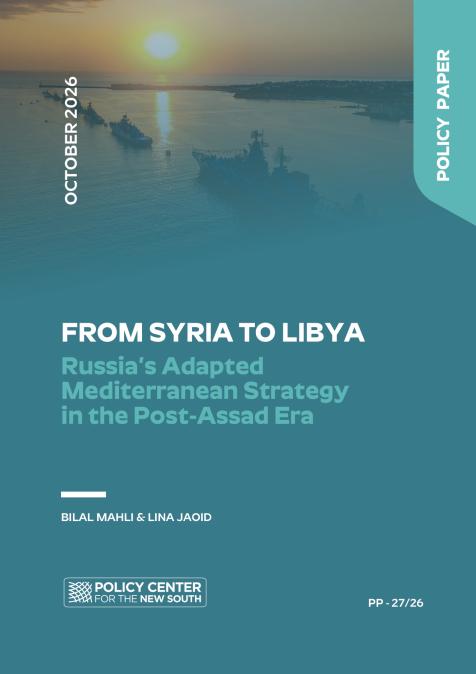
    In the two years since the fall of Bashar al-Assad in Syria, Russia has restructured its Mediterranean presence. Although Russia’s limited and increasingly conditional access to the Khmeimim and Tartus facilities in Syria has been preserved, its presence in the country has morphed from Assad’s ‘patron-client’ configuration to a more negotiated engagement. Simultaneously, Russia has upgraded its force-projection and logistical infrastructure in eastern Libya, giving it an access path ...
  • October 7, 2026
    Brazil's election poses a question that extends well beyond Latin America: how much freedom does a country retain to define its international role when external pressure collides with domestic political exhaustion? For the Global South, the answer matters more than any foreign government's preference regarding the next occupant of the presidential palace. Strategic autonomy remains fragile if every change of government puts a country's freedom of action back up for negotiation. ...
  • Authors
    Marie-Noelle Nwokolo
    October 6, 2026
    The author of this opinion, Marie-Noelle Nwokolo, is a 2024 alumna of the Atlantic Dialogues Emerging Leaders Program.In September 1978, delegations from 138 countries gathered in Buenos Aires, Argentina, around a powerful idea: developing countries had knowledge, experience and capabilities worth sharing with one another. The Buenos Aires Plan of Action gave institutional form to what we now call South-South Cooperation, part of a wider post-colonial effort by developing ...
  • Authors
    October 2, 2026
    The incident involving Flydubai Flight FZ1073 between Dubai and Tel Aviv does not yet support any definitive attribution. It does, however, provide a useful warning sign: as aviation security closes off traditional avenues of intrusion, threats may shift towards alternative pathways by exploiting the people, service providers, and systems that the aviation ecosystem must necessarily trust.  ...