
The Middle East faces a web of complex crises driven by historical legacies, regional power struggles, and ongoing geopolitical tensions. Among these crises, the Israeli-Palestinian conflict stands out as a deeply entrenched issue, marked by competing national aspirations and territorial disputes. The region’s challenges are further compounded by a mix of deeply rooted conflicts, sectarian divides, and the influence of both regional and global actors. These crises have far-reaching implications, affecting global security, economic stability, and international diplomacy. Understanding the dynamics of these conflicts requires a comprehensive view of their historical contexts and current geopolitical shifts. In this interview, our columnist Helmut Sorge hosts Charles Kupchan, Senior Fellow at the Council on Foreign Relations (CFR). Kupchan shares insights into the underlying factors shaping the Middle East's past and ongoing crises, including the Israeli-Palestinian conflict. He explores the roles of major international players and discusses potential paths toward resolution, shedding light on the region’s complex landscape and its broader impact on global affairs.
RELATED CONTENT
-
 October 14, 2026في ظل التوترات الجيوسياسية المتصاعدة، تتغير طرق التجارة العالمية وتتبدل معها موازين الممرات الاستراتيجية. تفتح هذه الحلقة من «حديث الثلاثاء» النقاش حول التقاء المسارات البحرية والبرية داخل هذه الممرات، والعوامل التي تتحكم في طبيعة السلع التي تعبرها. وتبحث كذلك في ما يمكن للمغرب أن يجنيه...
 -
 October 12, 2026Cet article soutient que le Chief Geopolitical Officer (CGO) doit être repensé à partir de l’expérience des entreprises africaines. Dans un environnement multipolaire et fragmenté, leur principal défi n’est pas seulement la gestion des risques, mais la préservation de plusieurs options stratégiques simultanément selon une logique de hedging. Trois modèles de CGO sont à distinguer : l’intermédiation (Office chérifien des Phosphates (OCP), Tanger Med), l’intégration régionale (Ethiopi ...
 -
 October 9, 2026In the first seven Policy Briefs of this ongoing series of analysis on Pan-Atlanticism: The Atlantic Basin in a Multipolar-Transnational World, we developed the argument that the strategic significance of the Atlantic Basin is on the rise for a range of international actors (states, regions and non-state agents) and from distinct political or ideological perspectives. In addition, in the most recently published Policy Brief -- “The U.S. and the Current International Reconfiguration: ...
 -
 October 8, 2026In the two years since the fall of Bashar al-Assad in Syria, Russia has restructured its Mediterranean presence. Although Russia’s limited and increasingly conditional access to the Khmeimim and Tartus facilities in Syria has been preserved, its presence in the country has morphed from Assad’s ‘patron-client’ configuration to a more negotiated engagement. Simultaneously, Russia has upgraded its force-projection and logistical infrastructure in eastern Libya, giving it an access path ...
 -
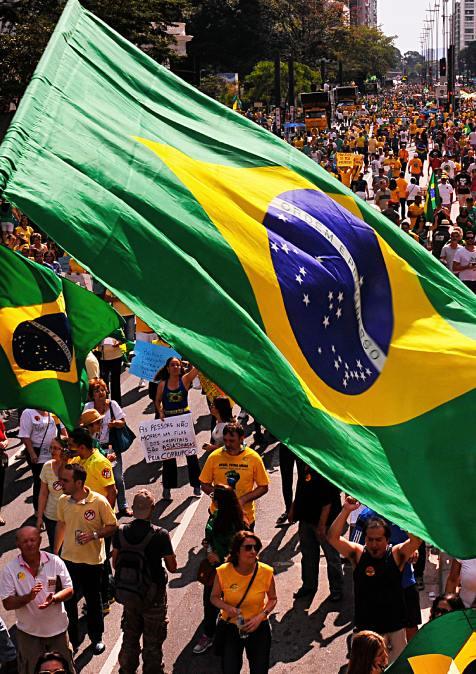 October 7, 2026Brazil's election poses a question that extends well beyond Latin America: how much freedom does a country retain to define its international role when external pressure collides with domestic political exhaustion? For the Global South, the answer matters more than any foreign government's preference regarding the next occupant of the presidential palace. Strategic autonomy remains fragile if every change of government puts a country's freedom of action back up for negotiation. ...
 -
 October 6, 2026The author of this opinion, Marie-Noelle Nwokolo, is a 2024 alumna of the Atlantic Dialogues Emerging Leaders Program.In September 1978, delegations from 138 countries gathered in Buenos Aires, Argentina, around a powerful idea: developing countries had knowledge, experience and capabilities worth sharing with one another. The Buenos Aires Plan of Action gave institutional form to what we now call South-South Cooperation, part of a wider post-colonial effort by developing ...
 -
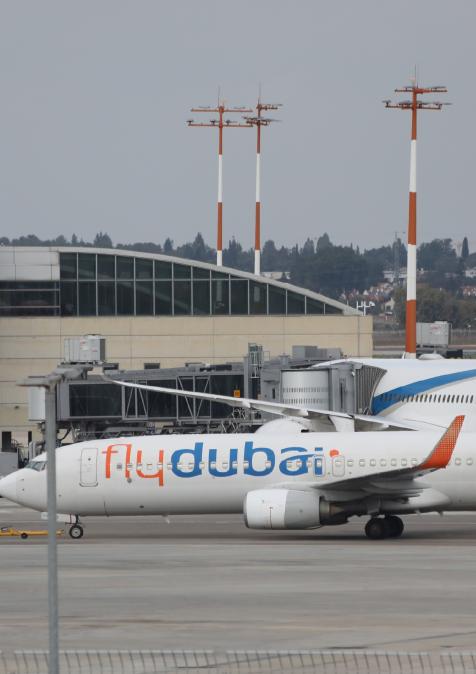 October 2, 2026The incident involving Flydubai Flight FZ1073 between Dubai and Tel Aviv does not yet support any definitive attribution. It does, however, provide a useful warning sign: as aviation security closes off traditional avenues of intrusion, threats may shift towards alternative pathways by exploiting the people, service providers, and systems that the aviation ecosystem must necessarily trust. ...
 -
 October 2, 2026L’incident du vol FZ1073 entre Dubaï et Tel-Aviv ne permet encore aucune attribution définitive. Il constitue en revanche un révélateur utile : à mesure que la sûreté aérienne ferme les voies classiques d’intrusion, la menace cherche à emprunter des voies alternatives en exploitant les personnes, les prestataires et les systèmes auxquels l’écosystème aéronautique doit nécessairement accorder sa confiance. ...
 -
 October 02, 2026Building on his Policy Brief "Latin America, World Politics and the Great Powers", Nizar Messari examines how recent developments are reshaping U.S. influence in the region and affecting ...
 -
 September 30, 2026On August 7, 2026, Saudi Arabia, Turkey, and Pakistan signed the Mecca Joint Défense Agreement, a collective-defense pact widely compared to NATO’s Article 5. This essay argues that the comparison is misleading. Mecca borrows NATO’s language of solidarity without yet possessing NATO’s institutional machinery, and the Houthi offensive against Saudi Arabia in September 2026 provided an early and revealing test of what the agreement actually means in practice. Neither Pakistan nor Turk ...

