حديث الثلاثاء: آفاق التعاون بين كوريا الجنوبية و إفريقيا

July 29, 2022

يخصص مركز السياسات من أجل الجنوب الجديد حلقة برنامجه الأسبوعي "حديث الثلاثاء"   لمناقشة آفاق التعاون بين كوريا الجنوبية و إفريقيا مع المصطفى الرزرازي، الباحث البارز بمركز السياسات من أجل الجنوب الجديد.

شهدت العلاقات الكورية الإفريقية إنطلاقاً من العقد الأول من الألفية تطوراً ملحوظاً اتسم بإرتفاع مهم في مستوى المبادلات التجارية بين الجانبين و تكثيف وتيرة المشاورات السياسية بالإضافة إلى توقيع عديد من الاتفاقيات في مختلف المجالات السياسية و الاقتصادية و الثقافية . و هي الديناميكية التي تجلت على سبيل المثال  في تنظيم كوريا الجنوبية سنة 2022 لأشغال القمة الأفريقية الكورية الخامسة بحضور و مشاركة عدد من وزراء الخارجية الأفارقة و ممثلين عن الجماعات الاقتصادية الإقليمية.

و سنعود من خلال هذه الحلقة إلى أبرز محطات و عوامل تطور العلاقات الكورية الافريقية علاوةً عن أهم نتائج المنتدى كإطار تشاور مرجعي بين الجانبين و الأفاق المستقبلية لهذه العلاقات في ظل التوجه الرامي إلى تنويع الشركاء الخارجين من قبل الإتحاد الافريقي.     
Speakers
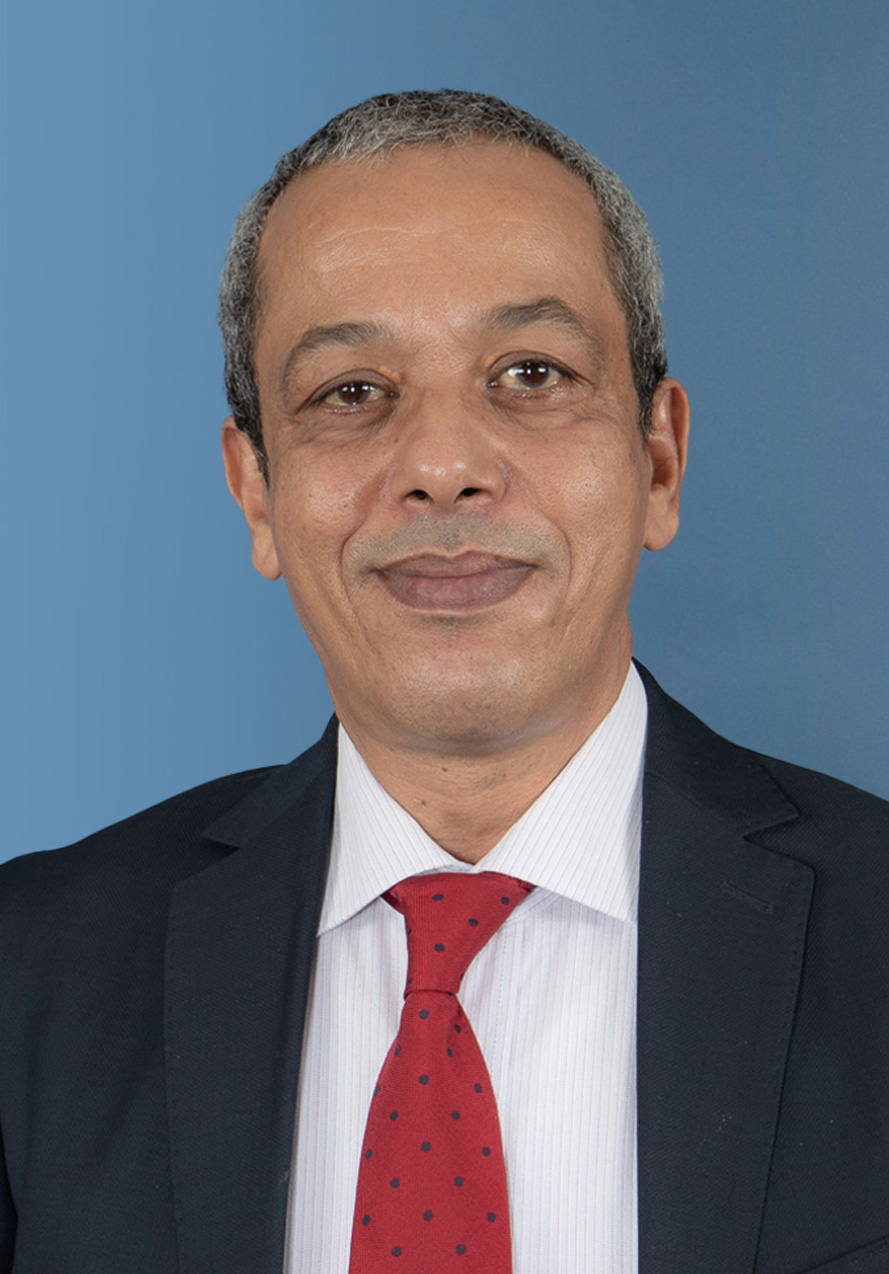
El Mostafa Rezrazi
Senior Fellow
Dr El Mostafa Rezrazi is a professor of Crisis Management, and Security Studies and a Senior Fellow at the Policy Center for the New South who focuses on Terrorism, Security and East Asia studies. His area of Expertise covers Afro-Asian Affairs, Strategic & Security Studies, Terrorism, Extremism and Deradicalization, mainly from the view of Criminal; Legal and Forensic Psychology.  He got his Ph.D. in Regional & International Affairs from the University of Tokyo in 1998, and later a Doctorate from the University of Mohammed V on the Psychological dynamisms of Suicide Bombers (2014). He is the executive director of the Moroccan Observatory on Extremism and Violence, Director of the African Center for Asian Studies, Rabat. Currently, he is Visiting Professor a ...
Oussama Tayebi
Senior International Relations Specialist
Oussama Tayebi is a Senior International Relations Specialist at the Policy Center for the New South (PCNS).At the PCNS, Oussama Tayebi primarily conducts research on governance, peace, and security issues in Central Africa. Before joining the PCNS in 2019, Oussama Tayebi contributed to the activities of the UN Women’s multi-country office for the Maghreb and the Paris office of the ONE Campaign (NGO), providing support for advocacy initiatives on the Africa-EU partnership and official development cooperation issues.Oussama Tayebi holds a bachelor’s degree in political science from the School of Governance and Economics in Rabat, Morocco, and a master’s degree in international relations from Sciences Po Aix, France.Oussama Tayebi is fluent in Arabic, English, and French. ...

RELATED CONTENT

  • Authors
    Florent Parmentier
    October 12, 2026
    Cet article soutient que le Chief Geopolitical Officer (CGO) doit être repensé à partir de l’expérience des entreprises africaines. Dans un environnement multipolaire et fragmenté, leur principal défi n’est pas seulement la gestion des risques, mais la préservation de plusieurs options stratégiques simultanément selon une logique de hedging. Trois modèles de CGO sont à distinguer : l’intermédiation (Office chérifien des Phosphates (OCP), Tanger Med), l’intégration régionale (Ethiopi ...
  • Authors
    Paul Isbell
    October 9, 2026
    In the first seven Policy Briefs of this ongoing series of analysis on Pan-Atlanticism: The Atlantic Basin in a Multipolar-Transnational World, we developed the argument that the strategic significance of the Atlantic Basin is on the rise for a range of international actors (states, regions and non-state agents) and from distinct political or ideological perspectives. In addition, in the most recently published Policy Brief -- “The U.S. and the Current International Reconfiguration: ...
  • Authors
    Marie-Noelle Nwokolo
    October 6, 2026
    The author of this opinion, Marie-Noelle Nwokolo, is a 2024 alumna of the Atlantic Dialogues Emerging Leaders Program.In September 1978, delegations from 138 countries gathered in Buenos Aires, Argentina, around a powerful idea: developing countries had knowledge, experience and capabilities worth sharing with one another. The Buenos Aires Plan of Action gave institutional form to what we now call South-South Cooperation, part of a wider post-colonial effort by developing ...
  • September 28, 2026
    This paper was initially published in French on the website of the Fondation Jean-Jaurès. There was a historic decline in Official Development Assistance (ODA) in 2025. Foreign aid to developing countries from members of the OECD-DAC fell by some 23%, the largest decline on record and the second consecutive annual decline. Aid to Africa fell by more than 25%. The International Monetary Fund (IMF) described this decline in ODA to Africa as “a shock like no other.” It differ ...
  • Authors
    Marianna Albuquerque
    September 23, 2026
    The author of this opinion, Marianna Albuquerque, is a 2022 alumna of the Atlantic Dialogues Emerging Leaders Program.As world leaders gather in New York for the 81st United Nations General Assembly, climate change returns to the center of multilateral diplomacy under markedly different circumstances. The debate is no longer confined to whether the world must decarbonize, but increasingly centers on how the transition will happen, who will bear its costs, who will capture ...
  • Authors
    Luladay Berhanu Mengistie
    Guillaume Gérout Suominen
    September 21, 2026
    The African Union Summit of February 2026 instructed the African Continental Free Trade Area (AfCFTA) Council of Ministers to negotiate a Protocol on Industrial Policy and Development. This work, handled without adequate preparation, is likely to reproduce the weaknesses it is meant to remedy. This paper is a conceptual mapping exercise, written to raise the preparatory questions before drafting begins, rather than to prescribe outcomes.It proceeds in five sections:1. It works towar ...
  • Authors
    Joana Ama Osei-Tutu
    September 12, 2026
    The author of this opinion, Joana Ama Osei-Tutu, is a 2017 alumna of the Atlantic Dialogues Emerging Leaders Program.South-South cooperation (SSC) is often presented as an alternative to the hierarchical relationships that have historically characterized international development. In principle, SSC means Global South countries learn from one another, share expertise and resources, and develop solutions grounded in their own experiences, rather than importing models designe ...