Publications /
Opinion
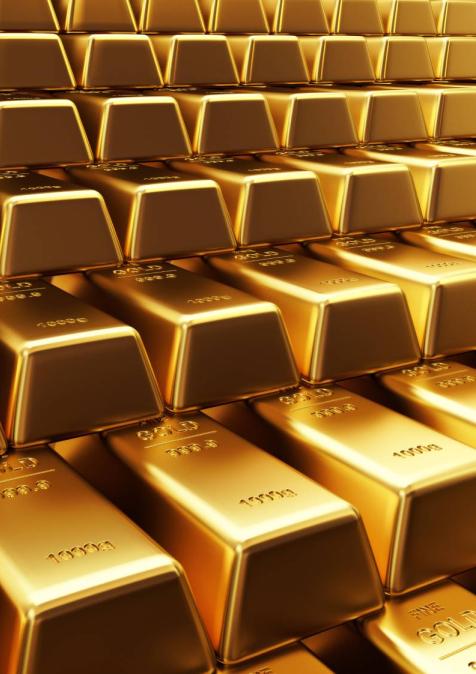
Record after record, gold seems unstoppable: on October 8, 2025, the ounce surpassed a new high on the London market, exceeding the $4,000 mark and reaching around $4,170 at the afternoon fixing two weeks later. While such surges are not unusual in the commodities world, the scale of this increase is striking. The rise has indeed been remarkable: the $2,000-per-ounce threshold was first crossed in August 2020, and the $3,000 mark, once considered unreachable, was surpassed in March 2025. Over the first ten months of 2025, gold has gained more than 57%. On October 21, however, prices experienced a sharp correction, falling from $4,294 to $4,169, a nearly 6% drop in just one day. Was this a “technical” correction, almost normal after such a surge, or a harbinger of a longer decline? At this point, no one can say for certain.
The Price Surge: Geopolitical and Economic Drivers
The factors influencing gold prices are well-known, and two have been particularly decisive over the past three years: macroeconomic and geopolitical tensions/uncertainties on one hand, and the reality of U.S. monetary policy on the other. Gold is considered a safe-haven asset, and when conflicts, commercial or military, intensify, demand for this precious metal increases, driving prices upward almost mechanically. It is, however, “competed with” in this role by U.S. Treasury bonds, also considered safe assets with very low credit risk (the famous “AAA” rating by agencies), but offering the advantage of interest payments. This is where the degree of U.S. monetary tightening and the level of short- and long-term interest rates (over ten years) matters. In periods of anti-inflation measures, these rates rise, increasing real interest rates (i.e., adjusted for inflation) and, correspondingly, weighing on gold demand.
This explains the relative stability of gold prices until October 2022 and their spectacular rise afterward. During the earlier period, the two aforementioned variables played a dissonant role. While the war in Ukraine, tensions in the Middle East, and general uncertainties supported gold, the tightening of the Federal Reserve’s monetary policy from March 2022 had the opposite effect. As noted in our previous op-ed on gold[1], this “glass ceiling” disappeared in October of that year, when markets anticipated a slowdown in interest rate hikes. Their successive cuts, three in 2024, then in September 2025 explain, following the same logic, why gold continued its strong upward trajectory amid unchanged high geopolitical tensions, especially in the Middle East. A partial consequence of these rate cuts is the significant depreciation of the dollar, which also makes gold purchases more accessible globally, as most commodities are priced in U.S. dollars.[2]
The Effects of President Trump’s Policy
One question remains: why have gold prices risen so dramatically? Falling under the “uncertainty” category, the surge in global debt, estimated at $337.7 trillion at the end of H1 2025 by the Institute of International Finance, is particularly concerning. This is especially true for global public debt, which, according to the IMF, could exceed 100% of GDP by 2029, its highest level since 1948.
President Donald Trump’s policies also raise questions, both regarding the harmful effects of new American protectionism on global growth and concerns about the Federal Reserve’s autonomy. Central bank independence from political power has been considered, for decades, an essential condition for fulfilling its primary mission: ensuring price stability. From White House pressure to lower rates, to the appointment of Stephan Miran, also a presidential advisor, the attempted dismissal of Governor Lisa Cook, and the desire to fire Jerome Powell, evidence of growing challenges to this principle is accumulating. By increasing inflationary risk while weakening the dollar, this strategy has evidently fueled demand for gold.
Equally fundamental is the question of the dollar’s credibility. As a sign of a strategy to de-dollarize official reserves, central banks have steadily increased their gold holdings. A recent study by the World Gold Council highlighted that central banks purchased nearly 1,000 tonnes of gold between H2 2024 and H1 2025, a pace close to recent years but far above historical decades.
Geopolitical tensions, tariffs, inflationary risks, global debt uncertainties, purchases by ETFs and central banks, the stars have aligned to push gold to new heights. Behind the cyclical analysis, however, lies another reality: an international scene in profound transformation, where U.S. economic hegemony is increasingly challenged. Hasn’t gold, and commodities more generally, always reflected the changes in our world? For worse, and hopefully, for better.
_
[1] https://www.policycenter.ma/publications/or-vers-de-nouveaux-records-de-prix
[2] It should be noted, however, that contrary to this claim, gold has the particularity of being priced in multiple currencies. Therefore, it is not certain that this effect is decisive, with the interest rate channel remaining the predominant factor.